SpongeBob SquarePants: Battle for Bikini Bottom – Rehydrated is one of the most nostalgia-driven remakes in recent years, bringing back a cult-classic platformer originally released in 2003. Developed by Purple Lamp Studios and published by THQ Nordic, the game aims to recreate the charm of the original while introducing updated visuals and minor gameplay improvements.
For longtime fans of SpongeBob SquarePants, this remake offers a chance to revisit Bikini Bottom with modern graphics and smoother mechanics. At the same time, new players are introduced to a classic 3D platformer that defined an era of licensed games. The question, however, is whether Rehydrated successfully modernizes the experience or simply relies too heavily on nostalgia.
The answer lies somewhere in between. The game delivers a faithful recreation of the original, but its dated design choices remain noticeable even after the visual overhaul. Let’s break down what works, what doesn’t, and whether this remake is worth playing in 2026.
What Is Battle for Bikini Bottom – Rehydrated?
Battle for Bikini Bottom – Rehydrated is a remake of the 2003 PlayStation 2-era platformer that gained a cult following over time. The original game was praised for its level design, humor, and faithful adaptation of the SpongeBob universe. Unlike many licensed games of its time, it stood out for offering solid gameplay mechanics and replay value.
The remake retains the original story, which revolves around Plankton’s plan to take over Bikini Bottom using an army of robots. Players control SpongeBob, Patrick, and Sandy as they attempt to stop the chaos and restore order. Each character has unique abilities, adding variety to gameplay and encouraging exploration.
The developers chose to keep the core structure intact rather than redesigning the game from scratch. This decision plays a major role in how the remake is perceived, as it preserves both the strengths and weaknesses of the original experience.
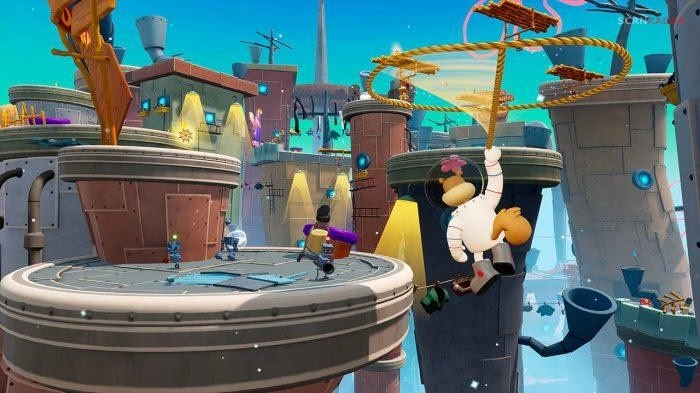
Gameplay: Classic Platforming That Feels Both Fun and Dated
The gameplay in Rehydrated sticks closely to the original formula. Players explore open-ended levels, collect items like shiny objects and golden spatulas, and complete platforming challenges. The structure feels similar to early 2000s platformers, which can be both nostalgic and limiting.
Movement is responsive, and each playable character offers distinct mechanics. SpongeBob uses a bubble wand for attacks and platforming, Patrick can lift and throw objects, and Sandy relies on her lasso for traversal. This variety keeps the gameplay engaging across different levels.
However, some aspects feel outdated by modern standards. The camera system can be inconsistent, and certain platforming sections lack precision. While these issues were common in older games, they stand out more in a modern remake where players expect refined controls.
Despite these drawbacks, the core gameplay loop remains enjoyable. Exploration, collectibles, and level variety still provide a satisfying experience, especially for players who appreciate classic platforming design.
Visuals and Graphics: A Major Upgrade
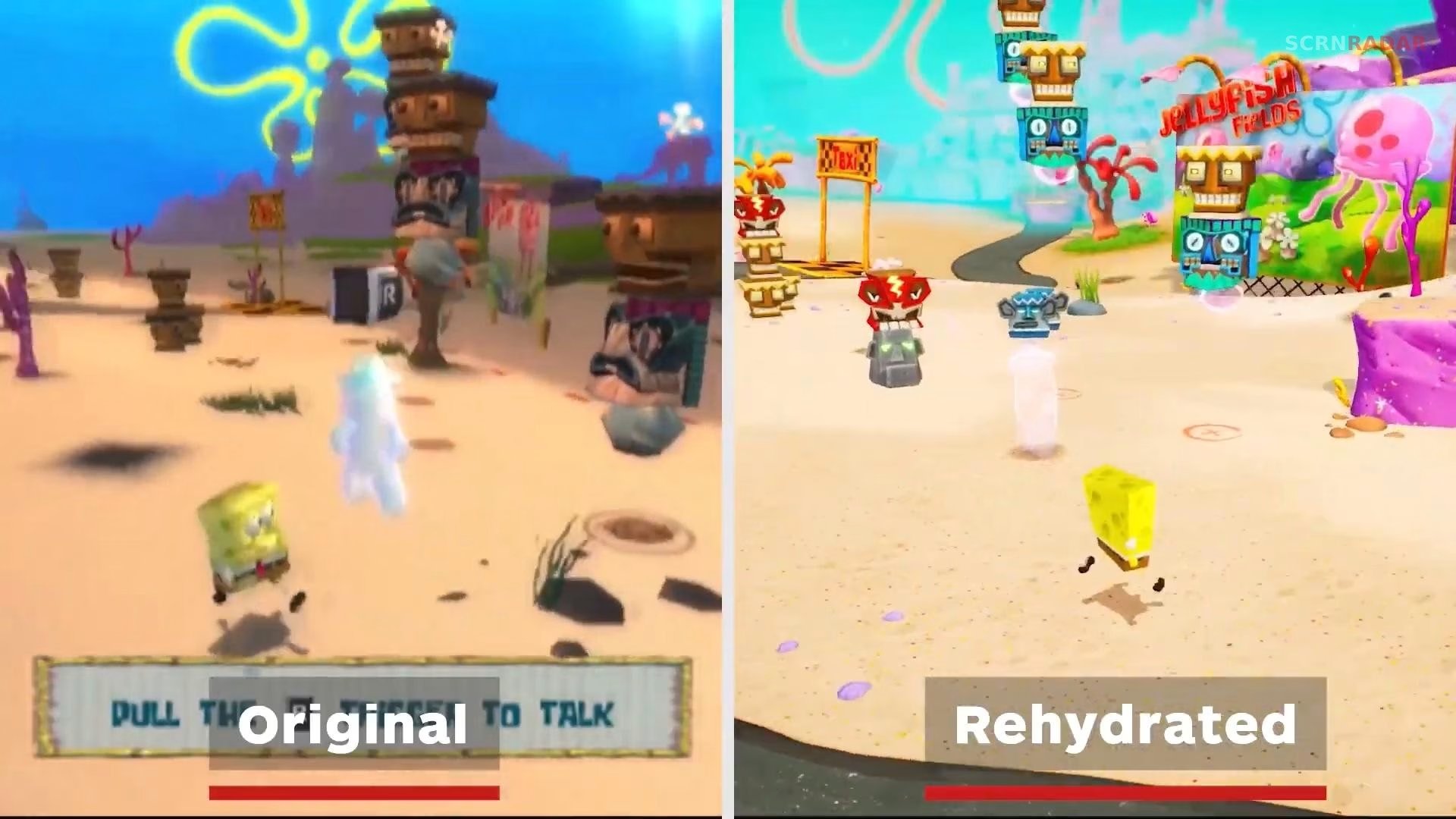
One of the biggest improvements in Rehydrated is its visual presentation. The game features completely rebuilt graphics, transforming the original’s simple models into vibrant, high-definition environments. Bikini Bottom looks more alive than ever, with detailed textures and colorful animations.
Character models have been redesigned to match the modern look of the TV series. The environments, from Jellyfish Fields to Goo Lagoon, feel faithful while benefiting from enhanced lighting and effects. This visual upgrade is one of the strongest reasons to play the remake.
That said, not every visual change has been universally praised. Some fans feel that the new art style lacks the charm of the original’s simpler aesthetic. Others have pointed out occasional inconsistencies in animation quality.
Even with these minor criticisms, the visual overhaul successfully modernizes the game. It makes Rehydrated feel relevant for today’s audience while staying true to its source material.
Sound Design and Voice Acting
Sound design plays a crucial role in capturing the essence of the SpongeBob universe. Rehydrated includes original voice lines along with newly recorded dialogue. Most of the original voice cast returns, helping maintain authenticity.
The soundtrack remains largely unchanged, featuring familiar tunes that fans will instantly recognize. These musical elements contribute to the nostalgic appeal of the game and enhance the experience.
However, not all voice actors returned for the remake. This has been noticeable to some players, particularly in certain characters where the difference is more apparent. While it does not significantly impact gameplay, it slightly affects immersion for longtime fans.
Still, the combination of classic sound design and updated audio elements works well. It reinforces the game’s connection to the TV show and adds to its charm.
New Content: Is There Anything Truly Fresh?
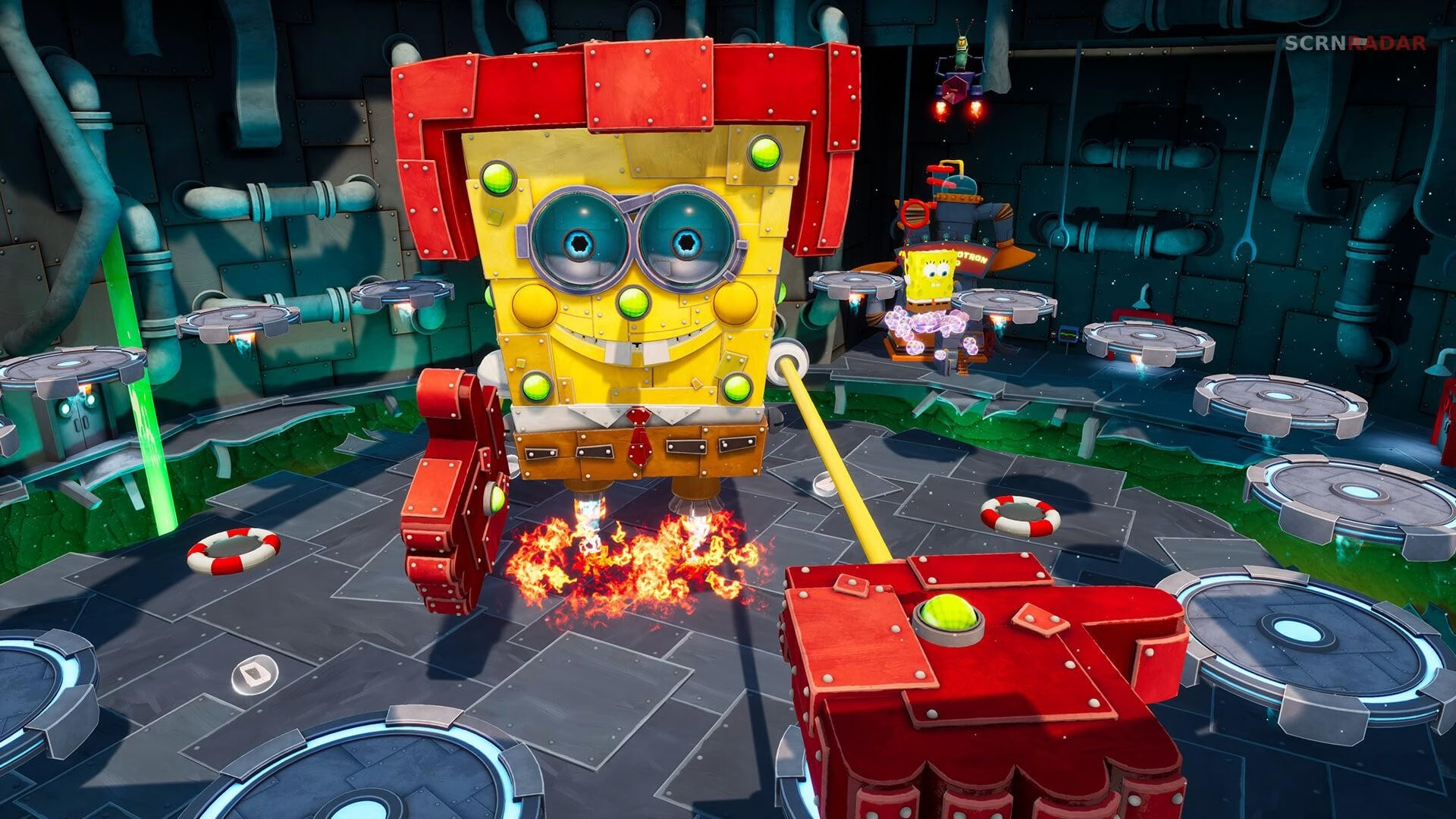
One of the main additions in Rehydrated is a multiplayer mode called “Robo-Squidward.” This horde-style mode allows players to team up and fight waves of enemies. While it adds replay value, it is relatively limited compared to the main campaign.
The developers also restored some cut content from the original game. These additions provide extra areas and challenges, giving fans something new to explore. However, these changes are subtle and do not drastically alter the experience.
For players expecting a significantly expanded remake, the new content may feel underwhelming. The focus remains on preserving the original game rather than reinventing it.
This approach works well for fans but may not fully satisfy those looking for a completely modernized experience.
Performance and Technical Issues
At launch, Rehydrated faced criticism for technical issues, including bugs, crashes, and inconsistent performance. Over time, patches have improved stability, but some problems still persist depending on the platform.
Load times can vary, and occasional glitches may disrupt gameplay. These issues are not game-breaking but can affect the experience. For a remake released in 2020, expectations for technical polish were higher.
On newer hardware, the game performs more smoothly, with improved frame rates and faster loading. Players using updated consoles or PCs are likely to have a better experience compared to those on older systems.
While performance has improved since release, it remains one of the weaker aspects of the game. It does not ruin the experience, but it prevents the remake from reaching its full potential.
Nostalgia vs Modern Expectations
Rehydrated is heavily driven by nostalgia. For players who grew up with the original, the game offers a near-perfect recreation with updated visuals. It captures the spirit of early 2000s platformers in a way that feels authentic.
However, modern players may find certain aspects less appealing. The level design, controls, and pacing reflect an older era of game design. Without nostalgia, these elements can feel repetitive or outdated.
This creates a divide in how the game is received. Fans of the original are more likely to appreciate its faithfulness, while newcomers may expect more innovation.
The game succeeds as a remake but struggles to fully bridge the gap between past and present expectations.