When She-Hulk: Attorney at Law premiered on Disney+, it quickly became one of the most talked-about Marvel series, not just for its fourth-wall-breaking humor but also for its massive production budget. Reports revealed that the show cost around $225 million for its nine-episode run, placing it among the most expensive streaming series ever made. Naturally, this raised questions among fans about where all that money went, especially given the show’s lighter tone compared to other Marvel Cinematic Universe projects.
Unlike action-heavy titles such as Loki or The Falcon and the Winter Soldier, She-Hulk blends courtroom comedy with superhero storytelling. However, the unique nature of the series required extensive CGI work, particularly for the titular character. Combined with Marvel’s high production standards and the challenges of creating a fully digital lead, the budget quickly escalated.
Let’s break down the She-Hulk budget in detail and understand why it became such a major topic of discussion.
How Much Did She-Hulk Cost?
According to multiple industry reports, She-Hulk: Attorney at Law had a total production budget of approximately $225 million. With nine episodes in the series, this puts the per-episode cost at roughly $25 million. This figure aligns with other high-end Marvel Disney+ shows, which typically range between $20 million and $25 million per episode.
For comparison, Game of Thrones reportedly reached around $15 million per episode in its final season, while Amazon’s The Rings of Power exceeded $50 million per episode. In this context, She-Hulk sits firmly within the upper tier of streaming television budgets.
However, the difference lies in how that budget was used. While many big-budget series invest heavily in sets, costumes, and large-scale battle scenes, She-Hulk required a significant portion of its budget to be allocated to digital effects.
Why CGI Was the Biggest Expense
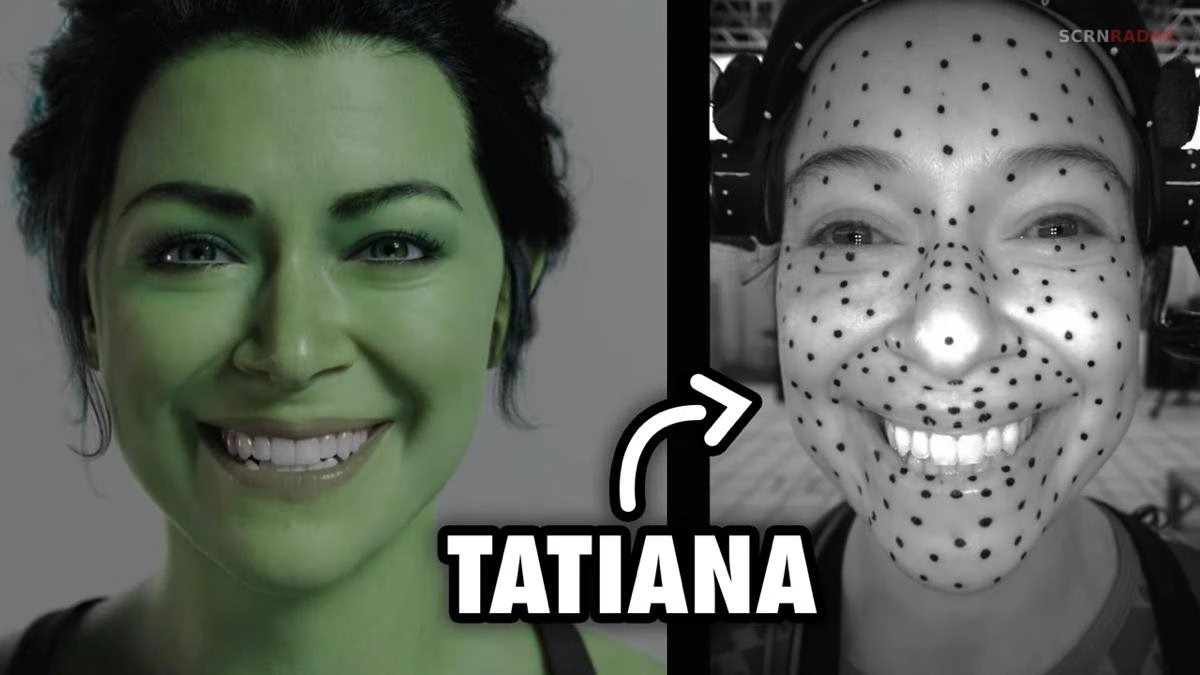
The primary reason behind She-Hulk’s high budget is the extensive use of CGI for Jennifer Walters’ Hulk form. Unlike the Hulk seen in earlier MCU films, She-Hulk appears in her transformed state for the majority of the show. This meant that nearly every scene featuring the main character required complex visual effects.
Creating a fully digital character that looks realistic in both action sequences and casual, dialogue-heavy scenes is extremely challenging. The character needed to express subtle emotions, deliver comedic timing, and interact naturally with real actors. This level of detail significantly increases production costs.
Marvel Studios president Kevin Feige acknowledged the importance of this technology in shaping the series. He emphasized that the goal was to make She-Hulk feel like a fully realized character rather than just a visual effect. Achieving this required advanced motion capture, animation, and rendering techniques.
The Challenge of Daytime Visual Effects
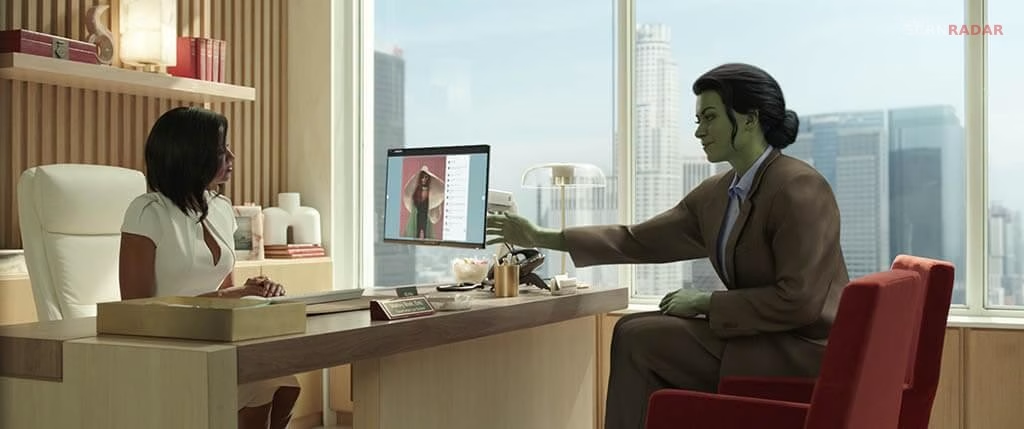
Another factor that drove up costs was the show’s frequent use of daytime scenes. Unlike darker, action-heavy films where CGI can be more easily blended into shadows, She-Hulk often takes place in brightly lit environments such as courtrooms, offices, and city streets.
Bright lighting makes it much harder to hide imperfections in visual effects. Every detail of the character model becomes more visible, requiring additional refinement and rendering work. This significantly increases the time and resources needed for each scene.
The series’ tone also contributed to this challenge. Because it leans heavily into comedy and dialogue, She-Hulk is often shown in close-up shots. These moments demand highly detailed facial animation, further increasing the complexity of the CGI work.
Production Timeline and Reshoots
Like many Marvel projects, She-Hulk underwent multiple reshoots and revisions during its production. These changes are common in large-scale productions, especially those that are closely tied to a larger cinematic universe.
Reshoots can significantly impact a project’s budget, as they require additional filming days, crew availability, and post-production work. In the case of She-Hulk, any changes involving the titular character would also require additional CGI work, further increasing costs.
The show’s development process also played a role. As Marvel experimented with a more comedic and meta storytelling style, adjustments were likely made to refine the tone. These creative decisions, while beneficial for the final product, can add to expenses.
Cast, Crew, and Marvel Production Standards
While CGI was the biggest cost factor, the budget also covered a high-profile cast and experienced production team. Tatiana Maslany, known for her award-winning performance in Orphan Black, led the series as Jennifer Walters. The show also featured Mark Ruffalo, Tim Roth, and several guest appearances from other MCU characters.
Marvel productions are known for maintaining a high level of quality across all departments. This includes set design, costumes, cinematography, and post-production. Even though She-Hulk focuses more on comedy than action, it still adheres to the same production standards as other MCU entries.
The involvement of multiple directors, writers, and visual effects studios also contributes to the cost. Coordinating these elements requires significant resources, especially for a project of this scale.
Why the Budget Sparked Debate
Despite its high budget, She-Hulk received mixed reactions from audiences, particularly regarding its visual effects. Some viewers felt that the CGI did not always match the level expected from a Marvel production, leading to questions about how the budget was allocated.

This criticism sparked broader discussions about the challenges faced by visual effects artists. Reports from industry insiders highlighted tight deadlines and heavy workloads, which can impact the final quality of CGI-heavy projects.
At the same time, others defended the show by pointing out the difficulty of creating a fully digital lead character for a television series. Unlike films, which have longer production timelines, streaming shows often operate under tighter schedules.
How She-Hulk Compares to Other Marvel Shows
When compared to other Marvel Disney+ series, She-Hulk stands out because of its unique structure. Shows like Loki and Moon Knight rely more on practical sets and occasional CGI, whereas She-Hulk requires constant visual effects.
This makes direct comparisons difficult. While the budgets may be similar, the distribution of costs is very different. She-Hulk invests heavily in a single digital character, while other shows spread their budgets across multiple elements.
In many ways, She-Hulk represents a different kind of experiment for Marvel. It combines sitcom-style storytelling with blockbuster-level visual effects, creating a hybrid format that is still relatively new in the industry.