The ending of Royal Blood delivers exactly what long-running murder mystery fans expected: betrayal, hidden motives, emotional breakdowns, and one final twist designed to completely reframe the Royales family tragedy. Throughout the series, viewers were encouraged to suspect nearly every major character connected to Gustavo Royales’ death. From inheritance disputes to secret affairs and family resentment, the show carefully built a web of suspicion around the entire Royales clan.
By the time the finale arrives, the central mystery finally reveals who killed Gustavo and why the murder happened. However, Royal Blood goes beyond a simple whodunit reveal. The ending also exposes emotional trauma, buried family secrets, and the destructive impact of greed and power inside the Royales family. The killer’s identity shocks several characters because it is deeply connected to long-standing emotional wounds rather than pure financial ambition alone.
Let’s break down who killed Gustavo Royales, why the murder happened, and what the final twist really means for the surviving characters.
What the main mystery of Royal Blood was about
From the beginning, Royal Blood centers on the murder of wealthy patriarch Gustavo Royales. After his death, the Royales family becomes consumed by paranoia, inheritance battles, and hidden secrets. The arrival of Napoleon “Napoy” Royales, Gustavo’s previously estranged illegitimate son, further destabilizes the already fractured family.
Napoy quickly becomes one of the story’s emotional anchors because he enters the Royales estate as both an outsider and a blood relative. Unlike many of Gustavo’s legitimate heirs, Napoy initially appears less motivated by wealth and more interested in uncovering the truth behind his father’s death.
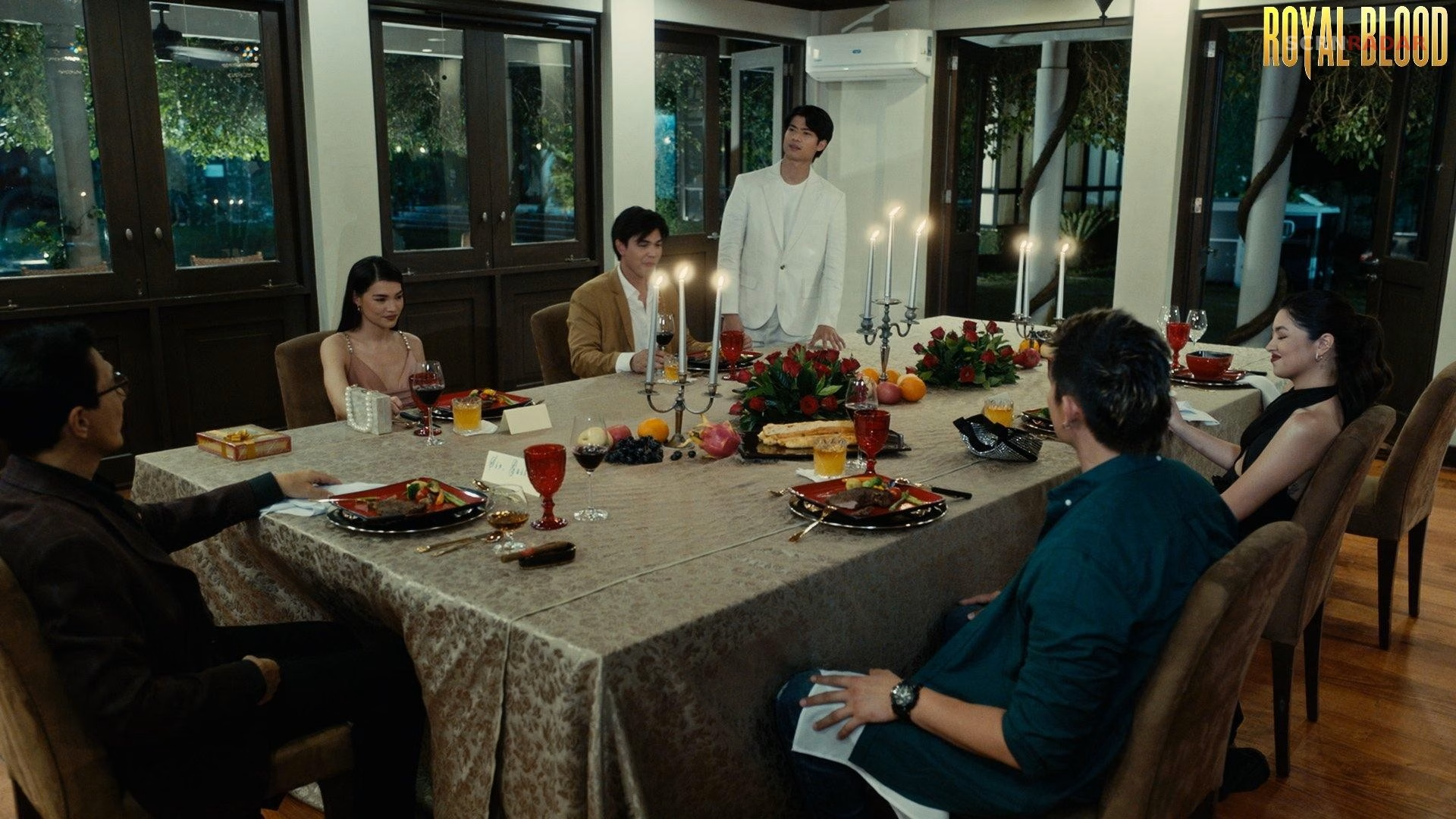
As the investigation progresses, nearly every family member becomes a suspect at some point. The series repeatedly introduces motives involving revenge, jealousy, greed, betrayal, and hidden relationships. This constant shifting of suspicion became one of the drama’s biggest strengths because viewers were never allowed to feel fully confident about any theory.
The mystery also expanded beyond a single murder. Poisonings, attempted killings, missing evidence, secret affairs, and betrayals slowly revealed how dysfunctional the Royales family truly was long before Gustavo died.
Margaret Royales is revealed as the killer
The show’s biggest reveal confirms that Margaret Royales, played by Rhian Ramos, is ultimately responsible for Gustavo’s murder. The twist surprised many viewers because Margaret spent much of the series appearing emotionally vulnerable and relatively less aggressive than some other Royales family members.
The reveal was officially confirmed during the final episodes of the series and immediately triggered strong reactions online. Many viewers admitted they suspected Margaret early, while others were surprised because the show deliberately distracted attention toward more obvious suspects throughout the story.
Margaret’s role as the killer becomes especially tragic because her actions are tied deeply to emotional suffering and unresolved trauma. Rather than portraying her as a straightforward villain obsessed purely with money, the series presents her as someone psychologically damaged by years of family dysfunction and manipulation.
Rhian Ramos herself explained in interviews that she appreciated the twist because it gave Margaret’s story a “full circle” emotional conclusion. According to her comments, the reveal reshaped how audiences viewed many earlier scenes involving Margaret.
The reveal also worked because Royal Blood carefully balanced sympathy and horror. Viewers understand Margaret’s pain, but the series never excuses the consequences of her actions.
Why Margaret killed Gustavo Royales

Margaret’s motive is rooted in years of emotional pain connected to Gustavo’s treatment of his family. Throughout the series, Gustavo is portrayed as a powerful but deeply flawed patriarch whose decisions emotionally damaged nearly everyone around him.
The show gradually reveals that Margaret carried enormous resentment and psychological trauma connected to family manipulation, emotional neglect, and the toxic power dynamics inside the Royales household. Gustavo’s controlling behavior created deep emotional scars that eventually contributed to Margaret’s breaking point.
Importantly, the murder was not presented as a spontaneous act. Royal Blood carefully built toward the idea that Margaret’s emotional collapse developed over time. The pressure of maintaining appearances inside the Royales family slowly pushed her toward desperation.
Inheritance and family politics also contributed to the tension. Gustavo’s enormous wealth created constant rivalry among his children and relatives, making emotional conflicts even more dangerous.
The series ultimately suggests that Gustavo’s death was caused not only by one individual but by years of emotional corruption within the family itself.
Napoy’s investigation drives the finale
Napoy, played by Dingdong Dantes, becomes the central force uncovering the truth behind Gustavo’s murder. His outsider perspective allows him to see through the manipulation and dishonesty inside the Royales family more clearly than others.
Throughout the series, Napoy faces suspicion himself because of his sudden arrival and complicated relationship with Gustavo. However, his determination to uncover the truth gradually earns him trust from several family members.
The finale heavily emphasizes Napoy’s emotional journey. More than solving a mystery, his investigation becomes about understanding the family he never truly knew. As secrets continue emerging, Napoy realizes the Royales family’s wealth and status were built on emotional destruction and lies.

This emotional angle helps separate Royal Blood from simpler murder mystery dramas. The investigation is not just about identifying the killer but also about exposing the emotional damage hidden beneath the family’s luxurious image.
Napoy’s role also reinforces one of the show’s biggest themes: truth eventually destroys the illusion of power and perfection.
The final twist changes how viewers see the family
Even after Margaret’s reveal as the killer, Royal Blood continues introducing additional twists during its closing episodes. The series intentionally avoids ending immediately after the murder revelation because the emotional consequences matter just as much as the mystery itself.
One of the biggest late-series twists involves revelations about Margaret’s identity and hidden family secrets connected to the Royales bloodline. These discoveries further destabilize the family and expose how much deception existed long before Gustavo’s death.
The finale also highlights how greed and power poisoned nearly every relationship inside the Royales estate. Affairs, betrayals, and manipulation created an environment where violence eventually became inevitable.
This approach makes the ending feel larger than a traditional detective reveal. The murder mystery becomes symbolic of a family destroying itself from within.
The series repeatedly emphasizes that Gustavo’s death exposed truths the family had spent years hiding. Once those truths emerged, reconciliation became almost impossible.
Why the killer reveal divided audiences
The Margaret reveal created mixed reactions because Royal Blood intentionally walked a difficult line between emotional tragedy and stunning suspense. Some viewers praised the twist for being emotionally layered and unpredictable, while others expected a more traditionally villainous character to be responsible.

Part of the division came from how sympathetic Margaret occasionally appeared throughout the series. The show spent significant time exploring her vulnerability and emotional struggles, which made it harder for some viewers to imagine her as the killer.
However, this complexity is exactly why the reveal worked for many fans. Rather than choosing the most obvious suspect, the series tied the murder directly to emotional trauma and family dysfunction.
The writers also benefited from maintaining secrecy during production. Reports revealed that much of the cast did not know the killer’s identity until near the finale because of strict confidentiality measures.
This secrecy helped preserve tension both on-screen and among audiences following the series weekly.
The Royales family represents toxic power and inheritance
One of the most important themes in Royal Blood is how wealth and power corrupt family relationships. Gustavo’s enormous fortune constantly influences how characters treat each other, creating an atmosphere driven by suspicion and competition.
The Royales family members are emotionally trapped by inheritance expectations and personal resentment. Many relationships become transactional rather than genuine because everyone fears losing power or status.
This theme becomes especially important in the ending because Gustavo’s murder ultimately feels like the inevitable result of years of emotional toxicity. The family’s obsession with control and inheritance slowly destroys trust between relatives.
Even characters who are not directly responsible for violence contribute to the emotional damage through manipulation, dishonesty, or selfishness. The finale reinforces that nearly everyone inside the Royales household played some role in creating the conditions that led to tragedy.

Royal Blood repeatedly suggests that money cannot repair emotional neglect or family trauma. Instead, wealth often intensifies those problems.
Margaret’s ending reflects emotional collapse
Margaret’s final storyline is deeply tragic because the series portrays her less as a calculating mastermind and more as someone emotionally broken by years of pain.
Once her role in Gustavo’s death becomes fully exposed, Margaret’s emotional state deteriorates rapidly. The pressure of maintaining secrets, combined with guilt and psychological instability, eventually overwhelms her completely.
The series avoids giving Margaret a glamorous villain ending. Instead, her downfall emphasizes sadness and emotional destruction. The writers clearly wanted audiences to understand that the murder solved nothing and only deepened the family tragedy.
This emotional framing helps explain why many viewers described the finale as heartbreaking rather than simply surprising . Margaret’s actions are horrifying, but they are also presented as the product of long-term emotional suffering.
Her ending reinforces the show’s larger message about how unresolved trauma can slowly destroy entire families.
The meaning behind the final scenes
The final moments of Royal Blood focus less on triumph and more on emotional aftermath. Even after the killer is exposed, the surviving Royales family members remain emotionally fractured.
Napoy’s journey becomes especially meaningful because he ultimately gains truth at the cost of family illusion. The finale suggests that uncovering reality is painful but necessary for healing.
The ending also emphasizes consequences rather than revenge. Gustavo’s death permanently changes the family, and exposing the killer does not magically repair those relationships.
Several final scenes highlight themes of guilt, forgiveness, and emotional accountability. Characters are forced to confront not only the murder itself but also the toxic behavior that helped create the tragedy.
This emotional focus gives the finale more weight than a standard mystery resolution. Royal Blood ultimately becomes a story about family wounds and emotional corruption rather than only about solving a crime.