When Rick and Morty returned for its fourth season, expectations were sky-high. After a long hiatus, fans were eager to see how the show would evolve while retaining its signature mix of absurd humor and existential dread. Season 4 does not just continue the chaotic adventures of Rick Sanchez and Morty Smith. It actively challenges its own storytelling patterns, experimenting with narrative structure, character focus, and audience expectations.
This season feels like a turning point where the show becomes more self-aware than ever before. While it still delivers outrageous sci-fi concepts and dark comedy, it also leans into meta-commentary about fandom, storytelling, and its own cultural impact. The result is a season that feels both familiar and refreshingly unpredictable. Let’s break down the full recap and review of Rick and Morty Season 4, exploring its biggest moments, standout episodes, and overall impact.
Season 4 Recap: Episodic Chaos Meets Subtle Character Growth
Rick and Morty Season 4 sticks to its mostly episodic format, but there is a noticeable undercurrent of character development running throughout. The season opens with “Edge of Tomorty: Rick Die Rickpeat,” which immediately sets the tone by blending high-concept sci-fi with dark humor. Morty’s obsession with controlling his fate through a death crystal becomes a hilarious yet disturbing exploration of free will.
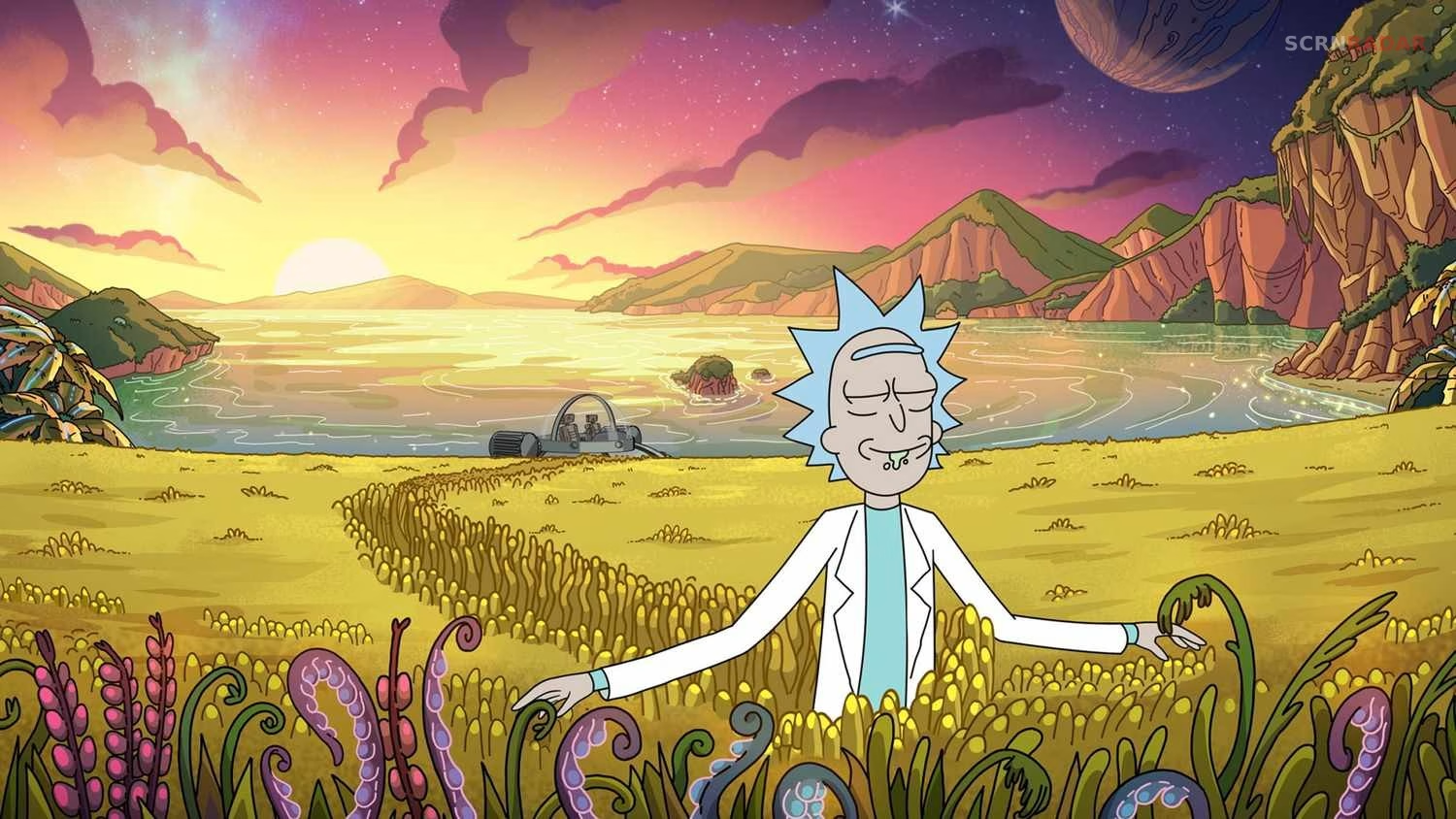
As the season progresses, episodes like “The Old Man and the Seat” provide rare emotional depth for Rick. His obsession with a private toilet reveals his deep loneliness and inability to form meaningful connections. This episode stands out as one of the few moments where Rick’s vulnerability is not hidden behind sarcasm or alcohol.
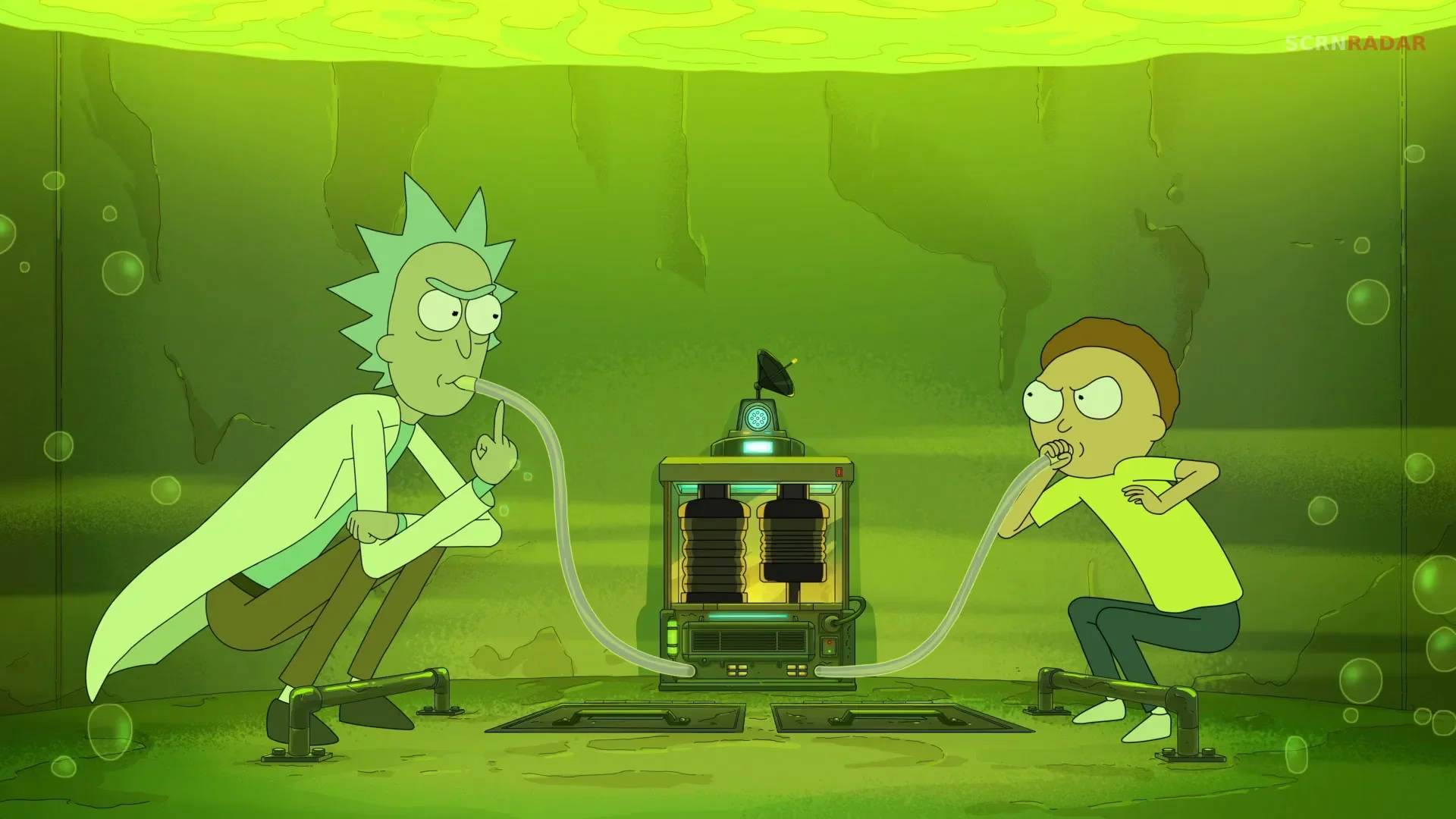
Another major highlight is “The Vat of Acid Episode,” which cleverly deconstructs storytelling tropes while delivering one of the most memorable twists of the series. Morty’s desire to prove Rick wrong leads to a sequence of events that is both hilarious and emotionally brutal. The episode perfectly captures the show’s ability to balance comedy with existential consequences.
Meanwhile, episodes like “Claw and Hoarder: Special Ricktim’s Morty” lean more into absurdity. The dragon storyline, while divisive among fans, embraces the show’s willingness to push boundaries, even if it means alienating part of its audience. This willingness to experiment is a defining trait of Season 4.
The season finale, “Star Mort Rickturn of the Jerri,” brings back larger narrative elements, including the Galactic Federation and Tammy. It delivers action-packed moments while also reinforcing the central theme of the Smith family’s dysfunctional dynamics. By the end, the show subtly reaffirms that no matter how far Rick and Morty travel, their emotional conflicts remain unresolved.
What Works: Humor, Creativity, and Meta Storytelling
One of the strongest aspects of Rick and Morty Season 4 is its relentless creativity. Each episode introduces a unique concept, whether it is death crystals, alien apps, or time-splitting realities. The show continues to excel at turning simple ideas into complex, unpredictable narratives that keep viewers engaged.
The humor remains sharp and unapologetically bold. Season 4 does not shy away from dark jokes or controversial themes, often pushing the boundaries of what animated television can explore. At the same time, it balances this with clever writing that rewards attentive viewers. Many jokes operate on multiple levels, blending slapstick comedy with philosophical undertones.
Meta storytelling becomes more prominent in this season. Episodes frequently break the fourth wall or comment on the nature of storytelling itself. “Never Ricking Morty” is a prime example, as it takes place on a literal story train, poking fun at narrative structures and fan expectations. While some viewers found it confusing, others appreciated its ambitious approach.
Another key strength is the show’s ability to explore existential themes without losing its comedic edge. Questions about free will, identity, and purpose are woven seamlessly into the narrative. Even in its most ridiculous moments, the show maintains a sense of depth that sets it apart from other animated series.
What Falls Short: Inconsistency and Overindulgence
Despite its strengths, Season 4 is not without flaws. One of the most common criticisms is its inconsistency. While some episodes are widely regarded as classics, others feel less impactful or overly indulgent. The uneven quality can make the season feel disjointed at times.
The heavy reliance on meta humor is another point of contention. While it adds a layer of sophistication, it can also make certain episodes feel inaccessible. Casual viewers may find themselves lost in the complexity, especially in episodes that prioritize concept over character.
Additionally, the season sometimes struggles to balance its episodic nature with long-term storytelling. Fans who were hoping for significant plot progression may feel disappointed by the lack of overarching narrative development. Although the finale attempts to address this, it does not fully resolve the issue.
Character development, while present, is often subtle and inconsistent. Rick’s emotional moments are compelling, but they are not always followed through in subsequent episodes. This can make his growth feel fragmented rather than cohesive.

A Risky Yet Rewarding Chapter in the Series
Rick and Morty Season 4 is a bold and experimental continuation of the series. It embraces its identity as a show that thrives on unpredictability, even if it means taking risks that do not always pay off. The season’s willingness to challenge conventions is both its greatest strength and its biggest weakness.
For longtime fans, Season 4 offers plenty to enjoy. It delivers memorable episodes, sharp humor, and thought-provoking themes that reinforce why the show remains so popular. At the same time, it may not be the most accessible entry point for new viewers due to its complex storytelling and heavy use of meta commentary.
Ultimately, Season 4 serves as a transitional phase for the series. It lays the groundwork for future developments while continuing to push the boundaries of what animated storytelling can achieve. Whether you love it or find it frustrating, there is no denying that Rick and Morty Season 4 leaves a lasting impression.
If nothing else, it proves that the show is not afraid to evolve, even if that evolution comes with a few missteps. And in a series built on chaos and unpredictability, that might be exactly the point.