When Netflix quietly launched Squid Game in 2021, few could have predicted the scale of its global dominance. With minimal marketing and little early buzz, the South Korean survival drama quickly evolved into a cultural phenomenon. Its blend of childhood games, brutal violence, and sharp social commentary on economic inequality struck a universal chord.
More than three years later, anticipation for Season 2 reached a fever pitch. But with expectations sky-high, the long-awaited continuation arrives with a very different reception, one that raises questions about storytelling choices, pacing, and whether lightning can strike twice.
The Legacy of Season 1: A Near-Perfect Balance
Created by Hwang Dong-hyuk, the first season of Squid Game succeeded because it balanced multiple tones effortlessly. It was disturbing yet playful, bleak yet emotionally engaging. The narrative didn’t just rely on surprising deaths; it built layered characters whose desperation reflected real-world struggles.
At the center was Seong Gi-hun, played by Lee Jung-jae, whose journey from failure to survivor anchored the story. Supporting characters, like Kang Sae-byeok and Oh Il-nam, added emotional depth that made each elimination meaningful rather than disposable.
Even upon rewatch, the show’s effectiveness remains intact. Its commentary on class disparity, debt, and systemic inequality still resonates, proving that its success wasn’t just about surprise; it was about substance.
Season 2, however, feels less like a complete chapter and more like a transitional setup for a future installment. Across seven episodes, the narrative struggles to justify its existence as a standalone season.
Instead of expanding the mythology or offering fresh insight into the Game, it largely treads familiar ground. It neither recreates the gripping simplicity of Season 1 nor deepens the world in a meaningful way. The result is a story that feels incomplete, more like a prolonged prologue than a satisfying continuation.
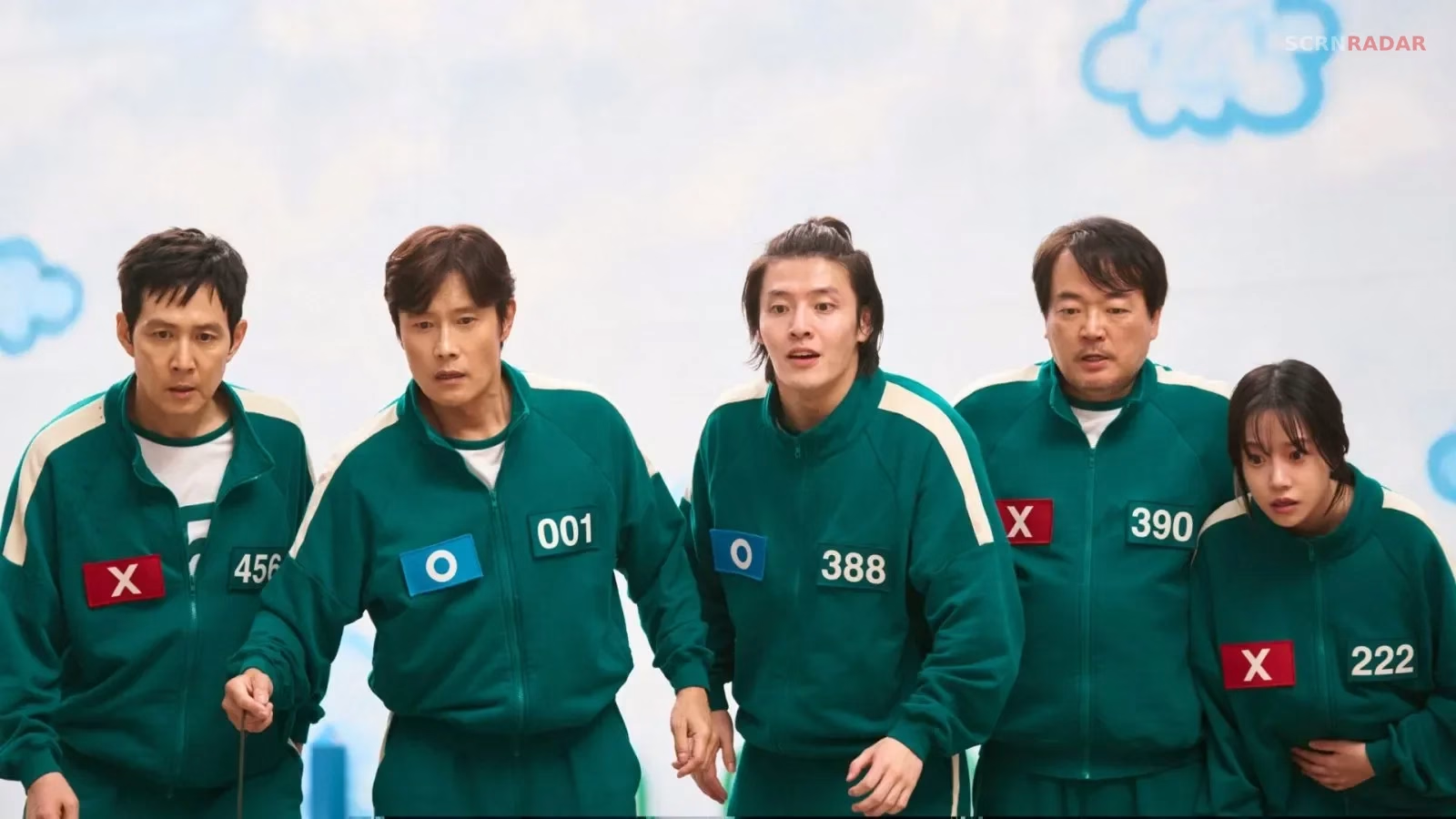
The season resumes with Gi-hun still haunted by his victory. Despite winning the massive cash prize, he abandons his plan to reunite with his daughter and instead dedicates himself to dismantling the Game.
His obsession leads him to search for the mysterious recruiter, played by Gong Yoo, and ultimately the elusive Front Man, portrayed by Lee Byung-hun.
While this premise is compelling, the execution falters. The show takes too long to return to the central concept, the deadly competition itself. Unlike Season 1, where early episodes established stakes and character motivations, Season 2 spends extended time on buildup that lacks the same emotional clarity.
By the time Gi-hun re-enters the Game, the delay feels less like tension-building and more like narrative stalling.
One of the most intriguing aspects of the original series was its twisted sense of fairness. Within an unjust world, the Game operated under strict rules, everyone had an equal chance, at least on paper.
Season 2 disrupts this balance. With Gi-hun returning as a central figure with prior knowledge, the competition loses its neutrality. Instead of 456 individuals fighting for survival, the story increasingly revolves around Gi-hun’s personal mission.
This shift changes the dynamic entirely. The Game becomes less about collective desperation and more about a singular narrative arc, reducing the stakes for other participants. What was once a shared tragedy now feels like a staged lesson centered on one man.
Season 1 thrived on character development, giving viewers time to connect with each participant. In contrast, Season 2 introduces new players but offers limited backstory or emotional grounding.
Characters are defined more by archetypes than fully realized personalities: a struggling mother and son, a failed crypto investor, a former soldier seeking identity. While these concepts are compelling on paper, they rarely evolve beyond their initial setup.
Without strong emotional connections, the impact of their deaths diminishes. The brutality remains, but the heartbreak is largely absent.
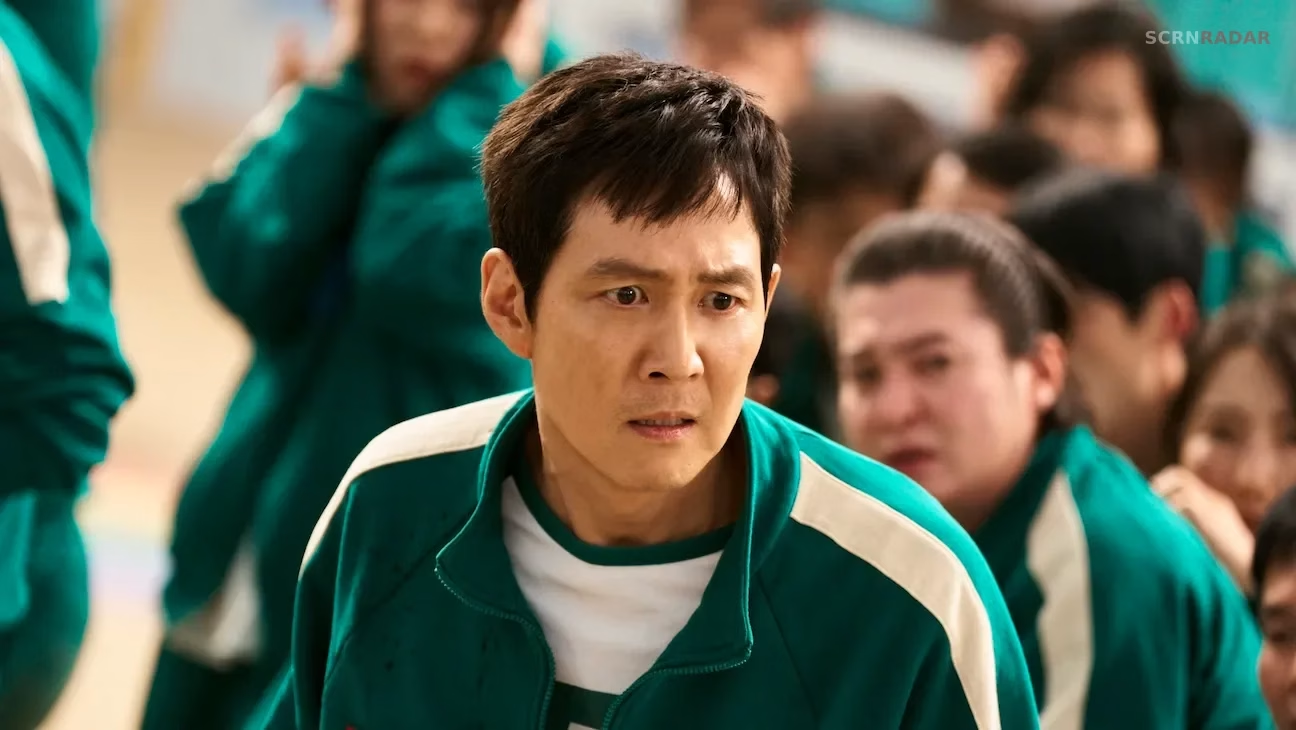
Familiar Games, Fading Creativity
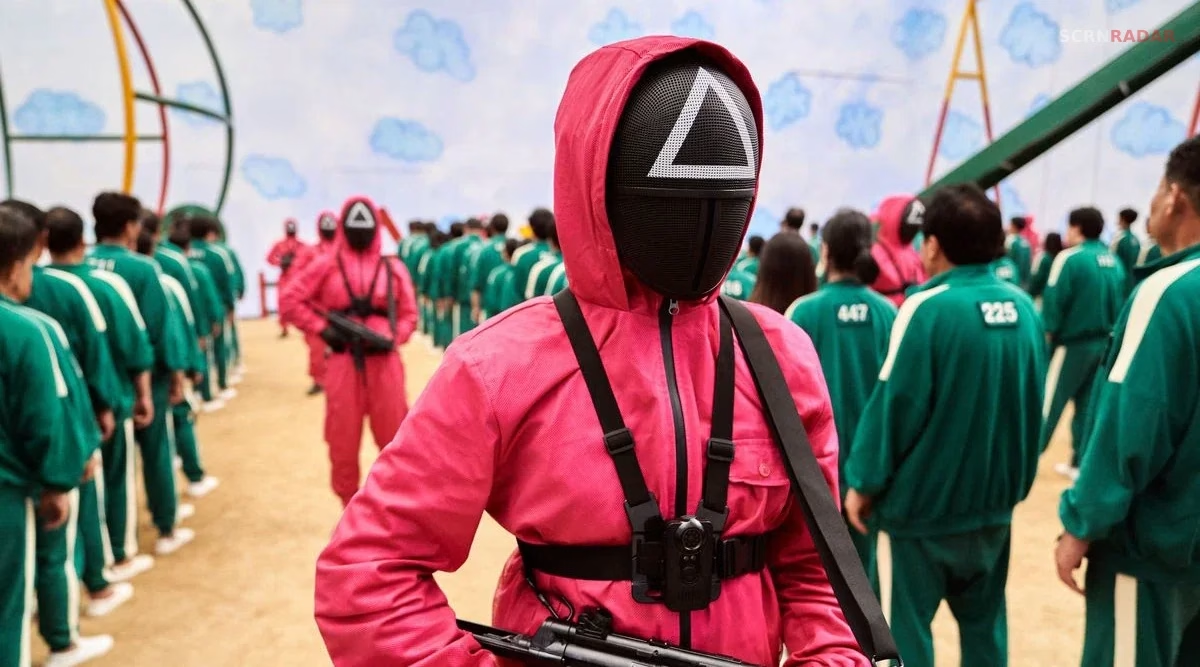
Visually, the show retains its signature aesthetic, bright, surreal sets juxtaposed with grim violence. However, the games themselves lack the ingenuity that once made the series so unpredictable.
Season 1 thrived on suspense because viewers never knew what childhood game would be twisted next. In Season 2, that sense of discovery is weaker. The challenges feel repetitive, and the creative spark that once defined the series begins to dim.
One of the more prominent additions this season is the expanded role of voting. Players are repeatedly asked to decide whether to continue or end the Game, shifting focus from survival challenges to group decision-making.
While this could serve as a metaphor for democratic systems, where people often act against their own interests, the concept is overused. The repeated voting sequences consume significant screen time without delivering proportional narrative payoff.
Instead of enhancing tension, they slow the pacing and dilute the urgency that once drove the series forward.
Another noticeable change is the tone. Season 2 leans heavily into bleakness, stripping away much of the dark humor and whimsy that previously balanced the show’s brutality.
Gi-hun himself reflects this shift. Where his character once displayed emotional range, moving between humor, desperation, and resilience, he now operates in a narrower, more somber register. While this evolution makes sense narratively, it also makes the character less engaging to watch.
Despite the writing issues, the cast delivers solid performances. Lee Jung-jae remains compelling, even within a more constrained role. New additions bring energy, particularly standout personalities that inject moments of unpredictability.
However, strong acting can only compensate so much. Without deeper character development, even talented performers struggle to create lasting impact.
Missed Opportunities and Controversial Choices
Season 2 also faces criticism for certain creative decisions, including representation choices that feel underdeveloped. While the inclusion of diverse characters signals progress, the execution doesn’t fully meet modern expectations for nuanced storytelling.
At the same time, the absence of memorable figures from Season 1 leaves a noticeable void. The emotional weight those characters carried is difficult to replicate, and the new cast doesn’t quite fill that gap.
Despite its shortcomings, Season 2 isn’t a complete failure. The foundation of Squid Game, its premise, visual identity, and social commentary, remains intact. There are glimpses of the show’s former brilliance, particularly in later episodes where tension briefly reaches the heights of the original.
This raises an important possibility: Season 2 may function primarily as groundwork for a more ambitious third season. If future episodes expand the mythology, deepen character arcs, and restore narrative balance, the series could regain its footing.