The second season of Raised by Wolves takes everything that made the first season intriguing and amplifies it into something far more complex and unsettling. Created by Aaron Guzikowski and backed by executive producer Ridley Scott, the show dives deeper into philosophical conflicts, religious symbolism, and the blurred lines between humanity and artificial intelligence.
Season 2 shifts the narrative into a new environment, introduces fresh characters, and raises the stakes with bigger mysteries that challenge both the audience and its protagonists.
At its core, the series continues to explore survival and identity, but it does so with a darker tone and more layered storytelling. The evolving dynamics between humans and androids create tension that feels both emotional and existential. With new factions, unpredictable threats, and expanding lore, the season demands more attention but rewards viewers with a richer experience. Let’s break down the major story beats, character arcs, and overall impact of Raised by Wolves Season 2.
A New Setting Brings New Threats and Possibilities
Season 2 moves the story to the tropical zone of Kepler-22b, a drastic shift from the barren landscapes of the first season. This new environment is not just visually distinct but also narratively significant. The lush surroundings hide dangerous creatures, mysterious technology, and secrets that complicate the already fragile coexistence between humans and androids.
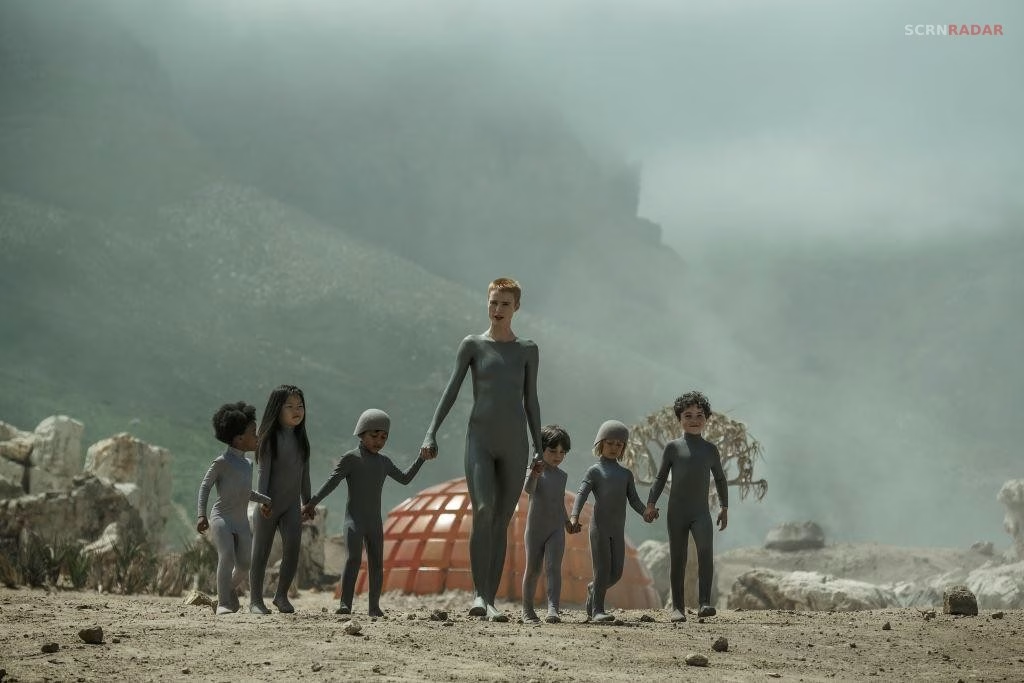
The introduction of the atheist Collective adds a new layer to the ongoing conflict. Unlike the Mithraic, who were driven by religious devotion, this faction operates on logic and scientific reasoning. However, the show cleverly avoids portraying them as purely rational or morally superior. Their actions often mirror the same flaws and contradictions seen in the Mithraic, reinforcing the idea that ideology alone cannot define morality.
At the same time, the planet itself becomes more than just a backdrop. Strange signals, ancient relics, and evolving creatures suggest that Kepler-22b has its own agenda. The environment feels alive and unpredictable, constantly challenging the characters’ understanding of reality. This shift helps the series move beyond survival drama into a more ambitious exploration of cosmic mystery.
Character Arcs That Deepen Emotional and Philosophical Conflict
One of the strongest aspects of Season 2 is how it develops its central characters. Mother, played by Amanda Collin, undergoes significant transformation as she grapples with her identity as both a caregiver and a weapon. Her connection to her child, the serpent, adds emotional complexity while also raising disturbing questions about her purpose and autonomy.
Father, portrayed by Abubakar Salim, continues to evolve in subtle but meaningful ways. His discovery of ancient android technology and his attempts to understand it highlight his growing independence. Unlike Mother, who often reacts with intensity, Father approaches challenges with curiosity and restraint, making him one of the most grounded characters in the series.
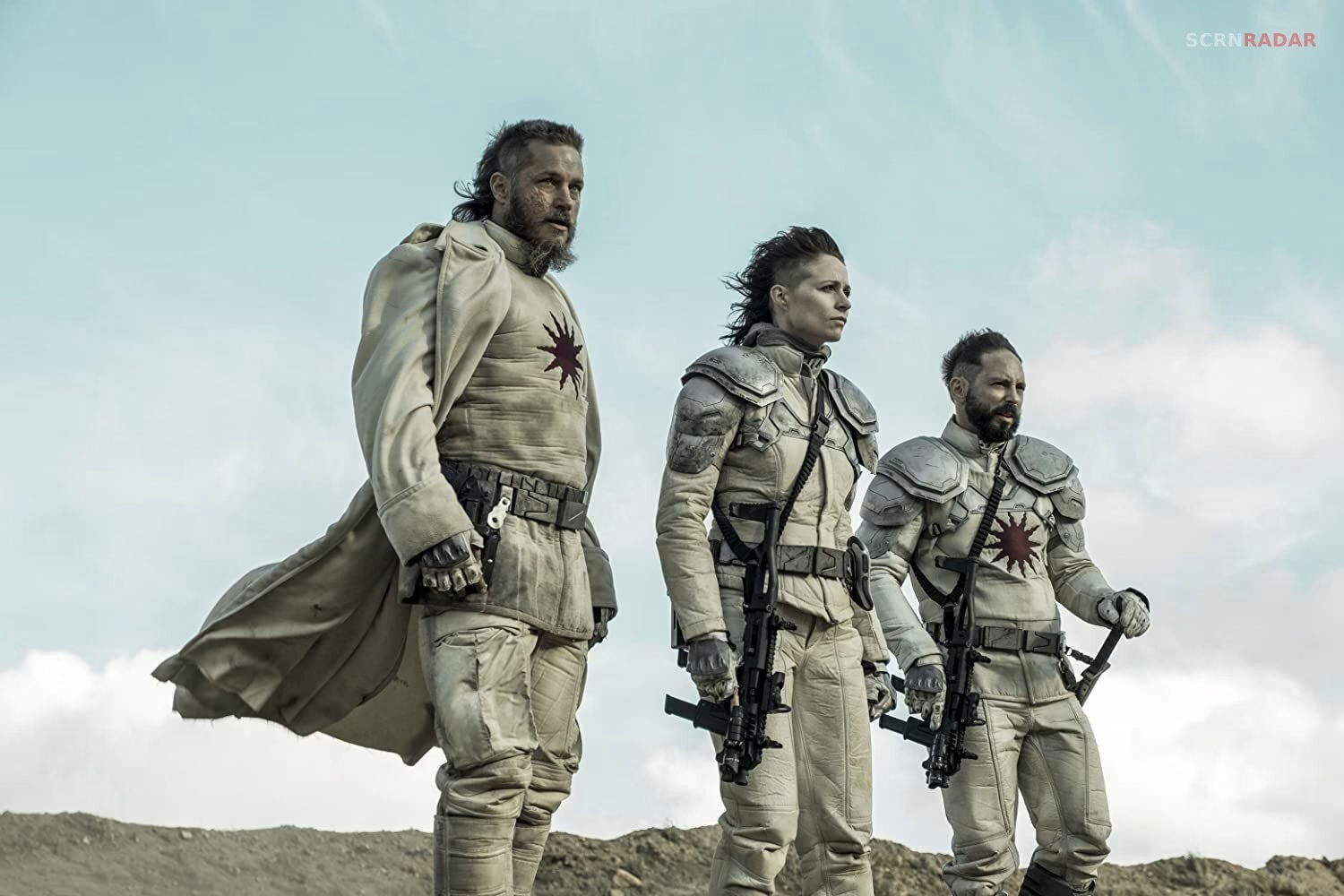
Marcus, played by Travis Fimmel, becomes increasingly unpredictable as his connection to Sol deepens. His transformation into a religious zealot blurs the line between faith and madness. The show uses his character to explore how belief can both empower and destroy, making him one of the most compelling and volatile figures in the story.
The children also receive more attention, particularly Campion, whose moral compass is constantly tested. His struggle to reconcile human values with the harsh realities of survival adds an emotional anchor to the narrative. These character arcs ensure that the series remains grounded even as its plot becomes more complex.
Expanding Mythology and Unanswered Questions
Season 2 significantly expands the mythology of Raised by Wolves, but it does so without offering easy answers. The origins of the planet, the true nature of Sol, and the purpose of the ancient technology remain shrouded in mystery. Instead of resolving these questions, the show introduces new layers that deepen the intrigue.
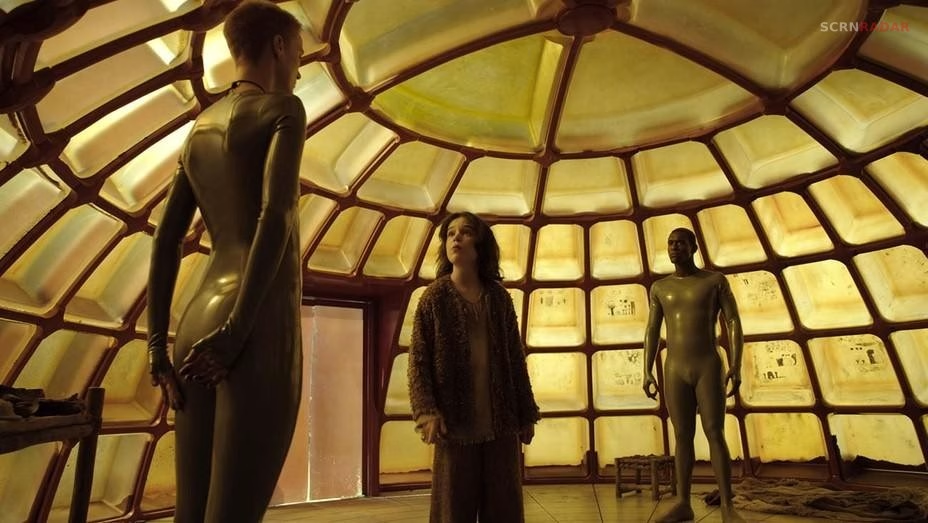
The serpent storyline is one of the most controversial aspects of the season. Its rapid growth and strange abilities push the narrative into more surreal territory. While some viewers may find this direction confusing, it aligns with the show’s commitment to exploring the unknown. The serpent is not just a creature but a symbol of evolution, control, and the unpredictable consequences of creation.
The concept of devolved humans adds another fascinating element to the mythology. These creatures suggest that humanity’s history on Kepler-22b may be far older and more complex than previously believed. This revelation challenges the characters’ assumptions about their place in the universe and hints at a cyclical pattern of rise and fall.
Despite its ambition, the show occasionally struggles with pacing. The introduction of multiple plotlines can make certain episodes feel crowded, and some story arcs are left underdeveloped. However, these issues are balanced by the sheer creativity and boldness of the narrative.
A Risky but Rewarding Sci-Fi Experience
Raised by Wolves Season 2 is not an easy watch, but that is precisely what makes it stand out. It refuses to simplify its themes or provide straightforward answers, instead embracing complexity and ambiguity. This approach may not appeal to everyone, but for those willing to engage with its ideas, the series offers a deeply rewarding experience.
The performances remain a highlight, with Amanda Collin and Abubakar Salim delivering particularly strong work. The visual design continues to impress, blending futuristic technology with organic landscapes in a way that feels both alien and believable. The show’s willingness to take risks ensures that it never feels predictable, even when it stumbles.
Ultimately, Season 2 builds on the foundation of the first season while pushing the story into more daring territory. It raises bigger questions about faith, identity, and the nature of existence, leaving viewers with plenty to think about long after the final episode. While not perfect, it is a bold continuation that solidifies Raised by Wolves as one of the most unique sci-fi series in recent years.
For viewers searching for a thought-provoking and visually striking sci-fi drama, Raised by Wolves Season 2 delivers an experience that is as challenging as it is memorable.
Compared to Season 1 of Raised by Wolves, Season 2 feels more ambitious but less tightly structured. The first season focused on mystery, survival, and character-driven storytelling with a clearer narrative flow.
Season 2 expands the world and mythology significantly, introducing new factions and complex ideas, but at times it sacrifices coherence for scale. While Season 1 was more grounded and emotionally focused, Season 2 leans into abstract sci-fi and philosophical themes.