When Project CARS 3 launched in 2020, it immediately sparked debate among racing fans. Developed by Slightly Mad Studios, the game marked a dramatic departure from its simulation-heavy predecessors. Instead of building on the hardcore realism of earlier entries, it pivoted toward a more accessible, arcade-style experience.
For some players, this shift made the game more approachable and fun. For others, especially sim racing enthusiasts, it felt like a step backward. With a redesigned career mode, simplified driving physics, and a stronger focus on progression systems, Project CARS 3 attempts to appeal to a broader audience.
But does it succeed in redefining the franchise, or does it lose its identity in the process? Let’s break down the full experience, from gameplay mechanics to graphics and value.
Career Mode and Progression System
The biggest structural change in Project CARS 3 lies in its career mode. Unlike earlier entries that offered a more open-ended motorsport journey, this installment introduces a linear progression system. Players start with basic road cars and gradually unlock faster vehicles, including GT and hypercars.
Each event is tied to a medal-based objective system. Completing goals such as finishing positions or lap times rewards medals, which are required to unlock new tiers. While this system provides clear direction, it often feels like a checklist rather than an immersive racing journey.
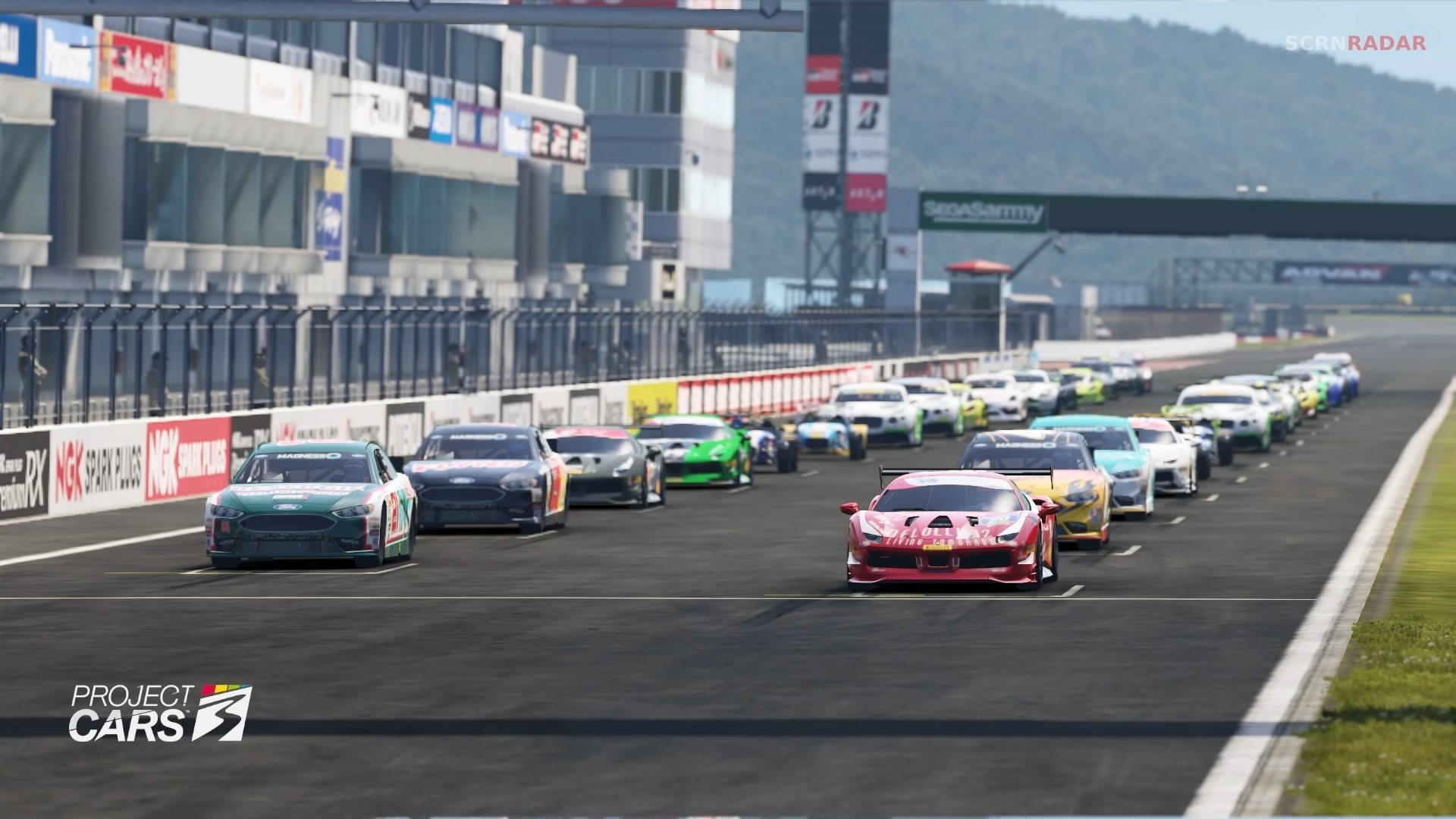
Races themselves are typically short, often lasting just two to three laps. This design forces players to aggressively push through the grid from the back, leaving little room for strategy or long-term racecraft. The absence of qualifying sessions and pit stops further simplifies the experience, removing elements that defined earlier games.
As a result, progression can feel repetitive. Instead of mastering tracks or improving driving skills, players may find themselves chasing objectives just to unlock better cars. This shift makes the career mode accessible but less rewarding for those seeking depth.
One area where Project CARS 3 shows improvement is its customization system. Cars are divided into performance tiers, allowing players to upgrade their favorite vehicles instead of constantly switching to new ones. This system adds flexibility and encourages long-term investment in a single car.
Upgrades include enhancements to power, handling, braking, and weight reduction. These changes directly impact performance, making progression feel more tangible. However, visual customization is limited, which may disappoint players expecting deeper personalization options.
The ability to transform a basic car into a competitive machine is a highlight. It adds a sense of ownership and progression that was less emphasized in previous titles. Still, the lack of meaningful visual changes reduces the overall appeal of customization.
Driving Physics: Simulation Meets Arcade
The most controversial aspect of Project CARS 3 is its driving physics. Earlier games in the series were known for their realistic handling and demanding gameplay. This entry, however, leans heavily into arcade-style mechanics.
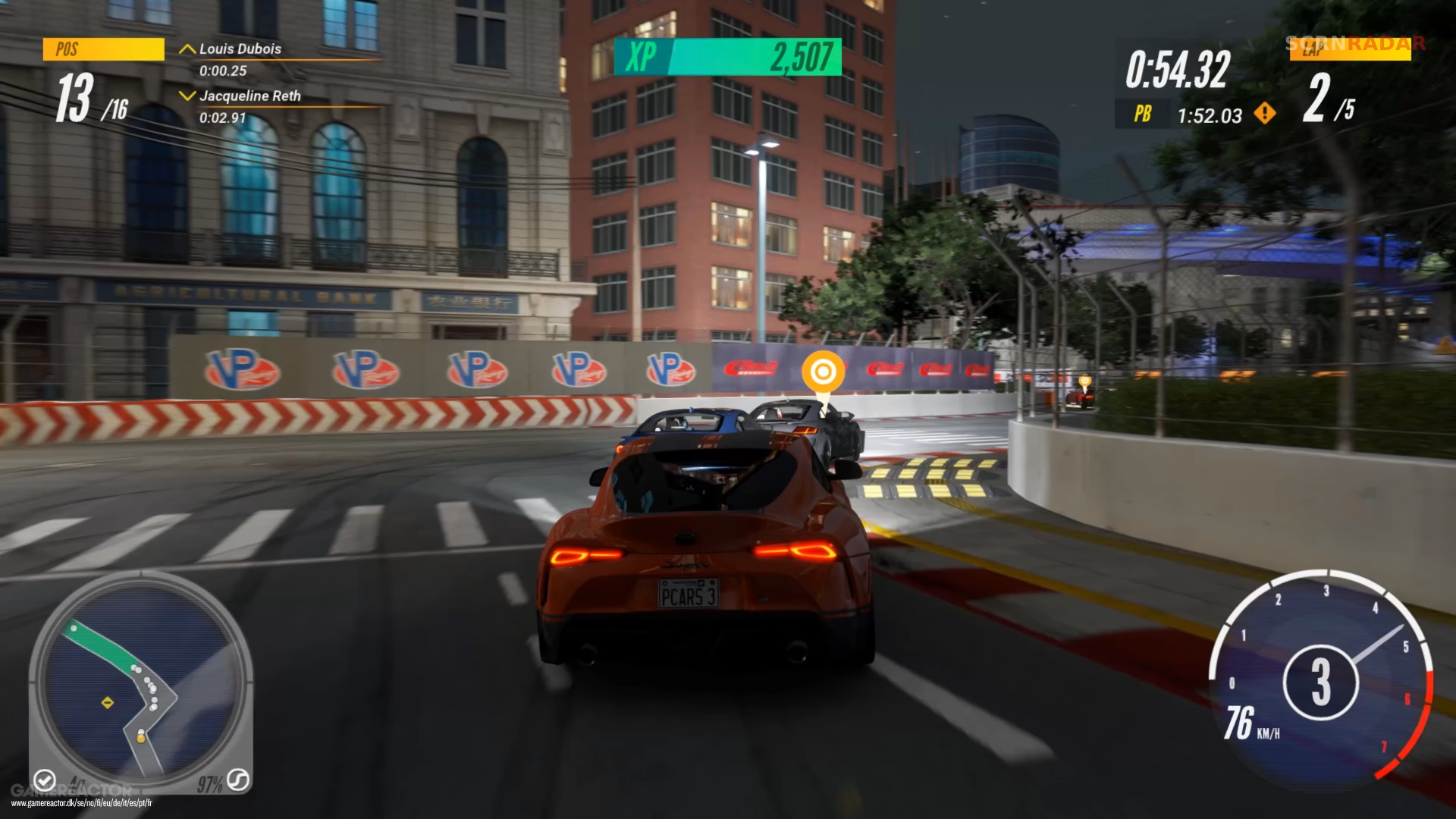
Cars are easier to control, with a noticeable reduction in punishment for mistakes. Understeer and oversteer are present but forgiving, allowing players to recover quickly from errors. This makes the game more accessible, especially for newcomers using controllers.
However, this accessibility comes at the cost of realism. Experienced players may find the handling lacks depth and authenticity. The connection between car and track feels less precise compared to simulation-focused titles.
Interestingly, higher-tier cars such as GT racers offer a more refined driving experience. They provide better balance and responsiveness, hinting at the game’s potential. Still, the physics system prioritizes fun over realism, which may not satisfy dedicated sim racers.
AI behavior in Project CARS 3 is functional but inconsistent. Opponents generally follow racing lines, but they can be overly aggressive and unpredictable. Collisions are common, and AI drivers may ignore the player’s position during close battles.
Difficulty settings create another challenge. Lower AI levels make it easier to progress but reduce competition. Higher settings provide better racing but make it difficult to achieve objectives within short race lengths.
This imbalance affects the experience. Instead of engaging in strategic battles, players often rely on aggressive overtaking to reach the front quickly. The result is a chaotic racing environment that prioritizes action over realism.
Graphics are one of the most criticized aspects of Project CARS 3, especially on consoles. Despite releasing on capable hardware, the game often appears visually outdated. Textures can look blurry, and environmental details lack sharpness.
Car interiors, in particular, suffer from poor detailing. Dashboards and cockpit views feel less polished compared to competing racing games. Weather effects, such as rain, further reduce clarity, making tracks appear muddy and indistinct.
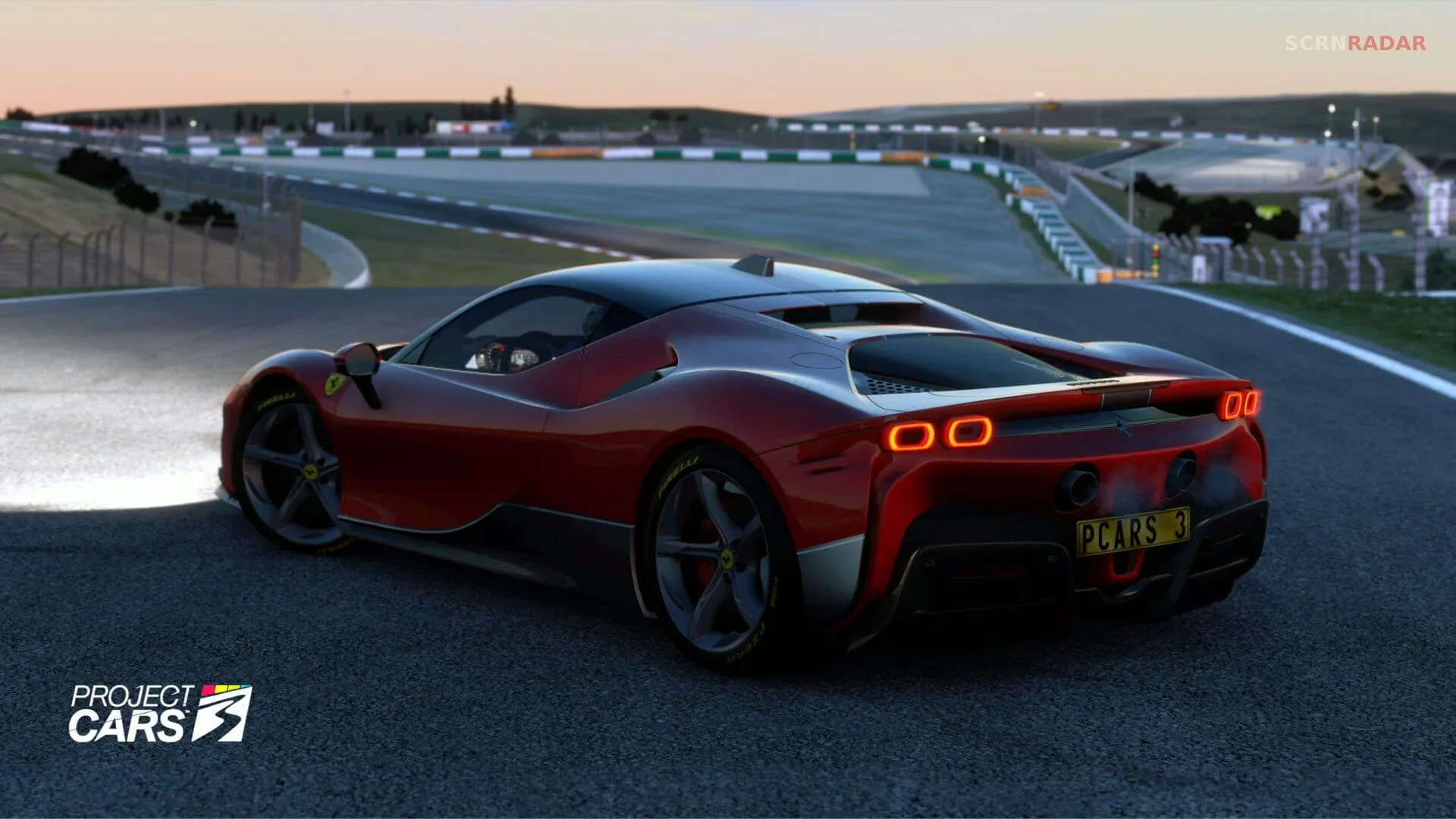
While the game still offers a wide range of licensed tracks and vehicles, the visual presentation fails to match modern standards. This is especially noticeable when compared to titles like Forza Horizon 4, which deliver significantly better visuals.
Sound Design and Audio Experience
Sound design is another area where the game falls short. Engine noises lack the intensity and character expected from high-performance cars. Compared to earlier entries in the series, the audio feels muted and less immersive.
While this may not be a dealbreaker for all players, it contributes to the sense that the game has been simplified. In racing games, sound plays a crucial role in immersion, and its absence is noticeable here.
Beyond career mode, Project CARS 3 offers multiplayer racing, but it does not significantly boost the experience. The core gameplay remains the same, with short races and simplified mechanics shaping the feel.
Interestingly, the game becomes more enjoyable when approached as an arcade racer. Using a controller and embracing its casual design can reveal a different kind of fun. The combination of licensed tracks, varied cars, and accessible handling creates moments of excitement.
However, this shift also raises an important question. By moving away from simulation, the game enters direct competition with established arcade racers. In this space, it struggles to stand out due to its weaker graphics and inconsistent design choices.
Who Should Play Project CARS 3?
Project CARS 3 is a game caught between two identities. It tries to transition from a hardcore simulation series into a more accessible racing experience, but the result feels uneven.
For casual players who enjoy quick races, straightforward progression, and controller-friendly gameplay, the game offers some value. Its customization system and variety of cars provide enough content for light entertainment.
However, for sim racing enthusiasts, the game may feel like a major step backward. The simplified physics, short races, and lack of depth reduce the sense of realism that defined the franchise.
In the end, Project CARS 3 is not necessarily a bad racing game, but it is a disappointing sequel. It trades depth for accessibility without fully excelling in either area. If you approach it with the right expectations, you may find some enjoyment. Otherwise, there are stronger alternatives that deliver a more complete racing experience.