The Season 1 finale of Pretty Little Liars: Original Sin delivers a clear and structured resolution to its central mystery while reinforcing the show’s focus on generational trauma and accountability. Unlike the often complex and twist-heavy reveals of its predecessor, this series opts for a more direct explanation, tying the present-day terror in Millwood to a specific tragedy from the past.
At the center of the story is the masked figure known as “A,” also referred to as the Leatherface killer. In the finale, “A” is revealed to be Archie Waters, a physically imposing and largely silent character who has carried out the violent attacks throughout the season.
Archie’s role is not random. He is directly connected to Angela Waters, whose story forms the foundation of the entire narrative. Angela was a student who suffered severe bullying years before the current timeline, and Archie is her son.
However, Archie is not acting independently. The real mastermind behind the attacks is Sheriff Tom Beasley. His involvement reframes the events of the season, shifting the narrative from a simple masked killer story to a calculated act of long-term revenge. Sheriff Beasley is revealed to be Angela’s father, and his motive is rooted in anger over how his daughter was treated and ultimately lost.
The finale revisits what happened to Angela Waters in detail. Years earlier, she was targeted and humiliated by a group of girls during their high school years.
Those girls later became the mothers of the current protagonists, including Imogen, Tabby, Noa, Faran, and Mouse. The most significant incident occurred during a New Year’s Eve party in 1999, where Angela was publicly shamed and isolated. The emotional and psychological impact of that night led to her eventual death by suicide.
This past event becomes the driving force behind Sheriff Beasley’s actions. Instead of confronting the women directly, he chooses to punish their daughters. This decision is central to the show’s themes.
The daughters are not responsible for what happened to Angela, yet they become the targets of a revenge plan rooted in unresolved trauma. Archie is used as the physical enforcer of this plan, carrying out the attacks under his father’s direction.
The final confrontation brings these elements together. Imogen plays a key role in uncovering the truth and ultimately faces both Sheriff Beasley and Archie. The situation escalates into a violent encounter that exposes the full extent of Beasley’s plan.
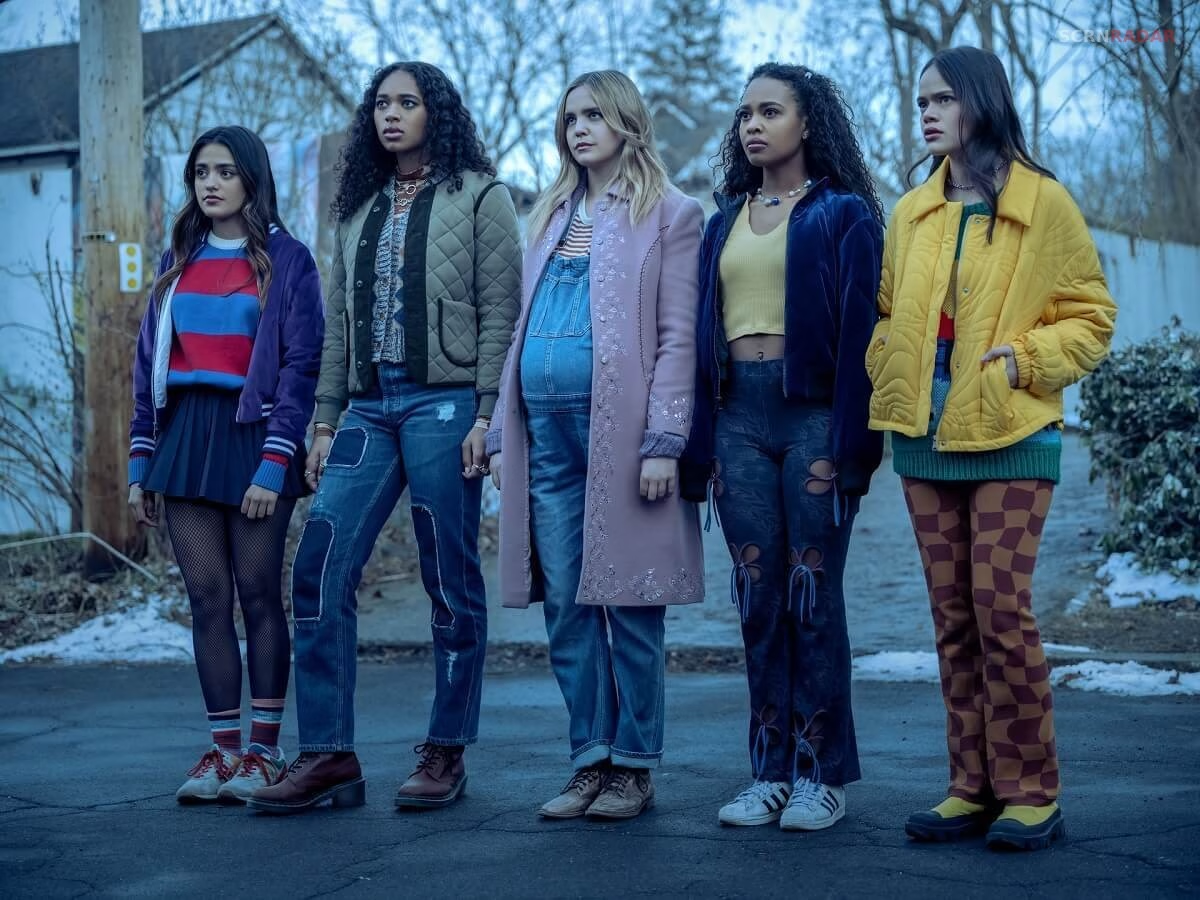
During this confrontation, Sheriff Beasley is killed, effectively ending his role as the orchestrator of the attacks. Archie survives and is taken into custody, providing partial closure to the immediate threat.
One of the notable aspects of the finale is its relatively straightforward approach to the reveal. While the original Pretty Little Liars often relied on multiple identities and shifting narratives, Original Sin focuses on a single, coherent explanation. This makes the ending easier to follow and gives the story a more grounded tone, even as it maintains elements of horror and suspense.
In addition to resolving the main mystery, the finale also addresses several character arcs. A key subplot involves Imogen’s pregnancy. Throughout the season, her situation reflects both emotional vulnerability and the pressure of responsibility. In the final episode, she decides to give her baby up for adoption. This decision is presented as a practical and thoughtful choice, rather than a purely emotional one.
The adoption also creates a direct link to the broader franchise. The baby is adopted by Aria Montgomery and Ezra Fitz, connecting the series to the events of Pretty Little Liars. This detail reinforces that Original Sin exists within the same narrative universe, even though it introduces a new cast and setting.
Thematically, the ending emphasizes the long-term consequences of silence and inaction. The mothers’ decision to hide their role in Angela’s suffering allowed that trauma to persist and evolve into something more destructive.
By revealing the truth, the finale suggests that accountability is necessary to break this cycle. However, it does not present this as a complete resolution. The damage caused by these events cannot be undone, and the characters are left to deal with the aftermath.
Archie’s fate also contributes to this sense of unresolved tension. Although he is captured, his survival leaves open the possibility that the threat is not entirely over. This choice aligns with the tone of the series, which avoids offering a fully closed ending and instead leaves room for continuation.
Season 1 ending of Pretty Little Liars: Original Sin provides a focused and coherent end to its central mystery while reinforcing its core themes. By linking past actions to present consequences, the series presents a narrative where accountability is unavoidable, and revenge is shown to be destructive rather than satisfying. The result is an ending that balances resolution with lingering uncertainty, setting the stage for future developments without undermining the story it has already told.