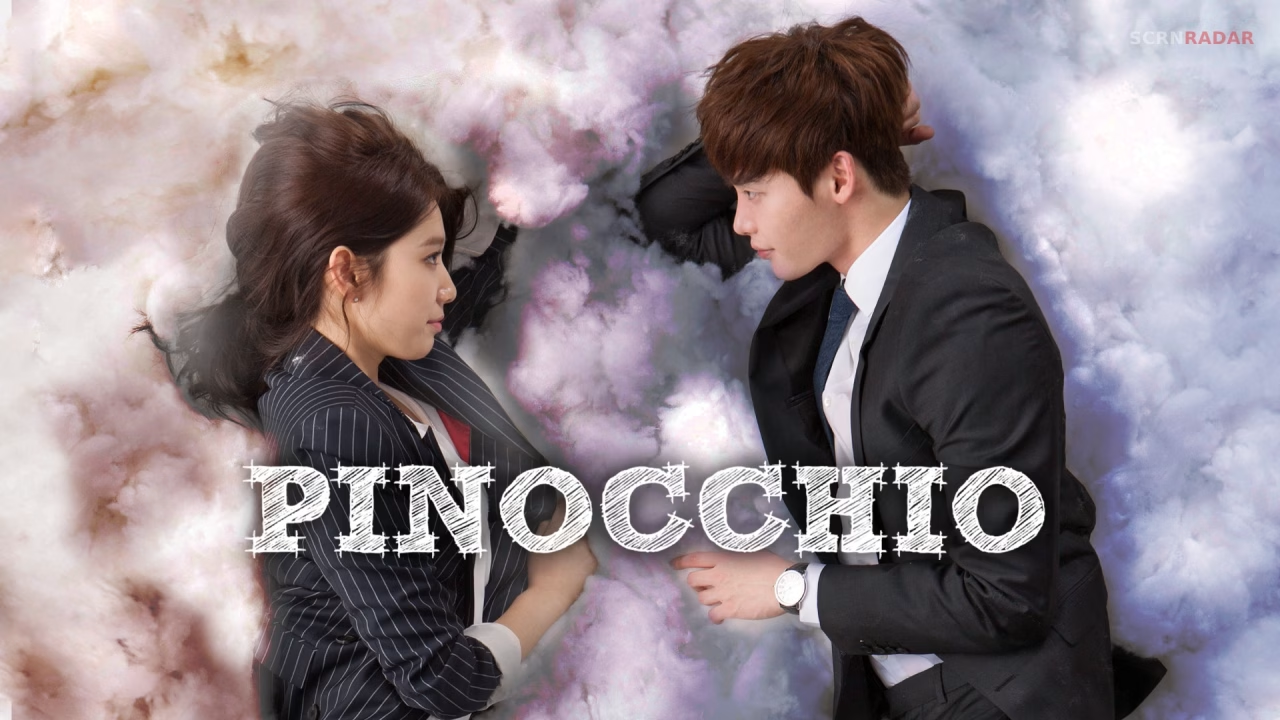
Pinocchio remains one of the most memorable Korean dramas of the 2010s because it combines romance, journalism, family tragedy, and social commentary into a deeply emotional narrative. Starring Lee Jong-suk and Park Shin-hye, the series explores the consequences of misinformation and the responsibility that comes with reporting the truth. According to official drama summaries and reviews from AsianWiki and IMDb, the story centers on a young man whose family is destroyed by unethical media coverage and his complicated journey back into the journalism industry.
What separates Pinocchio from many romantic K-dramas is its strong emotional core. While the romance is important, the series focuses equally on trauma, revenge, and moral responsibility. The drama consistently questions whether reporters truly serve justice or sometimes create harm in pursuit of headlines.
More than a decade after its release, Pinocchio still holds up because of its writing, character development, and emotional storytelling. It is not just a love story but also a critique of sensationalized media culture.
Plot Overview: A Story Built on Tragedy and Truth
The story begins with Ki Ha-myung, a gifted young boy whose life is destroyed after a factory fire leads to false media accusations against his firefighter father. Reports from AsianWiki and Netflix summaries explain that irresponsible journalism portrays his father as a coward who abandoned his team, even though the truth is far more complicated.
The public backlash devastates Ha-myung’s family. His mother eventually attempts suicide, and Ha-myung is presumed dead after falling into the sea. However, he survives and is rescued by an elderly man who mistakes him for his deceased son. Ha-myung adopts a new identity as Choi Dal-po and spends years hiding his intelligence and painful past.
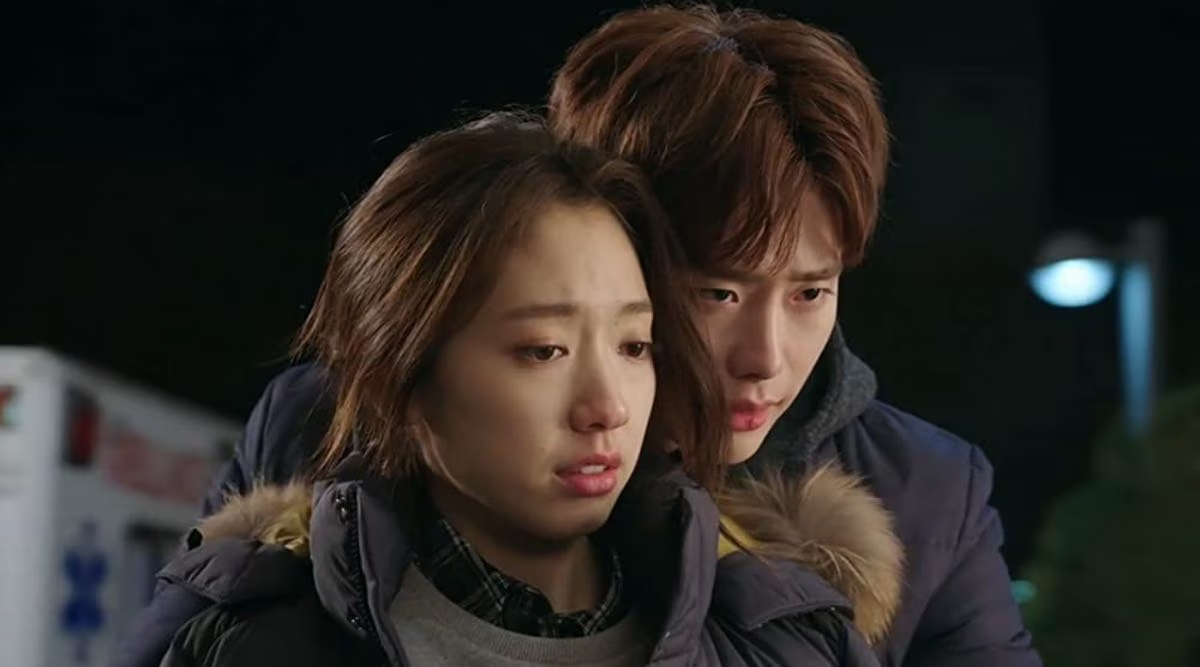
Dal-po grows up alongside Choi In-ha, the granddaughter of the man who rescued him. Ironically, In-ha dreams of becoming a reporter despite suffering from “Pinocchio Syndrome,” a fictional condition that causes her to hiccup whenever she lies. As adults, both characters enter the journalism world for very different reasons. In-ha wants to pursue honest reporting, while Dal-po seeks to expose the truth behind the tragedy that destroyed his family.
The series gradually evolves from a revenge story into a broader exploration of truth, ethics, and forgiveness.
The Strength of the Writing and Themes
One of the biggest reasons Pinocchio remains highly regarded is its writing. Screenwriter Park Hye-ryun builds the story around media ethics rather than using journalism simply as a backdrop. Reviews and retrospectives consistently praise the drama for exploring how misinformation can permanently damage lives.
The series repeatedly challenges the idea of “truth” in media. Reporters in the drama often face pressure to prioritize speed, emotional impact, or ratings over verification. This creates moral conflicts that feel surprisingly relevant even years after the drama aired.
The fictional Pinocchio Syndrome itself becomes symbolic. In-ha physically cannot lie, making her a contrast to a media industry filled with manipulation and half-truths. This concept could have felt gimmicky, but the drama uses it effectively to reinforce its themes.
The revenge angle also adds emotional depth. Dal-po’s anger toward reporters, especially In-ha’s mother Song Cha-ok, creates constant tension. However, the show avoids turning characters into simple villains, instead presenting morally complicated individuals shaped by ambition, guilt, and regret.
Lee Jong-suk’s Performance as Choi Dal-po
Lee Jong-suk delivers one of the strongest performances of his career as Choi Dal-po/Ki Ha-myung. His character is emotionally layered, balancing intelligence, bitterness, vulnerability, and compassion throughout the series.
Dal-po initially pretends to be foolish and lazy to hide his identity, but beneath that facade is someone deeply traumatized by public humiliation and personal loss. Lee Jong-suk effectively portrays both sides of the character, making Dal-po feel believable and emotionally grounded.

Many reviews highlight how well he handles the drama’s emotional scenes. Whether expressing quiet heartbreak or controlled anger, his performance consistently carries emotional weight. Reddit discussions and retrospective reviews frequently mention his chemistry with Park Shin-hye as one of the drama’s strongest elements.
His character arc is also satisfying because Dal-po gradually moves from revenge toward understanding what honest journalism should actually represent.
Park Shin-hye as Choi In-ha
Park Shin-hye’s portrayal of Choi In-ha gives the drama much of its warmth and emotional balance. In-ha could have easily become a stereotypical romantic lead, but she feels genuinely likable because of her determination and sincerity.
Her Pinocchio Syndrome creates both comedic and emotional moments throughout the series. The hiccups often add humor, but they also reinforce her inability to hide her true feelings. According to multiple reviews and cast discussions, Park Shin-hye’s performance helped make the character relatable rather than exaggerated.
In-ha’s relationship with her mother adds another emotional layer. Song Cha-ok is directly connected to the tragedy that destroyed Dal-po’s family, creating a painful conflict between love and resentment. This dynamic gives the romance real emotional stakes instead of relying on artificial misunderstandings.
Park Shin-hye also handles the transition from naive dreamer to responsible reporter convincingly. In-ha matures significantly across the series without losing the optimism that defines her character.
Supporting Characters and Emotional Depth
The supporting cast plays a major role in making Pinocchio emotionally engaging. Kim Young-kwang as Seo Beom-jo adds complexity through his quiet personality and conflicted family background. Meanwhile, Lee Yu-bi provides energy and humor as Yoon Yoo-rae.
However, one of the most important characters is Song Cha-ok, played by Jin Kyung. She represents the dangers of irresponsible journalism while also being portrayed as a deeply flawed human being rather than a one-dimensional antagonist.

The family dynamics throughout the series are especially strong. Dal-po’s adoptive grandfather and uncle create many heartfelt moments that balance the heavier themes. These relationships help the drama feel emotionally rich instead of overwhelmingly dark.
Reviews from IMDb users and drama blogs frequently praise the ensemble cast for making the world feel authentic and emotionally layered.
Romance and Chemistry
The romance between Dal-po and In-ha is one of the drama’s highlights because it develops naturally over time. Since they grow up together, their relationship already carries emotional familiarity before romantic feelings fully emerge.
Unlike many melodramatic K-dramas, Pinocchio avoids excessive misunderstandings or forced love triangles. The emotional tension comes primarily from their family history and conflicting feelings toward journalism.
Lee Jong-suk and Park Shin-hye’s chemistry was widely praised during the drama’s original broadcast and remains one of the reasons the series is still recommended today. Their interactions feel emotionally sincere rather than overly stylized.
The romance also works because it supports the main themes instead of distracting from them. Their relationship constantly ties back to questions of truth, trust, and forgiveness.
Weaknesses: Pacing and Melodrama
Despite its strengths, Pinocchio is not perfect. Some episodes in the middle section move slower than necessary, particularly when the drama focuses heavily on newsroom competition.
The series occasionally leans too far into melodrama, especially during emotional confrontations. Certain plot twists can also feel overly convenient, which slightly weakens the realism the show otherwise maintains.
Additionally, viewers expecting a fast-paced thriller may find the drama more emotionally driven than suspenseful. While the revenge storyline is important, the series prioritizes character development over constant plot twists. Still, these weaknesses rarely overshadow the drama’s emotional impact or thematic strength.
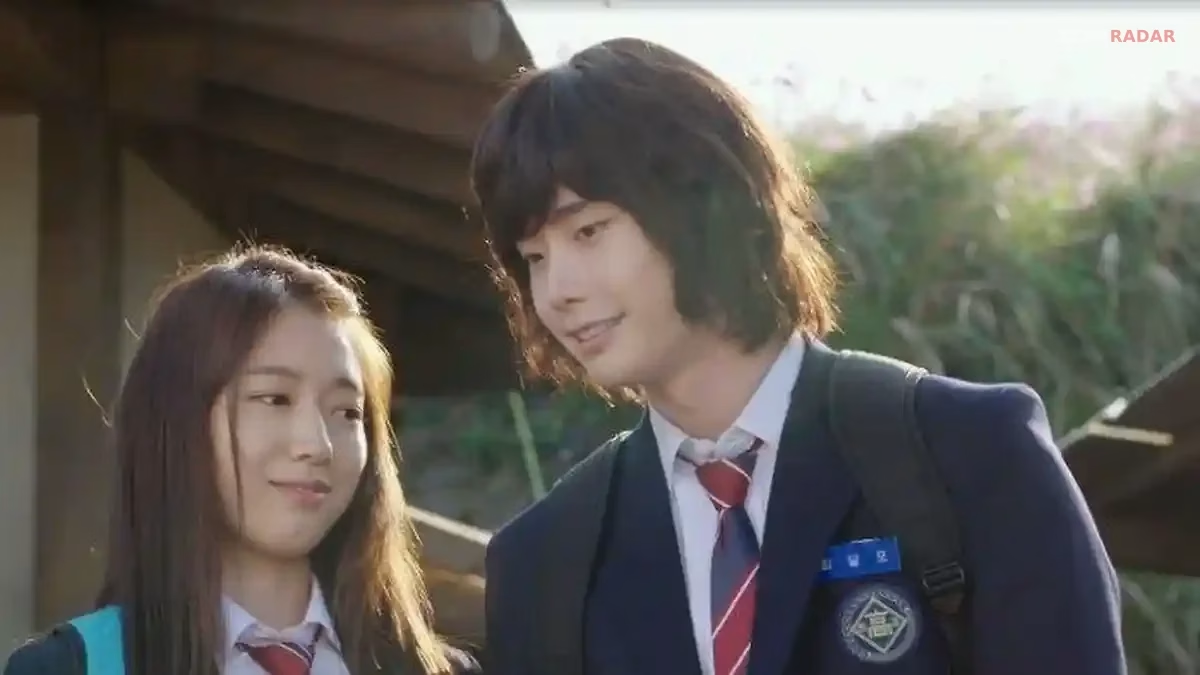
Another aspect that deserves recognition is how Pinocchio handles its emotional resolutions, particularly in the later episodes. Instead of relying on dramatic revenge or punishment, the story leans toward accountability and personal growth.
Characters are forced to confront the consequences of their actions, especially those in positions of power within the media industry. This approach aligns with the drama’s central message that truth is not just about exposing others, but also about acknowledging one’s own mistakes. The resolution feels earned because it is rooted in character development rather than sudden plot twists.
The drama also benefits from strong direction and cinematography, which enhance its emotional storytelling. Scenes involving newsroom tension, emotional confrontations, and quiet character moments are framed in a way that emphasizes realism.
The use of flashbacks is particularly effective, gradually revealing key details without overwhelming the audience. This careful pacing allows viewers to connect with the characters on a deeper level. Combined with a memorable soundtrack that complements the tone of the series, Pinocchio creates a viewing experience that remains impactful long after the final episode.
Pinocchio remains one of the strongest journalism-focused K-dramas because it combines romance with meaningful social commentary. Its exploration of media ethics, truth, and personal responsibility gives the series emotional depth that many romantic dramas lack.
The performances from Lee Jong-suk and Park Shin-hye lift the material further, creating characters who feel emotionally authentic and memorable. Combined with strong writing and layered relationships, the drama succeeds as both an emotional romance and a critique of sensational journalism.
While the pacing occasionally slows and some melodramatic elements feel exaggerated, the experience remains compelling. More importantly, the themes explored in Pinocchio still feel relevant today, particularly in an era where misinformation spreads rapidly through media and social platforms.
For viewers looking for a K-drama that balances romance with emotional storytelling and social relevance, Pinocchio continues to be an easy recommendation.