Once Upon a Time in America is not just a gangster film. Directed by Sergio Leone, it is a sprawling, melancholic exploration of friendship, betrayal, and the passage of time. Spanning several decades, the film follows David “Noodles” Aaronson, played by Robert De Niro, as he navigates the rise and fall of his criminal empire alongside his childhood friends.
What makes the film truly unforgettable is its ending. Unlike conventional crime dramas that tie up loose ends neatly, Once Upon a Time in America leaves viewers with ambiguity, symbolism, and unanswered questions. The final moments, especially Noodles’ mysterious smile, have sparked debate for decades.
Is the ending real, or is it a dream? Did Max actually die? And what does that final shot truly mean?
Let’s break down the ending in detail and uncover the deeper meaning behind one of cinema’s most enigmatic finales.
The Timeline Twist: Understanding the Film’s Nonlinear Structure
Before looking into the ending, it is essential to understand the film’s nonlinear storytelling.
The narrative moves across three timelines: Noodles’ childhood in the early 1900s, his rise during Prohibition, and his return as an older man in the 1960s. These timelines are not presented in a straightforward manner. Instead, they blend into one another, often triggered by memories, sounds, or emotional cues.
This fragmented structure is key to interpreting the ending. The film is less about what objectively happened and more about how Noodles remembers his past.
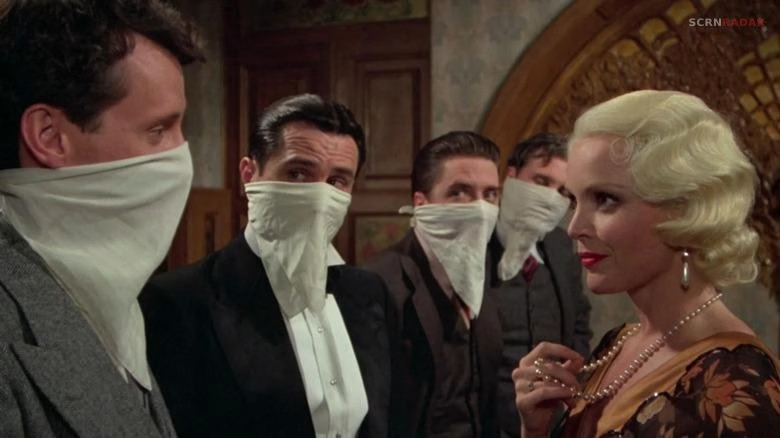
Memory, in this case, is unreliable. This idea becomes crucial when analyzing whether the final scenes represent reality or a subjective dream.
One of the central mysteries of the ending revolves around Max, played by James Woods.
In the earlier timeline, Max appears to die during a botched robbery after Noodles tips off the police. Consumed by guilt, Noodles disappears for years.
However, in the 1960s timeline, Noodles encounters a powerful politician named Secretary Bailey, who is heavily implied to be Max under a new identity. This revelation reframes everything.
Max did not die. Instead, he orchestrated his own escape, leaving Noodles to believe he was responsible for his death. This betrayal adds another layer of tragedy to their friendship.
In their final confrontation, Max asks Noodles to kill him, seeking redemption or perhaps an escape from his own guilt. Noodles refuses. Instead, he chooses to walk away.
Moments later, Max appears to vanish behind a garbage truck, leaving his fate uncertain. Did he commit suicide? Did he escape again? The film deliberately avoids a clear answer.
Noodles’ Decision: Why He Refuses to Kill Max
Noodles’ refusal to kill Max is one of the most important moments in the film.
Throughout the story, Noodles is haunted by guilt. He believes he caused the deaths of his closest friends. When he learns the truth, he has an opportunity for revenge or closure. But he rejects both.
By refusing to acknowledge Max’s new identity, Noodles essentially denies him the resolution he seeks. He chooses not to play a role in Max’s narrative anymore. This decision reflects growth.
Noodles finally breaks free from the cycle of violence and betrayal that defined his life. Instead of seeking justice through revenge, he chooses detachment. It is a quiet but powerful form of closure.
One of the most popular interpretations of the ending is the “opium dream theory.”
The film concludes with a shot of Noodles lying in an opium den, smiling as he drifts into a haze. This scene mirrors an earlier moment in the timeline, suggesting a possible loop.
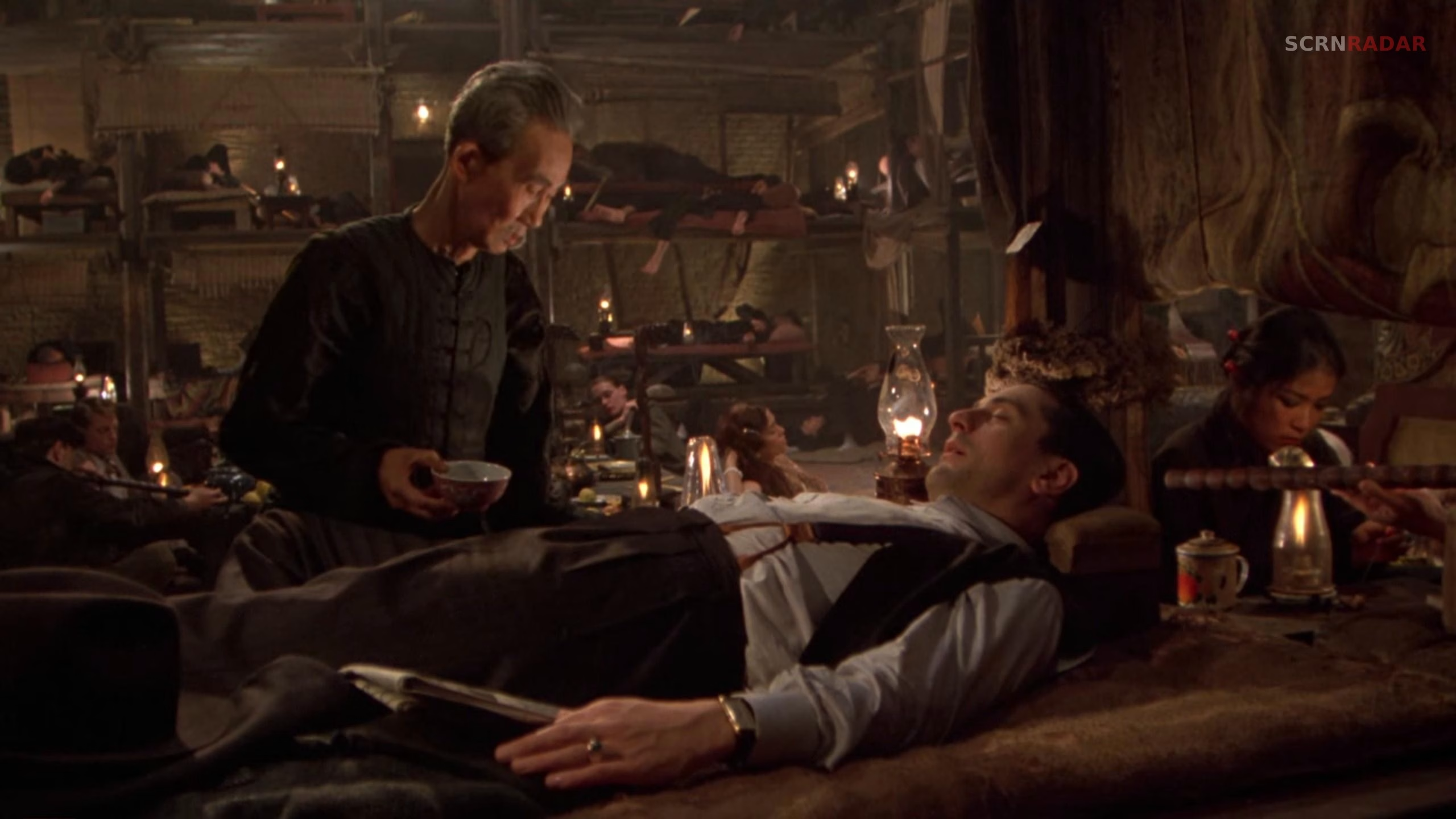
According to this theory, everything that happens after Noodles enters the opium den is a dream or hallucination.
In this interpretation, the 1960s storyline, including Max’s return, never actually happens. It is Noodles’ subconscious attempting to process his guilt and imagine a different outcome.
This would explain the surreal tone of the later scenes and the unresolved nature of the ending. However, the film never confirms this theory.
It remains one of several possible interpretations, leaving viewers to decide what they believe.
The Meaning of the Final Smile
The final shot of Noodles smiling is one of the most discussed moments in film history. What does it mean?
If the opium dream theory is true, the smile could represent escape. Noodles retreats into a fantasy where he can confront his past and find a form of closure.
If the events are real, the smile might reflect acceptance. After years of guilt and regret, Noodles finally lets go. There is also a darker interpretation.
The smile could suggest denial. Instead of facing reality, Noodles chooses to lose himself in illusion, avoiding the pain of his past.
What makes the ending so powerful is that all these interpretations are valid.
The film does not provide a definitive answer because it is not about the answer. It is about the emotional experience.
The ending of Once Upon a Time in America ties together several key themes that run throughout the film.
Memory plays a central role. The nonlinear structure emphasizes how the past is reconstructed rather than recalled accurately. Noodles’ perspective shapes the story, making it deeply subjective.
Regret is another major theme. Noodles spends his life haunted by his choices. Even when he learns the truth, the emotional weight remains.
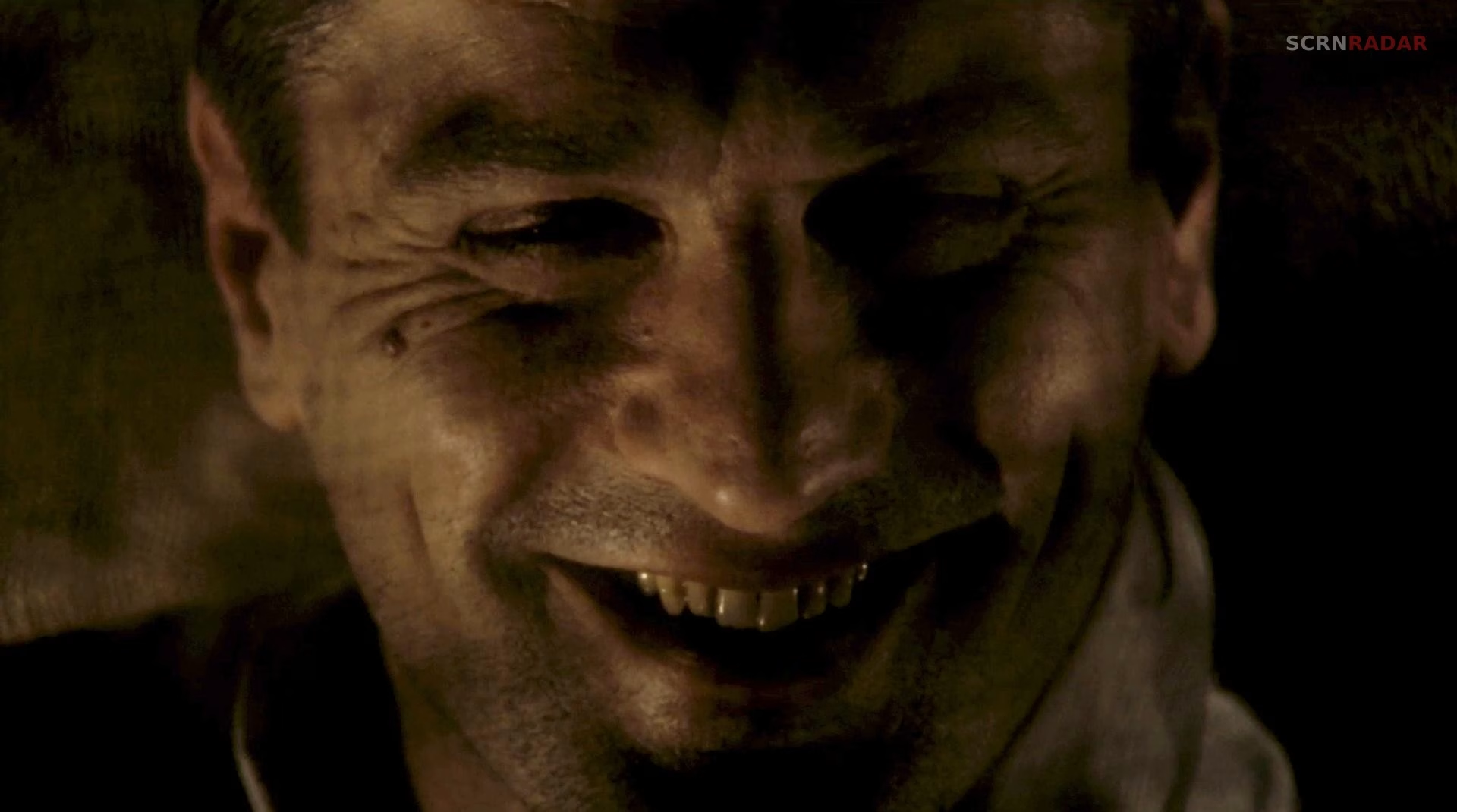
Illusion versus reality is perhaps the most important theme. The film constantly blurs the line between what is real and what is imagined. This ambiguity is reflected in the ending, where viewers are left questioning everything they have seen.
These themes boost the film beyond a traditional gangster story. It becomes a meditation on time, identity, and the human condition.
Why the Ending Still Resonates Today
Decades after its release, Once Upon a Time in America continues to spark discussion. The ending is a major reason for this lasting impact.
In an era where many films aim for clarity and resolution, this film embraces ambiguity. It trusts the audience to engage with its themes and draw their own conclusions.
This approach makes the viewing experience more personal. Each interpretation reveals something about the viewer as much as the film itself.
The emotional weight of Noodles’ journey, combined with the unanswered questions, ensures that the ending lingers long after the credits roll.