In a streaming world filled with high-stakes thrillers and glossy romances, My Liberation Notes (widely known as My Liberation Diary) remains a rare, introspective gem. Since its release in 2022, the series has steadily gained recognition for its deeply human storytelling, and by 2026, it has cemented its place as one of the most emotionally resonant Korean dramas of its time.
Created by Park Hae-young and directed by Kim Seok-yoon, the show follows three siblings guiding monotonous routines, strained relationships, and an unshakable sense of emptiness. Unlike conventional K-dramas driven by dramatic twists, this series leans into silence, stillness, and subtle emotional shifts.
What makes My Liberation Notes so powerful even today is its honesty. It doesn’t attempt to fix its characters or rush their journeys. Instead, it invites viewers to sit with discomfort, reflect on their own lives, and perhaps find a quiet sense of understanding.
A Story That Finds Meaning in the Ordinary
At first glance, the narrative appears deceptively simple. The Yeom siblings, played by Lee Min-ki, Kim Ji-won, and Lee El, live in a rural area far from Seoul, enduring long commutes and emotionally stagnant lives. Their days blur together, marked by repetitive routines and quiet dissatisfaction.
However, the arrival of Son Suk-ku as the enigmatic Mr. Gu subtly shifts the emotional world. His connection with Mi-jeong unfolds in a way that feels organic and unforced, adding depth without overshadowing the core narrative.
Rather than relying on plot-driven tension, the drama thrives on moments that might seem insignificant in another story. A conversation during a bus ride, a shared silence, or even the act of walking home becomes meaningful. By 2026, audiences will have increasingly come to appreciate this kind of storytelling, especially as more people relate to the quiet struggles of everyday life.
One of the reasons My Liberation Diary remains relevant is its exploration of themes that feel even more significant today. The concept of “liberation” runs through the entire series, but it is never presented as a grand or dramatic transformation. Instead, it is subtle and deeply personal.
Mi-jeong’s desire to be “worshipped” is one of the show’s most talked-about elements. It isn’t about vanity but about longing for acknowledgment in a world that often overlooks quiet individuals. In 2026, when conversations around emotional validation and self-worth are more open, this idea feels strikingly modern.
The series also captures the weight of burnout with remarkable accuracy. The endless cycle of work, commute, and exhaustion is portrayed without exaggeration, making it painfully relatable. Even as work cultures evolve, the emotional fatigue depicted in the drama still mirrors real-life experiences.
Equally important is the portrayal of loneliness. Despite being surrounded by people, the characters struggle to form meaningful connections. The show suggests that true connection is rare but deeply transformative when it happens, a message that continues to resonate in an increasingly digital world.
Performances That Feel Effortlessly Real
The emotional impact of My Liberation Diary is largely driven by its cast, who deliver performances that feel understated yet deeply affecting. Kim Ji-won stands out as Mi-jeong, capturing the character’s internal conflict with minimal dialogue. Her performance is quiet but powerful, allowing viewers to feel every unspoken emotion.
Opposite her, Son Suk-ku brings a layered intensity to Mr. Gu. His portrayal balances mystery with vulnerability, making the character both intriguing and relatable. Their on-screen dynamic is one of the most memorable aspects of the series, not because of dramatic moments but because of its authenticity.
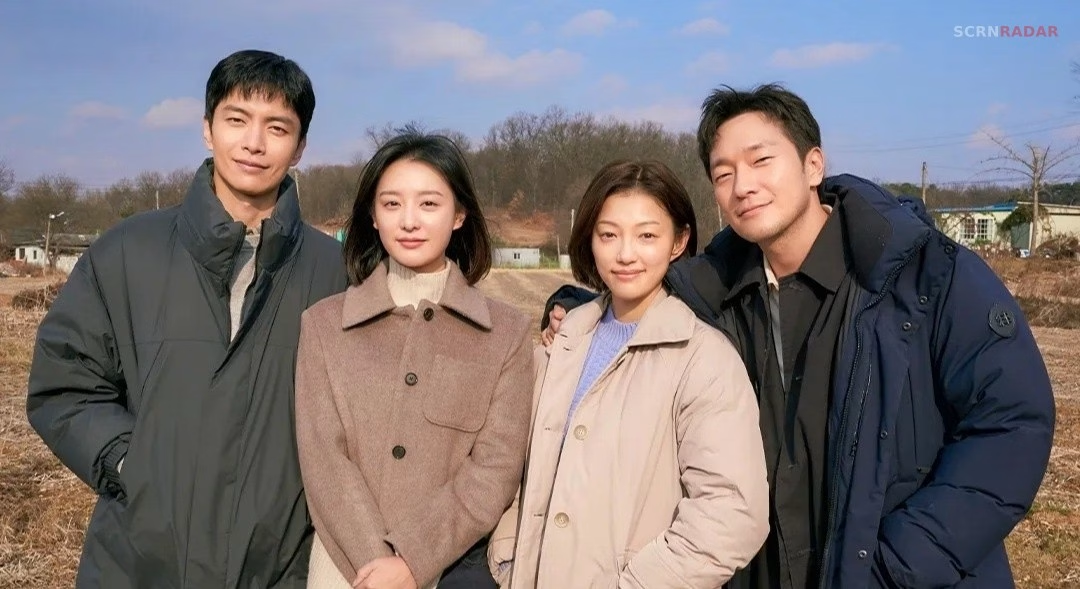
Meanwhile, Lee Min-ki and Lee El add texture to the narrative. Their characters bring subtle humor and grounded realism, preventing the story from becoming overly heavy while still maintaining its emotional depth.
Director Kim Seok-yoon adopts a restrained approach that perfectly complements the script. The pacing is deliberately slow, allowing the audience to fully absorb each moment. Scenes often linger longer than expected, creating space for reflection.
The visual style emphasizes simplicity. Quiet rural landscapes, modest interiors, and long, unbroken shots mirror the characters’ emotional states. This minimalism enhances the storytelling rather than distracting from it.
By 2026, this kind of understated direction feels increasingly refreshing. In contrast to visually overwhelming productions, My Liberation Diary demonstrates how less can often be more when it comes to emotional storytelling.
The writing by Park Hae-young is perhaps the show’s greatest strength. Known for her ability to craft deeply introspective narratives, she creates dialogue that feels both poetic and grounded in reality.
Many lines from the series continue to circulate online, often shared by viewers who find their own experiences reflected in the words. The script avoids melodrama, instead focusing on honest, sometimes uncomfortable truths.
What sets the writing apart is its patience. The story doesn’t rush toward resolution or force character development. Instead, it allows growth to happen gradually, mirroring the way change occurs in real life. This authenticity is a key reason why the drama continues to resonate years after its release.
Why It Still Matters in 2026
In 2026, My Liberation Diary feels more relevant than ever. As audiences increasingly seek meaningful content over pure entertainment, the series stands out as a reminder of the power of quiet storytelling.
Its themes of self-discovery, emotional fatigue, and the search for connection transcend cultural boundaries. Whether you are watching it for the first time or revisiting it, the experience often feels personal, as if the story is speaking directly to you.
The drama has also influenced a wave of introspective K-dramas that attempt to replicate its tone. However, few have managed to capture the same level of authenticity and emotional depth.
My Liberation Diary is not designed for instant gratification. It demands patience and emotional investment, but it rewards viewers with a deeply moving experience.
From a 2026 perspective, it remains one of the most impactful Korean dramas of the past decade. Its strength lies not in dramatic storytelling but in its ability to reflect life as it is, quiet, complicated, and often unresolved.
For those willing to embrace its slow pace, My Liberation Diary offers something rare: a sense of understanding that lingers long after the final episode.