Minions: The Rise of Gru arrived with massive expectations after the global success of the Despicable Me franchise and the original Minions spin-off. By the time this prequel released, the yellow chaos-makers had already become one of modern animation’s most recognizable mascots. However, while audiences clearly loved the Minions’ absurd humor and visual comedy, there was also growing concern about whether the franchise had become too reliant on noise and randomness.
The Rise of Gru attempts to answer that criticism by shifting more focus toward young Gru himself. Set in the 1970s, the movie explores how an 11-year-old Gru begins his journey toward becoming the iconic supervillain audiences know from the Despicable Me films. Alongside the Minions, Gru faces criminal organizations, martial arts training, and his complicated mentorship with Wild Knuckles.
The result is a fast-paced animated adventure filled with vibrant visuals, slapstick humor, and nostalgic style. Yet beneath all the entertainment, the film raises an important question: does this prequel genuinely expand the franchise in a meaningful way, or is it simply another excuse for chaotic Minion antics? Let’s break down what works, what does not, and whether Minions: The Rise of Gru lives up to the franchise legacy.
What Minions: The Rise of Gru is about
Set years before the events of Despicable Me, the story follows a young Gru, voiced by Steve Carell, who dreams of becoming the world’s greatest supervillain. Unlike the mature mastermind seen in later films, this version of Gru is awkward, overly ambitious, and still trying to prove himself.
Gru idolizes a notorious criminal team called the Vicious 6, a supervillain group led by Belle Bottom after the apparent downfall of legendary villain Wild Knuckles. Hoping to join the organization, Gru attends an interview with the group but quickly embarrasses himself. However, after stealing a powerful zodiac stone connected to the Vicious 6, Gru suddenly becomes the target of dangerous criminals across the city.
At the same time, the Minions attempt to rescue Gru after he is kidnapped by Wild Knuckles. Their rescue mission eventually leads them into kung fu training and increasingly ridiculous action sequences.
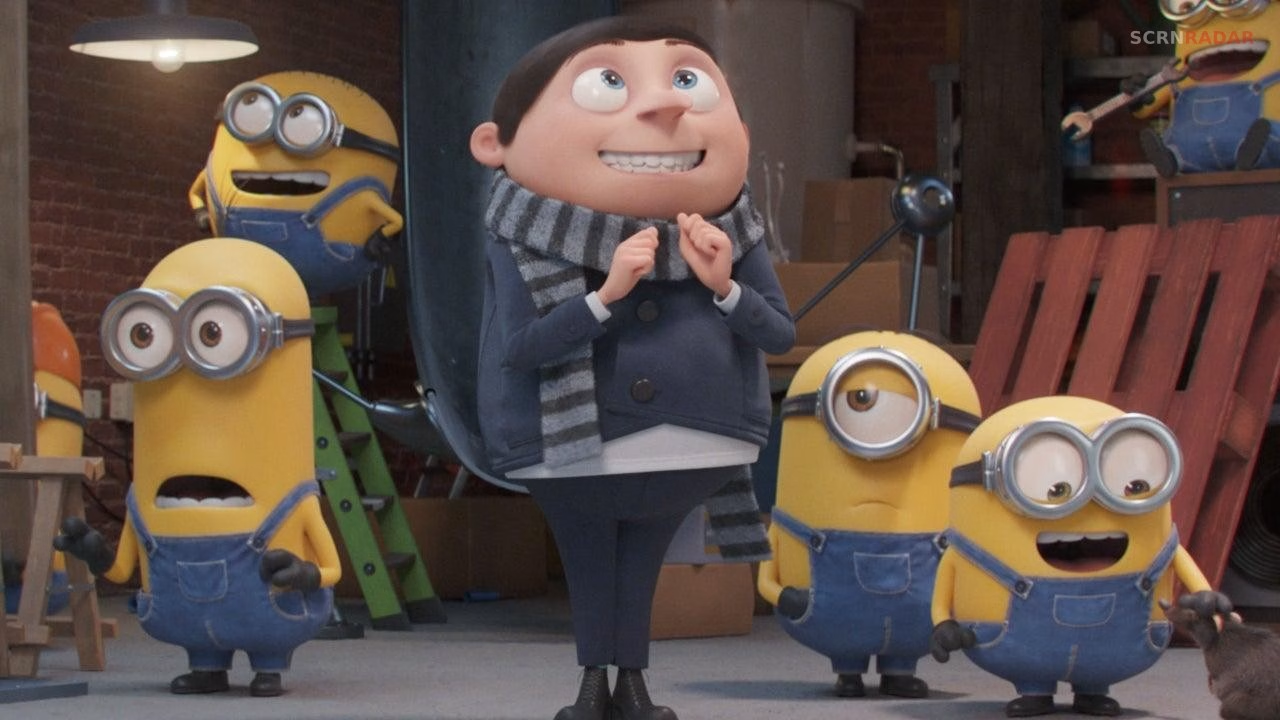
The film clearly aims to bridge the gap between Gru’s childhood and the villain audiences know later. It also tries to give emotional weight to Gru’s relationship with Wild Knuckles, positioning the older villain as an unexpected mentor figure.
The movie succeeds most as a comedy spectacle
The biggest strength of Minions: The Rise of Gru is simple: it is consistently entertaining. Illumination understands exactly what audiences expect from a Minions-centered movie and rarely slows down long enough for viewers to become bored.
The slapstick comedy works surprisingly well throughout most of the runtime. Whether it is Minions accidentally destroying buildings, misunderstanding martial arts traditions, or causing complete mayhem in public spaces, the movie maintains a strong comedic rhythm.
The visual gags are especially effective because they rely heavily on timing and animation rather than dialogue alone. Younger audiences can enjoy the chaos immediately, while older viewers may appreciate some of the absurd background humor and 1970s parody elements.
Importantly, the film also benefits from stronger pacing than the first Minions movie. The original spin-off sometimes felt disconnected because it focused almost entirely on episodic Minion chaos. Rise of Gru improves that structure by giving the story a clearer emotional anchor through Gru himself.
Even critics who were mixed on the overall narrative often admitted the movie remains fun to watch because of its relentless energy and visual creativity.
Young Gru adds emotional focus missing from the first Minions film
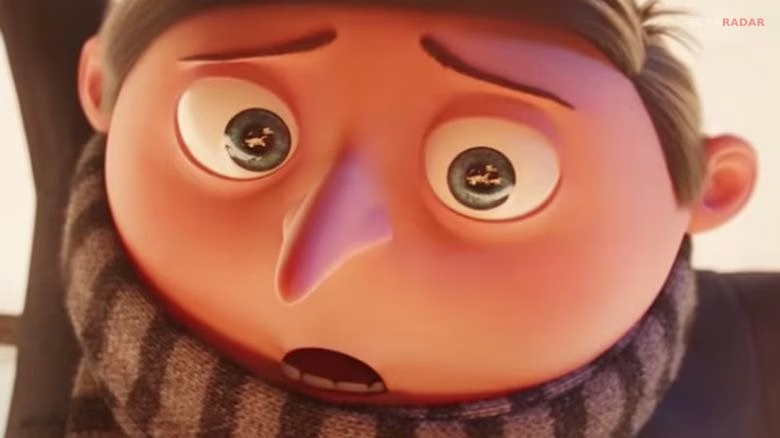
One of the smartest decisions in the movie is making Gru a more central figure instead of relying entirely on the Minions. The original Minions movie struggled at times because the yellow characters work best in smaller doses rather than carrying an entire narrative emotionally.
Young Gru solves that problem by giving the story an actual emotional perspective. His desire to be respected, his insecurity about being underestimated, and his fascination with villainy create a surprisingly engaging protagonist arc.
Steve Carell’s performance also helps tremendously. Even though Gru is younger here, Carell maintains the character’s recognizable personality while making him sound more vulnerable and immature. The performance preserves continuity without feeling repetitive.
The film’s strongest emotional scenes involve Gru’s evolving relationship with Wild Knuckles, voiced by Alan Arkin. Initially, Gru views him as a legendary villain to admire, but the dynamic gradually becomes more personal and mentor-driven.
These moments add warmth that the movie genuinely needs. Without Gru’s emotional storyline, the film likely would have collapsed into nonstop random comedy. Instead, there is at least some narrative progression beneath the chaos.
The Minions remain funny, but sometimes overwhelming
There is no escaping the fact that the Minions themselves remain the main attraction. Kevin, Stuart, Bob, and Otto drive much of the movie’s humor, and the film clearly prioritizes their chaotic energy above everything else.
At their best, the Minions are hilarious because of how committed the movie is to absurdity. Their fake language, exaggerated reactions, and constant physical disasters still work surprisingly well after multiple films.
Otto becomes one of the movie’s standout additions. His socially awkward personality and complete inability to understand situations properly create several of the funniest sequences in the film.
However, the movie occasionally falls into the same trap that has followed the franchise for years: overstimulation. There are moments when the nonstop noise, visual movement, and rapid-fire jokes become exhausting rather than funny.
RogerEbert.com criticized the movie’s tendency toward frantic energy over emotional depth, arguing that many scenes prioritize chaotic spectacle instead of meaningful storytelling.
This criticism is fair in certain sections, especially during some of the longer action scenes where the movie mistakes constant movement for actual momentum.
The 1970s setting gives the movie personality
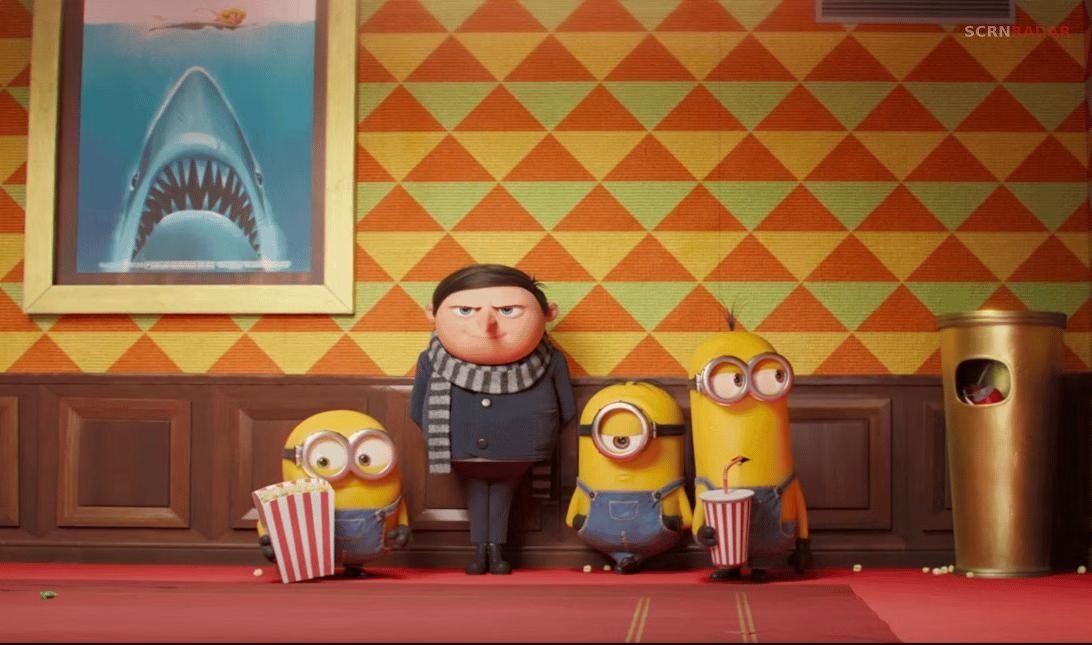
One of the film’s most enjoyable aspects is its strong 1970s aesthetic. From the soundtrack to the costume designs and visual style, the movie fully embraces the era in ways that help separate it from previous franchise entries.
The soundtrack is particularly effective. Songs from artists like Earth, Wind & Fire and The Rolling Stones help create a playful retro atmosphere that matches the exaggerated world perfectly.
The production design also deserves credit. The colorful cityscapes, villain hideouts, and exaggerated fashion choices all contribute to the movie’s energetic visual identity.
This retro setting also helps explain Gru’s fascination with old-school supervillains. The world feels inspired by classic spy films and comic-book adventures, which fits naturally with the franchise’s tone.
Unlike some animated sequels that feel visually identical to earlier installments, Rise of Gru at least attempts to give itself a distinct atmosphere. The stylistic commitment helps lift scenes that might otherwise feel formulaic.
Wild Knuckles becomes the movie’s secret weapon
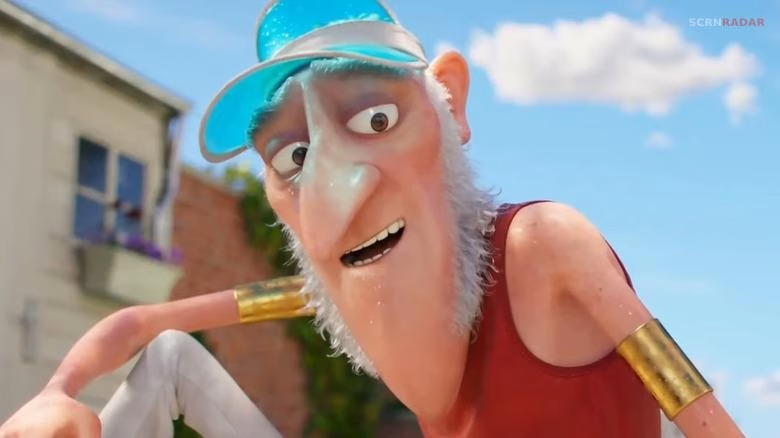
Alan Arkin’s Wild Knuckles unexpectedly becomes one of the film’s strongest elements. Although initially introduced as a legendary villain supposedly replaced by the Vicious 6, the character gradually evolves into something much more emotionally important.
Wild Knuckles works because he mirrors Gru’s own insecurities. Both characters feel discarded, underestimated, or unable to fit into the world around them. Their bond grows naturally through shared experiences rather than forced emotional speeches.
Arkin’s voice performance also balances humor and sincerity effectively. Wild Knuckles feels both intimidating and oddly vulnerable, which makes him more memorable than most villains in the franchise.
The movie’s emotional climax depends heavily on this relationship working, and thankfully it mostly does. Several scenes between Gru and Wild Knuckles carry genuine warmth beneath the comedy.
This emotional core helps separate Rise of Gru from purely episodic children’s entertainment. While the story itself remains simple, the mentor-student relationship gives the movie enough heart to remain emotionally engaging.
The Vicious 6 are visually fun but underdeveloped
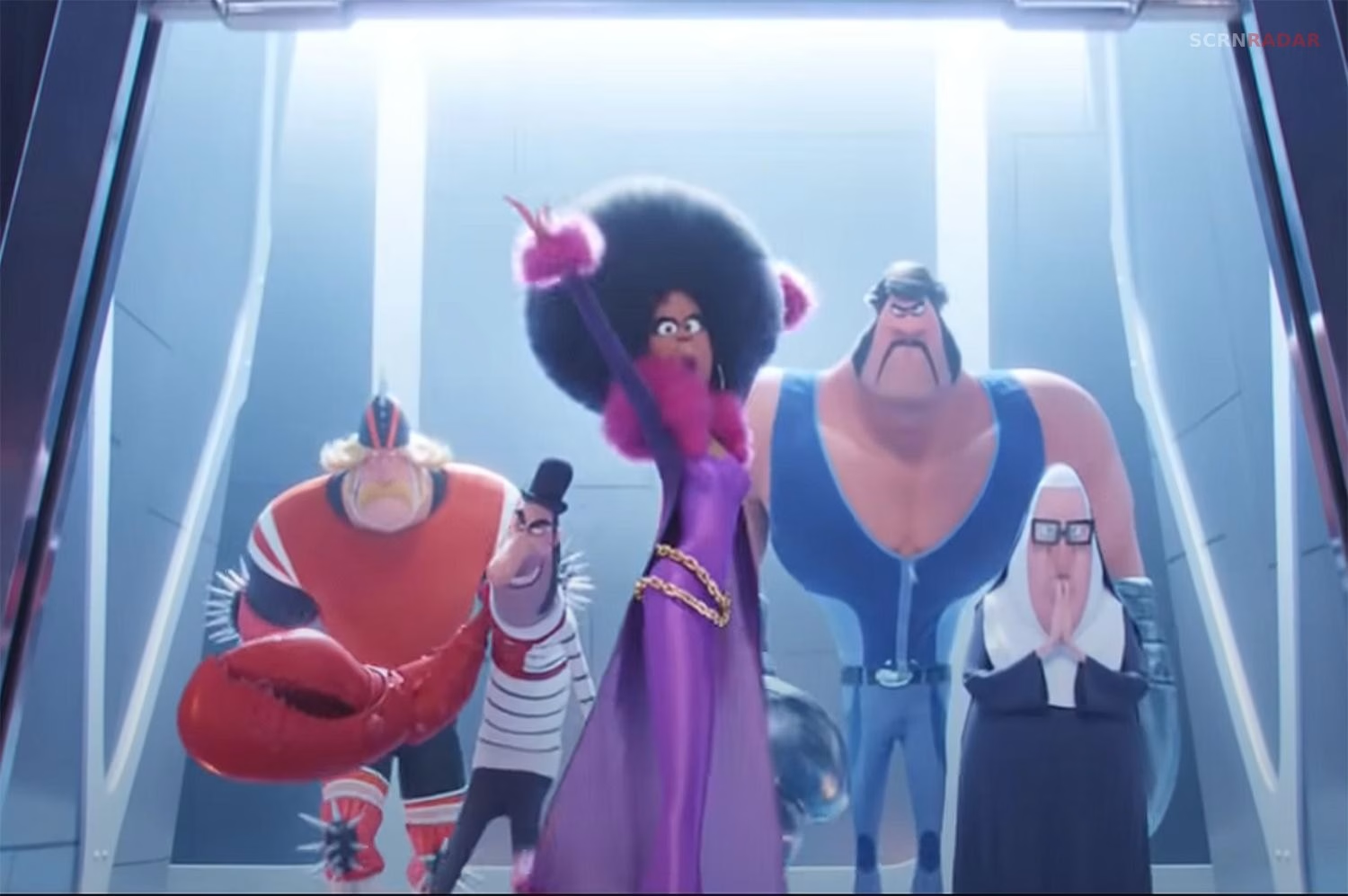
While Wild Knuckles works surprisingly well, the Vicious 6 are far less successful as antagonists. The group includes visually creative villains with memorable designs and powers, but most receive very limited development.
Belle Bottom, voiced by Taraji P. Henson, brings energy and style to the role, but the movie never explores her motivations deeply. She functions more as a flashy obstacle than a layered antagonist.
The rest of the Vicious 6 suffer from even less screen time. Characters like Jean Clawed and Nun-Chuck are amusing visually but barely exist beyond their gimmicks.
This creates one of the film’s major weaknesses. The best Despicable Me movies succeeded partly because their villains felt emotionally connected to Gru’s journey. Here, most antagonists simply exist to generate action scenes.
Several critics pointed out that the film focuses so heavily on visual comedy that many supporting characters feel underwritten.
The movie ultimately cares far more about momentum than character depth, which works for entertainment value but limits emotional impact.
The animation remains Illumination’s biggest strength
Visually, Minions: The Rise of Gru looks excellent. Illumination continues refining its animation style with bright colors, expressive character movement, and highly detailed comedic timing.
The action choreography is especially impressive during martial arts sequences involving the Minions. The exaggerated physics and cartoon energy create scenes that feel dynamic without becoming visually confusing.
The character animation also deserves praise. Gru’s facial expressions and body language communicate insecurity and ambition effectively, while the Minions remain endlessly expressive despite speaking mostly nonsense.
Importantly, the film knows exactly how to stage visual comedy. Many of the funniest moments happen entirely through animation rather than dialogue, reflecting strong confidence in visual storytelling.
The movie may not reach the artistic ambition of some recent Pixar or DreamWorks releases, but it absolutely succeeds at creating a polished and energetic animated experience.
Does the movie justify its existence as a prequel?
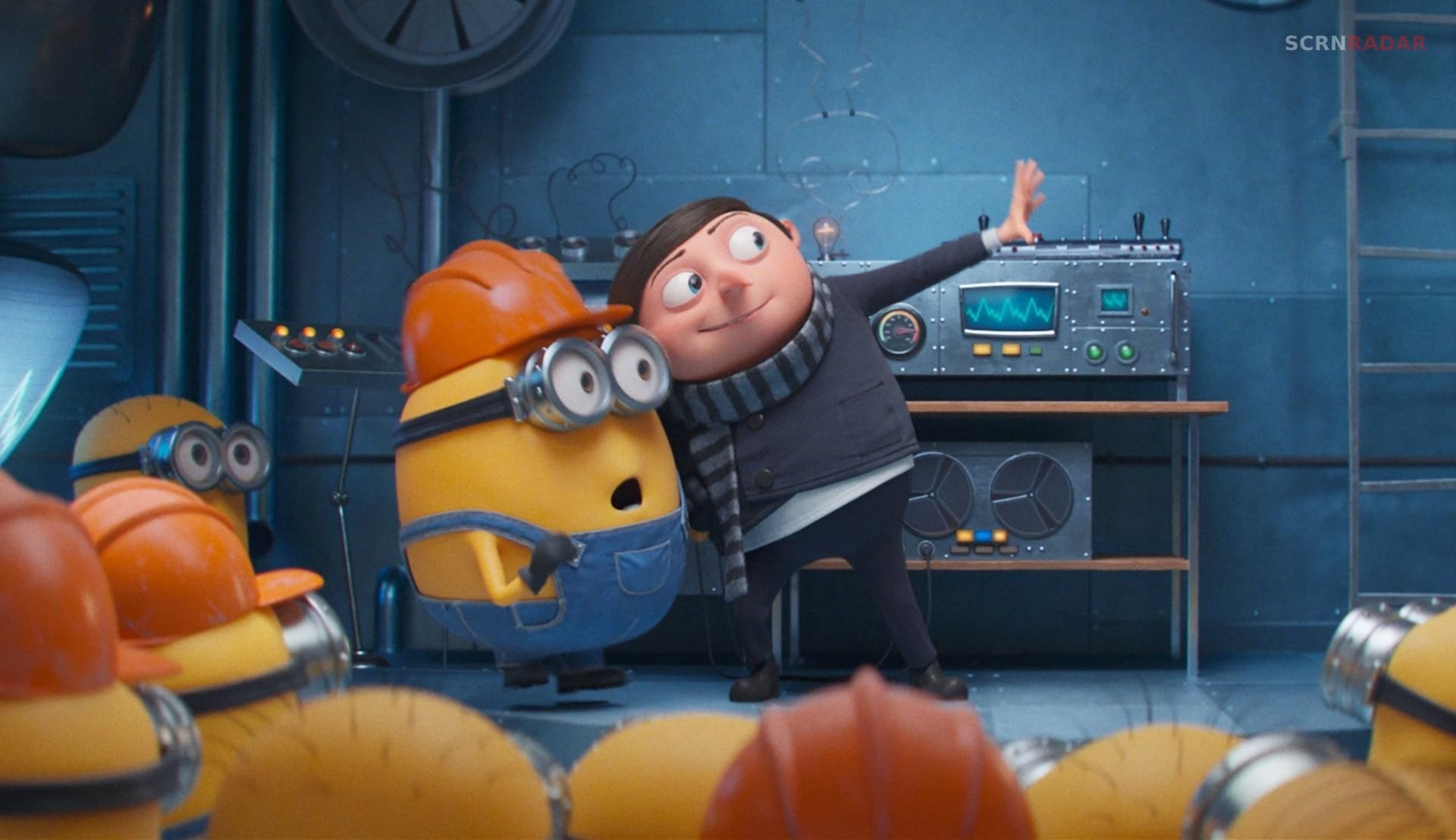
This is where reactions to the film become more divided. On one hand, Rise of Gru undeniably improves upon the first Minions movie by giving the story more emotional focus and narrative structure.
On the other hand, the film still struggles to fully justify why this prequel needed to exist beyond franchise expansion. Gru’s origin story adds context to his character, but it rarely changes how audiences understand him fundamentally.
The movie feels less like a necessary chapter and more like an entertaining side adventure within the larger Despicable Me universe. That is not inherently bad, but it does limit the film’s emotional ambition.
Several reviews described the movie as enjoyable but creatively safe. Rather than reinventing the franchise, it mostly delivers familiar humor and energetic action with a stronger emotional framework.
However, for many viewers, that familiarity is exactly the appeal. The franchise knows its audience extremely well and rarely pretends to be more sophisticated than it actually is.
The viral “Gentleminions” trend boosted the movie’s popularity
One of the most fascinating aspects of the movie’s release was the viral “Gentleminions” phenomenon. Teenagers around the world began attending screenings dressed in formal suits while ironically cheering during the movie.
The trend exploded across social media platforms and unexpectedly transformed the film into a meme-driven cultural event. Some theaters even had to issue warnings because of disruptive audience behavior during screenings.
Interestingly, the trend actually benefited the movie financially by generating enormous online attention and encouraging repeat viewings among younger audiences.
The phenomenon also reflected how deeply the Minions brand has embedded itself into internet culture. Even people who were not emotionally invested in the movie still participated because of the communal meme experience surrounding it.
While unrelated directly to the film’s storytelling quality, the Gentleminions trend undeniably became part of the movie’s identity and cultural legacy.
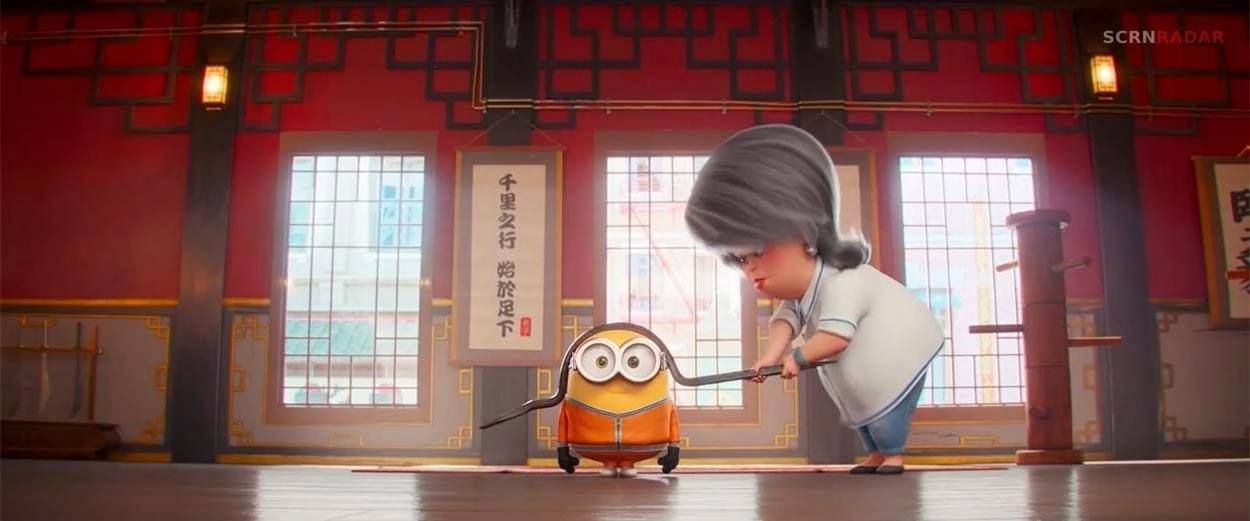
Minions: The Rise of Gru is ultimately exactly what it promises to be: a loud, colorful, chaotic animated comedy with enough emotional sincerity to avoid feeling completely hollow.
The film works best when focusing on Gru’s relationship with Wild Knuckles and his awkward attempts to become a respected villain. Those emotional threads give the movie more heart than the original Minions spin-off.
At the same time, the franchise’s familiar weaknesses remain present. The pacing occasionally becomes exhausting, the villains are underdeveloped, and the nonstop chaos sometimes overwhelms the storytelling.
Still, the movie succeeds where it matters most for its target audience. It is funny, visually energetic, consistently entertaining, and packed with memorable comedic sequences. Younger viewers will likely love the relentless Minion antics, while older audiences may appreciate the surprisingly effective emotional moments underneath.
Minions: The Rise of Gru may not lift the franchise artistically, but it does refine what the series already does well. Rather than reinventing the formula, the film simply delivers a more emotionally balanced version of the chaos audiences already expect. For longtime fans of the Despicable Me universe, that will probably be enough.