Marcia Lucas, the Academy Award-winning film editor best known for her work on Star Wars, has died at the age of 80. Her passing on May 27, 2026, in Rancho Mirage, California, was confirmed by her family, who stated that the cause of death was cancer. Widely regarded as one of the most influential editors in film history, Lucas played a pivotal role in shaping some of the most iconic movies of the 1970s.
Lucas’s family described her as
“a true trailblazer for women in film and one of the most influential editors in cinematic history.”
The statement emphasized her ability to bring emotional depth and clarity to storytelling, qualities that defined her work across multiple landmark projects.
A Career That Helped Define Modern Cinema
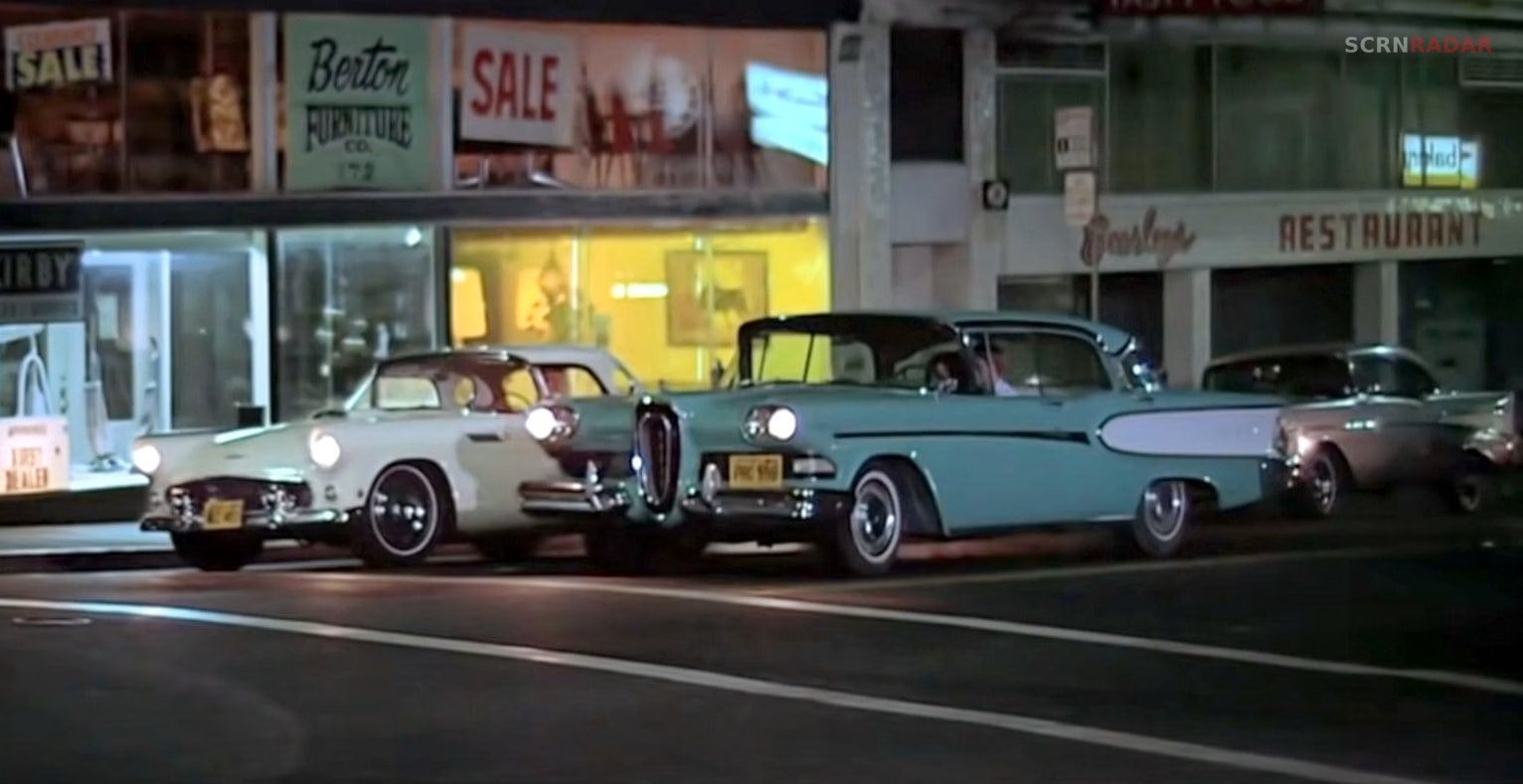
Marcia Lucas began her career in the film industry as a librarian before transitioning into editing, where she quickly established herself as a standout talent. One of her earliest major projects was American Graffiti (1973), directed by George Lucas, which earned her an Academy Award nomination for Best Film Editing.
The success of American Graffiti played a crucial role in enabling George Lucas to pursue his next project, Star Wars (1977). That film would go on to become a global phenomenon, redefining blockbuster filmmaking and launching one of the most successful franchises in cinema history.
For her work on Star Wars, Marcia Lucas shared the Academy Award for Best Film Editing with Paul Hirsch and Richard Chew. The film’s pacing, emotional rhythm, and narrative clarity have often been credited as key factors in its success, with Lucas’s contributions widely recognized by industry professionals.
Collaborations With Legendary Filmmakers
Beyond her work with George Lucas, Marcia Lucas collaborated with some of the most respected directors in Hollywood. She served as an editor on Martin Scorsese’s Alice Doesn’t Live Here Anymore (1974), further demonstrating her ability to adapt her style across different genres.
She also contributed to Scorsese’s Taxi Driver (1976) as a supervising editor and worked on New York, New York (1977). Her early career included roles as an assistant editor on Francis Ford Coppola’s The Rain People (1969) and other notable projects, helping her build a diverse and influential body of work.
These collaborations placed her at the center of a transformative era in American cinema, where filmmakers were pushing creative boundaries and redefining storytelling techniques.
A Lasting Impact on Film Editing
Marcia Lucas’s work is often credited with elevating the role of editing as a core storytelling tool. Her ability to shape narrative flow, enhance emotional beats, and refine pacing helped set new standards for the craft.
In its statement, her family highlighted her “extraordinary sense of story,” noting that she had a rare talent for finding the emotional truth within a scene. This skill was particularly evident in Star Wars, where editing played a critical role in balancing action, character development, and visual storytelling.
Her influence extended beyond her own projects, inspiring future generations of editors and filmmakers. As one of the few prominent female editors of her time, she also helped pave the way for greater representation within the industry.