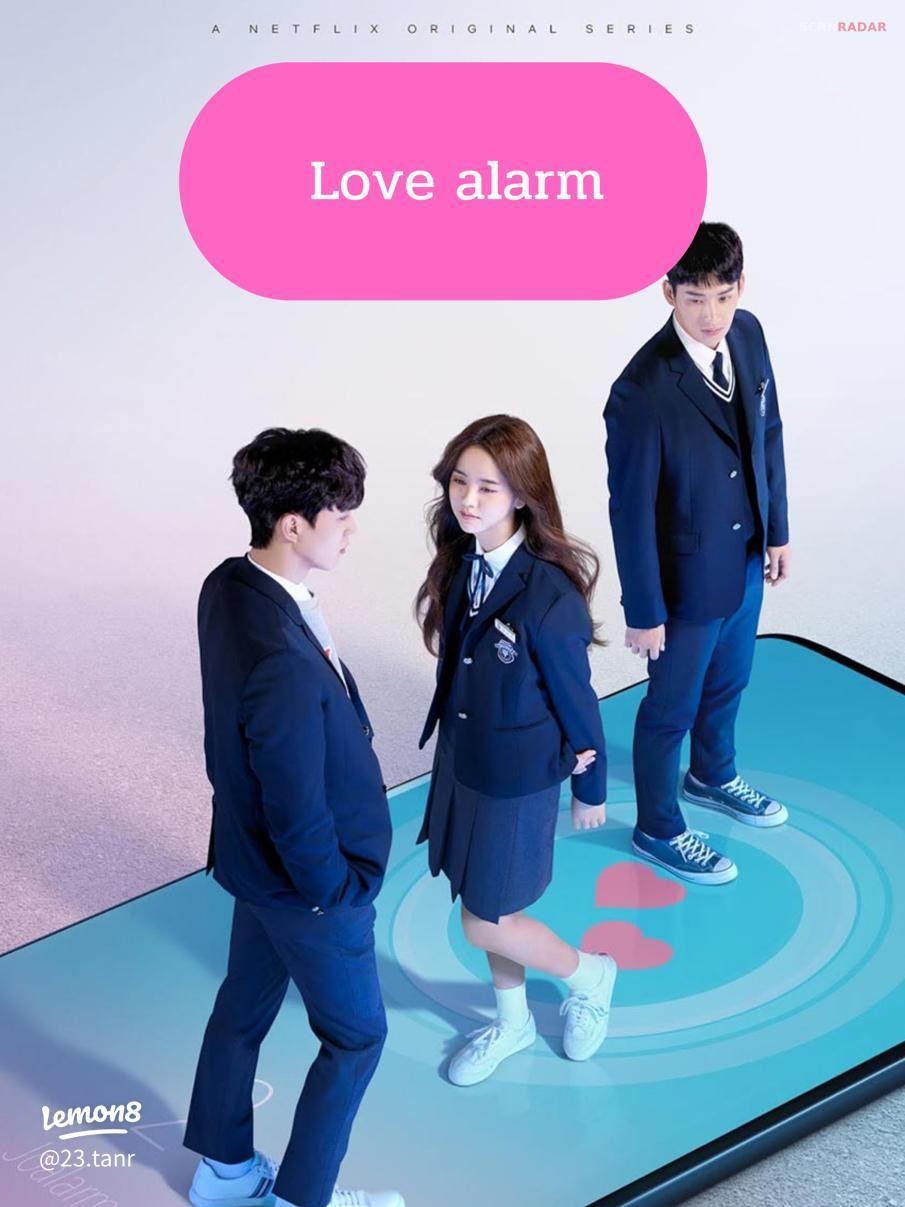
Love Alarm is one of Netflix’s earliest Korean drama hits, blending romance with a futuristic concept that instantly grabbed attention. Based on the popular webtoon by Chon Kye-young, the series imagines a world where a mobile app can detect romantic feelings within a 10-meter radius. This simple yet powerful idea sets the stage for a love triangle filled with emotional tension, social commentary, and modern dating struggles.
Starring Kim So-hyun, Jung Ga-ram, and Song Kang, the series explores how technology influences relationships and personal choices. While the premise feels fresh and engaging at first, the execution becomes more complicated across its two seasons. For viewers searching for a Love Alarm review, the show offers a mix of strong emotional moments and frustrating narrative decisions that spark debate long after watching.
A Unique Concept That Hooks You Instantly
The biggest strength of Love Alarm lies in its concept. The app acts as a truth detector for love, eliminating ambiguity in relationships while creating new emotional conflicts. It raises an intriguing question about whether love should be discovered naturally or confirmed through technology.
In the early episodes, the show uses this idea effectively. Characters are forced to confront their feelings in ways that feel raw and immediate. The tension between knowing and not knowing becomes a central theme, driving both the romance and the drama.
However, as the story progresses, the concept takes a backseat to traditional love triangle tropes. While still present, the app feels less like a driving force and more like a narrative tool to create conflict.
Performances and Character Dynamics
Kim So-hyun delivers a compelling performance as Kim Jo-jo, portraying a character shaped by trauma and emotional restraint. Her journey from a guarded teenager to someone confronting her feelings is one of the show’s strongest elements. The emotional weight she brings adds depth to an otherwise familiar storyline.
Song Kang, as Hwang Sun-oh, brings charisma and intensity to his role. His character represents passion and impulsiveness, making him instantly appealing to many viewers. On the other hand, Jung Ga-ram’s Lee Hye-young offers a quieter, more stable presence, creating a clear contrast between the two male leads.
The chemistry between the characters is effective, especially in Season 1. However, Season 2 shifts the focus in ways that feel divisive, leading to mixed reactions from audiences regarding the final romantic pairing.
Season 2: Where the Story Divides Viewers
Season 2 of Love Alarm is where opinions begin to split. Instead of building on the emotional intensity of the first season, it takes a slower and more introspective approach. The narrative focuses heavily on Jo-jo’s internal struggles and the long-term impact of her choices.
While this approach adds emotional realism, it also reduces the pacing and dramatic tension. Many viewers felt that the romantic resolution lacked the payoff expected after the buildup in Season 1. The shift in tone makes the second season feel noticeably different from the first.
The ending, in particular, sparked significant debate. Some appreciated the grounded and realistic conclusion, while others found it unsatisfying and disconnected from earlier developments.
Themes: Love, Technology, and Emotional Barriers
Beyond its romantic storyline, Love Alarm explores deeper themes about human connection in the digital age. The app symbolizes society’s reliance on technology to validate emotions, raising questions about authenticity and vulnerability.
The series also addresses emotional trauma and personal growth. Jo-jo’s character arc reflects the difficulty of opening up after experiencing loss and hardship. This adds a layer of depth that elevates the show beyond a simple love triangle.
Despite these strong themes, the execution sometimes feels uneven. The balance between concept-driven storytelling and character-focused drama is not always consistent, leading to moments where the narrative loses its impact.