Lost (2023) is not your typical survival thriller. Directed by Aniruddha Roy Chowdhury and starring Yami Gautam in a commanding lead role, the film takes a familiar premise and transforms it into an emotionally layered and suspense-driven experience. At its core, the movie revolves around a woman stranded in a hostile environment, but what makes Lost stand out is how it blends physical survival with psychological struggle.
From the very first frame, the film builds tension through atmosphere rather than spectacle. It places viewers directly into the protagonist’s isolated world, forcing them to confront fear, uncertainty, and desperation alongside her. With minimal distractions and a tight narrative focus, Lost becomes less about external threats and more about internal resilience.
Let’s break down what makes Lost (2023) worth watching, from its performances and storytelling to its technical execution and emotional depth.
Plot Overview: A Survival Story Rooted in Isolation
Lost (2023) follows the story of a woman who finds herself stranded in an unforgiving wilderness after a sudden and unexplained incident. Cut off from civilization, she must navigate harsh terrain, limited resources, and the constant threat of danger.

The narrative unfolds in a deliberately slow and immersive manner. Instead of rushing through events, the film allows each moment to breathe. This pacing helps establish a strong connection between the audience and the protagonist’s mental state. Every decision she makes feels significant because the stakes are always high.
What makes the plot engaging is its unpredictability. The film avoids conventional tropes and instead focuses on realism. There are no exaggerated heroics or convenient escapes. Every small victory feels earned, and every setback adds to the tension.
At its heart, Lost is less about “what happens next” and more about “how will she survive this moment.” That shift in focus keeps the audience invested throughout.
Yami Gautam’s Performance: The Film’s Strongest Asset
One of the biggest strengths of Lost (2023) is the performance by Yami Gautam. Carrying a film that relies heavily on a single character is no easy task, but she delivers a performance that feels authentic and deeply compelling.
Her portrayal captures the full spectrum of human emotion. Fear, determination, exhaustion, and hope all come through without the need for excessive dialogue. Much of her performance is conveyed through subtle expressions and body language, which adds to the film’s realism.
There are moments where silence speaks louder than words, and Gautam handles these scenes with remarkable control. She makes the audience feel her vulnerability while also showcasing her strength.
This role stands out as one of the more intense performances in her career, proving her ability to anchor a film almost entirely on her own.
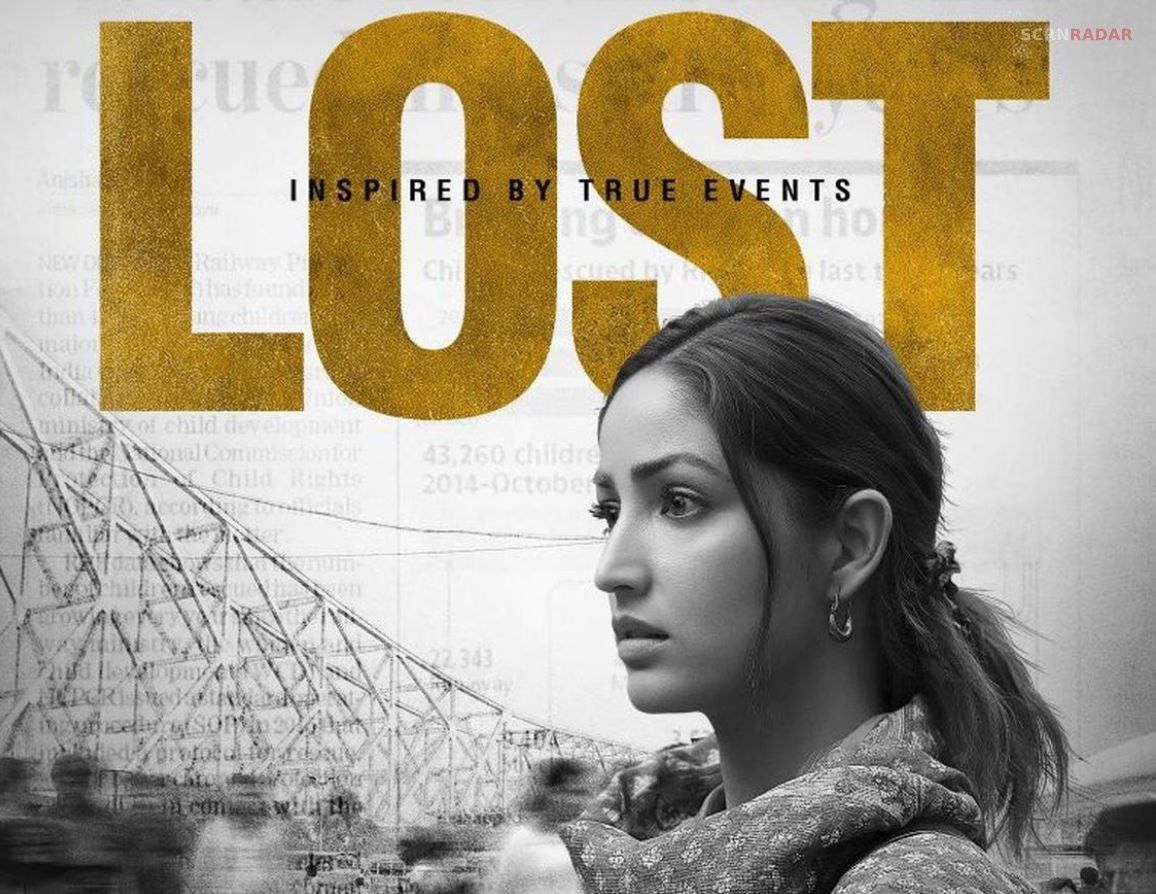
Director Aniruddha Roy Chowdhury takes a minimalist approach to storytelling, and it works in the film’s favor. Instead of relying on complex subplots or multiple characters, the narrative remains tightly focused on the protagonist’s journey.
The film uses silence and stillness effectively. Long stretches without dialogue are not just stylistic choices but essential elements of storytelling. They create an immersive experience that pulls viewers into the character’s isolation.
Chowdhury’s direction also emphasizes realism. The challenges faced by the protagonist feel grounded and believable. This authenticity enhances the emotional impact of the story.
The decision to keep the narrative simple allows the film to explore deeper themes without distraction. It becomes a character study as much as it is a survival thriller.
Cinematography and Visual Tone: Building Atmosphere
The cinematography in Lost (2023) plays a crucial role in establishing its tone. Wide shots of the terrain highlight the vastness and isolation of the setting, while close-ups capture the protagonist’s emotional state.
The use of natural lighting adds to the realism. Instead of overly stylized visuals, the film opts for a raw and grounded look. This choice enhances the sense of immersion and makes the environment feel more threatening.
Camera movements are deliberate and restrained. There are no unnecessary flourishes. Every shot serves a purpose, whether it’s to build tension or to emphasize the character’s solitude.
The visual storytelling complements the narrative perfectly, reinforcing the themes of isolation and survival.
Beyond its surface-level story, Lost (2023) explores several deeper themes. Survival is the most obvious one, but the film goes further by examining what it means to endure both physically and mentally.
Fear is a constant presence throughout the film. It’s not just about external dangers but also the psychological toll of being alone in an unpredictable environment. The film shows how fear can both paralyze and motivate.
Another key theme is resilience. The protagonist’s journey becomes a testament to human strength. Even in the face of overwhelming odds, she continues to push forward.
There is also an underlying exploration of self-discovery. Stripped of all external distractions, the character is forced to confront herself. This adds an introspective layer to the story, making it more than just a thriller.

Pacing and Tension: A Slow Burn That Pays Off
The pacing of Lost (2023) may not appeal to everyone, especially those expecting a fast-paced thriller. However, the slow-burn approach is intentional and effective.
By taking its time, the film builds tension gradually. Each scene adds to the sense of unease, creating a constant feeling of anticipation. The lack of immediate action makes the eventual high-stakes moments even more impactful.
This pacing also allows for character development. The audience gets to understand the protagonist on a deeper level, which makes her journey more engaging.
While some viewers might find certain sections slow, the overall payoff justifies the approach.
Sound design plays a subtle but important role in Lost (2023). The film relies heavily on ambient sounds rather than a traditional background score.
The rustling of leaves, the sound of footsteps, and the silence of the environment all contribute to the atmosphere. These elements make the setting feel alive and unpredictable.
When music is used, it is minimal and purposeful. Instead of overwhelming the scenes, it enhances key moments and emotions.
This restrained approach to sound design aligns with the film’s overall minimalist style, creating a cohesive viewing experience.
Strengths and Weaknesses: What Works and What Doesn’t
One of the biggest strengths of Lost (2023) is its commitment to realism. The film avoids unnecessary dramatization and focuses on authenticity.
The performance by Yami Gautam is another major highlight. Her ability to carry the film almost single-handedly is impressive.
The cinematography and direction also stand out, creating a strong sense of atmosphere and immersion.
However, the film’s slow pacing may not work for all audiences. Some viewers might find it too deliberate or lacking in conventional thrills.
Additionally, the minimalistic approach means there is limited backstory or context for the protagonist. While this adds to the mystery, it might leave some viewers wanting more.