The 2023 action thriller Kandahar, starring Gerard Butler, delivers intense desert chases, high-stakes espionage, and gripping survival drama. While the story is set in Afghanistan, the movie was not filmed there. Instead, the filmmakers chose Saudi Arabia as the primary shooting location, creating a visually authentic backdrop that closely resembles the rugged terrain of the Middle East.
Directed by Ric Roman Waugh, the film stands out not just for its action but also for its large-scale location work. In fact, Kandahar made history as one of the first major Hollywood productions to shoot extensively in Saudi Arabia after the country reopened to international filmmaking.
Let’s break down the real filming locations used in Kandahar and why they played such an important role in shaping the film’s atmosphere.
AlUla: The Core Filming Location
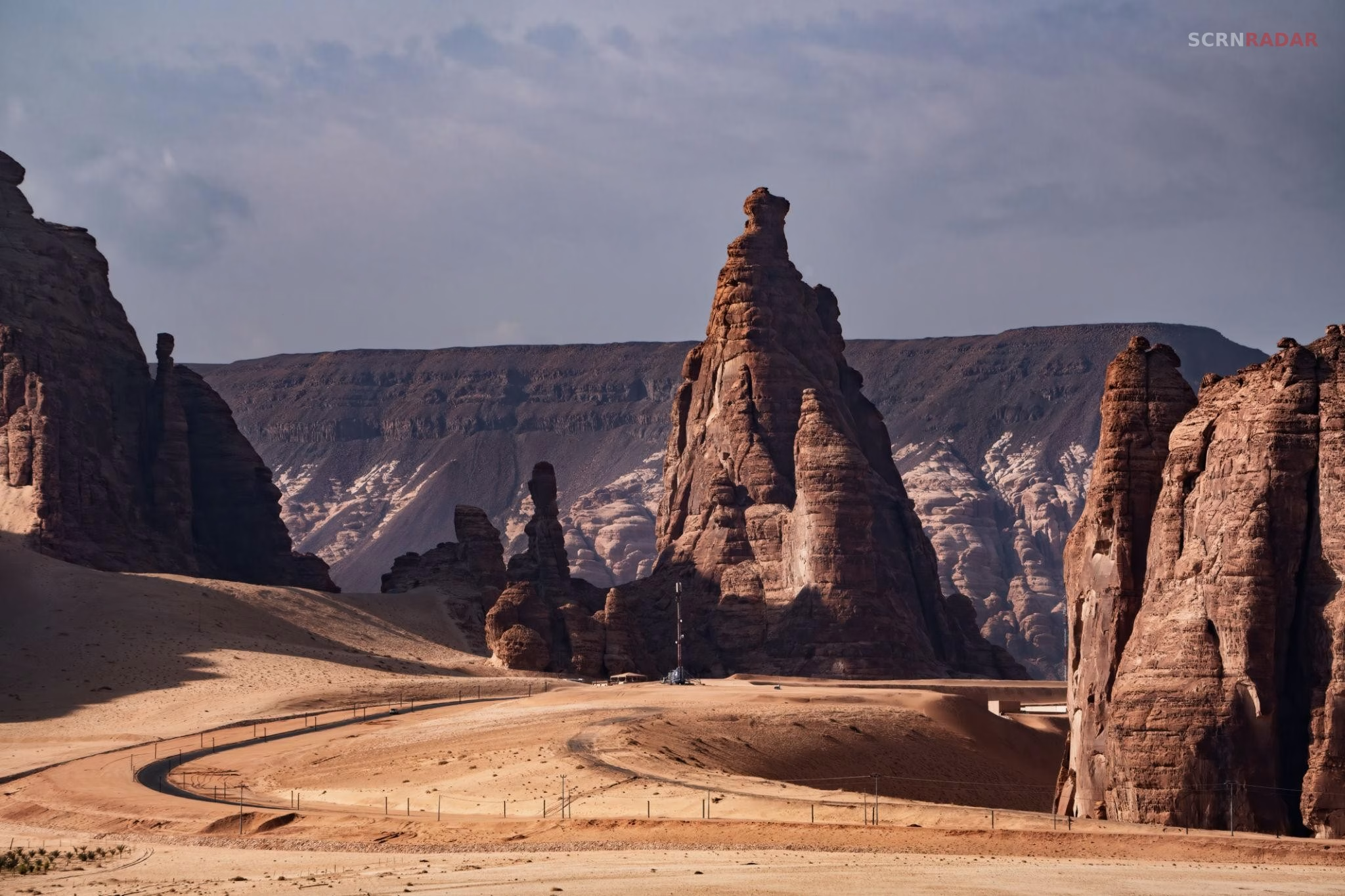
The majority of Kandahar was filmed in AlUla, a historic region in northwestern Saudi Arabia. Known for its dramatic desert landscapes, AlUla served as the perfect stand-in for Afghanistan due to its similar terrain and remote atmosphere.
This region is home to the UNESCO World Heritage Site Hegra, which features ancient rock-cut tombs dating back thousands of years. The filmmakers used these natural and historical backdrops to create a sense of realism and scale.
AlUla’s mix of deserts, rocky formations, and oasis landscapes allowed the production team to shoot a wide variety of scenes without leaving the region. This versatility made it the central hub of the film’s production.
While much of the film takes place in desert environments, some urban scenes required city backdrops. For these sequences, the production moved to Jeddah and Riyadh.
Jeddah, a major port city on the Red Sea, was used for both interior and exterior shots. Its modern skyline and coastal setting provided a different visual tone compared to the desert scenes. Landmarks like King Fahd’s Fountain and major commercial buildings appear subtly in the background.
Riyadh, the capital city, offered a more structured and urban environment. Its dry climate and city layout made it suitable for scenes requiring a controlled, metropolitan setting.
Beyond AlUla, Jeddah, and Riyadh, the film also utilized other regions across Saudi Arabia, including Tabuk, Ha’il, and Taif.
These locations added diversity to the film’s visuals. Tabuk provided mountainous desert terrain, while Ha’il offered rugged landscapes ideal for action sequences. Taif, known for its cooler climate and elevated terrain, helped create variation in the film’s environment.
This wide range of locations allowed the filmmakers to depict different types of terrain without leaving the country. It also contributed to the film’s realistic and immersive feel.
Why Saudi Arabia Was Chosen
Saudi Arabia was not just a convenient choice but a strategic one. After lifting its cinema ban in 2018, the country began welcoming international film productions. Kandahar became one of the first major Hollywood films to take advantage of this opportunity.
The country offers vast, untouched landscapes that are ideal for large-scale outdoor shooting. According to the film’s producers, the variety of terrain, from deserts to mountains and even greener areas, made it a highly flexible filming destination.
Additionally, local support and incentives made the production process smoother. The result is a film that feels authentic while showcasing locations rarely seen in Hollywood productions.