Hollywood’s latest fascination is moving beyond superheroes and franchise characters to a very different kind of celebrity: the technology mogul. Several high-profile films arriving in theaters this fall and winter are examining figures including Elizabeth Holmes, Elon Musk, Sam Altman and Mark Zuckerberg, turning real-world Silicon Valley controversies into documentaries, dramas and psychological portraits.
The trend comes at an interesting moment for the movie business, as studios continue searching for original stories that can generate theatrical interest. Instead of fictional billionaires, these films are drawing from events involving companies such as Theranos, Tesla, SpaceX, OpenAI and Facebook, giving audiences stories that already carry significant public attention.
Why Hollywood Is Suddenly Looking to Tech Moguls for Movie Stories
Elizabeth Holmes is at the center of one of the most unconventional projects in this wave. Nathan Fielder and Lance Oppenheim’s You Can See Everything was kept largely secret before making a surprise debut at the 2026 Telluride Film Festival. The 174-minute documentary follows Holmes after she invited the filmmakers into her home shortly before beginning her prison sentence for fraud, with the project eventually expanding into a three-year examination of her life and public image.
The film has already attracted attention because of the unusual relationship between Holmes and Fielder. In footage released by A24, Holmes insists, “I don’t have anything to deceive you on,” before Fielder responds with his characteristically uncomfortable humor. You Can See Everything is scheduled to reach theaters in October, adding another cinematic examination of the Theranos scandal to the long list of projects inspired by Holmes.
Elon Musk is receiving an equally expansive treatment in Alex Gibney’s Musk. The documentary premiered at the Venice Film Festival and runs for 232 minutes, making it one of Gibney’s most ambitious portraits. Musk did not cooperate with the production and has publicly attacked the project, calling it a “hit piece” and criticizing Gibney’s approach.
The documentary features interviews with people from Musk’s personal and professional circles, including his first wife Justine Musk, Tesla co-founder Martin Eberhard and Ashley St. Clair. St. Clair also spoke publicly at Venice after saying she rejected a reported $40 million nondisclosure agreement, allowing her to participate in the documentary. Musk is scheduled for a U.S. theatrical release on October 16 through Bleecker Street before its HBO Max release.

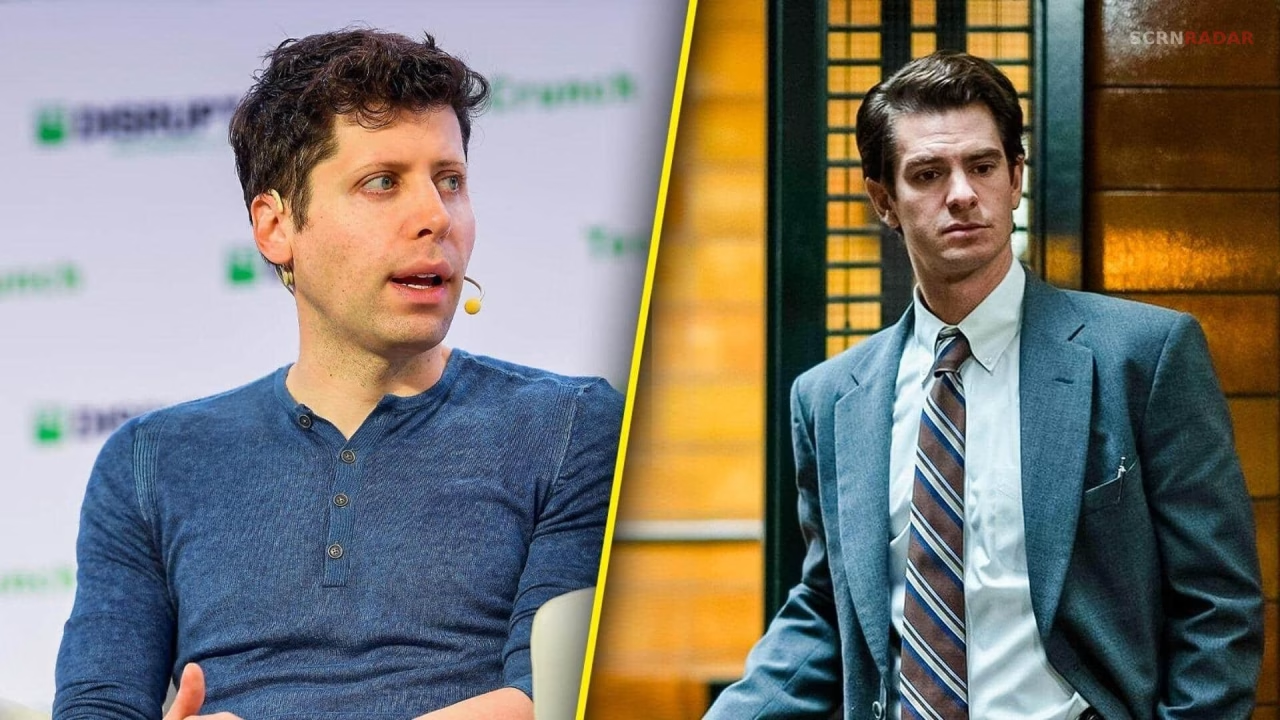
Sam Altman’s story is taking a more fictionalized route with Luca Guadagnino’s Artificial. Andrew Garfield portrays the OpenAI CEO in the film, which focuses on the extraordinary events surrounding Altman’s removal and reinstatement as CEO in November 2023. The movie also features Yura Borisov as Ilya Sutskever and Ike Barinholtz as Elon Musk.
The production itself became part of the story after Amazon MGM dropped the film following its partnership with OpenAI. Neon subsequently acquired the movie and is releasing it in select theaters on December 25, with a wider rollout planned for January 2027.
Mark Zuckerberg, meanwhile, is returning to the screen through The Social Reckoning. Written and directed by Aaron Sorkin, the film acts as a companion to 2010’s The Social Network and shifts the focus toward Facebook whistleblower Frances Haugen and The Wall Street Journal investigation known as “The Facebook Files.” Jeremy Strong now plays Zuckerberg after Jesse Eisenberg declined to reprise the role.
Sorkin has explained the relevance of revisiting Facebook, saying, “There isn’t a life that Facebook’s algorithm hasn’t touched, and that influence has shaped everything.” The Social Reckoning is scheduled to open in theaters on October 9, making it another major theatrical release built around the continuing cultural impact of Silicon Valley.
Taken together, these projects suggest that Silicon Valley has become Hollywood’s latest source of real-world drama. The stories combine enormous wealth, technological disruption, corporate power and public controversy, giving filmmakers material that can feel as dramatic as traditional fictional narratives while remaining rooted in events audiences already recognize.