When Netflix released Fatma in April 2021, the Turkish crime drama quickly stood out from the platform’s growing catalog of international thrillers. Created by Özgür Önürme and led by an acclaimed performance from Burcu Biricik, the six-episode series tells the story of a cleaning woman whose search for her missing husband spirals into a violent and psychologically complex journey. What begins as a mystery gradually transforms into a character study about trauma, invisibility, and survival.
Unlike many crime dramas that focus on detectives, gangsters, or professional killers, Fatma centers on someone society constantly overlooks. That premise becomes the foundation of the show’s most compelling idea: a woman becomes dangerous precisely because nobody notices her. The result is a thriller that combines emotional storytelling with social criticism while delivering one of Netflix’s most memorable international protagonists.
What Is Fatma About?
The series follows Fatma Yılmaz, a cleaner whose life is already marked by grief and hardship. After her husband Zafer disappears shortly after being released from prison, she begins searching for answers. During that search, an unexpected confrontation leads to a murder, setting off a chain of events that pushes Fatma deeper into violence.
As Fatma investigates Zafer’s criminal connections, she becomes entangled with dangerous individuals tied to organized crime. Each new encounter forces her into increasingly desperate situations. Rather than becoming a traditional criminal mastermind, Fatma survives through improvisation, instinct, and the fact that most people underestimate her.
The story gradually reveals deeper emotional wounds connected to loss, neglect, and personal trauma. These elements lift the series beyond a straightforward revenge thriller and turn it into a psychological examination of a woman pushed beyond her limits.

Burcu Biricik Carries the Entire Series
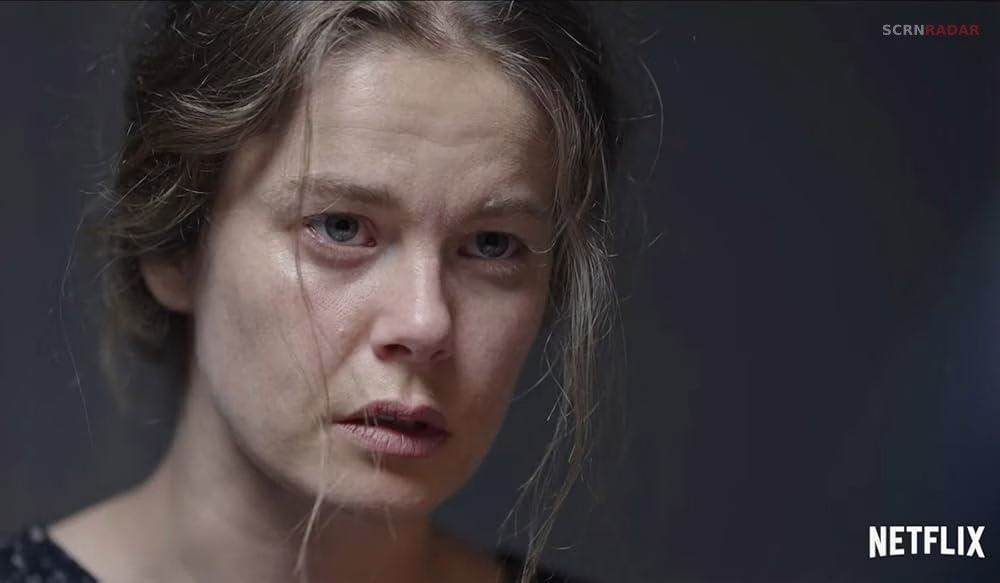
The strongest aspect of Fatma is undoubtedly Burcu Biricik’s performance. Nearly every emotional beat in the show depends on her ability to communicate pain, fear, and determination with minimal dialogue. Her portrayal keeps the audience invested even during the series’ quieter moments.
Critics widely praised her work. Rotten Tomatoes highlighted reviews that described her performance as charming, with The Globe and Mail noting that viewers “cannot take your eyes off her.”
Biricik herself discussed the depth of the character in an interview with Variety, explaining that the script provided extensive detail about Fatma’s personality and emotional state. That attention to character development is evident throughout the series.
What makes the performance particularly effective is its restraint. Fatma rarely delivers dramatic speeches or emotional monologues. Instead, Biricik relies on expressions, body language, and subtle reactions to convey the character’s internal collapse.
The Concept of Invisibility Is the Show’s Greatest Strength
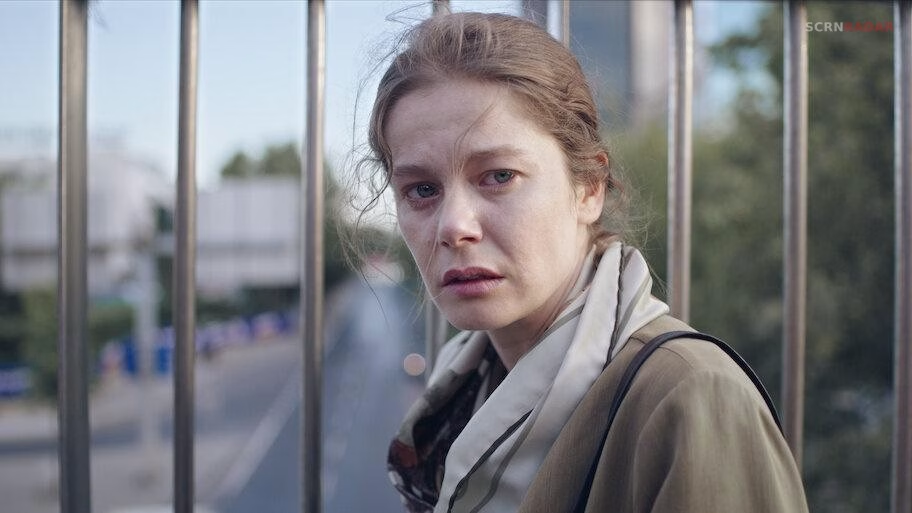
Many crime dramas focus on power, influence, or intimidation. Fatma takes the opposite approach. The series constantly emphasizes how invisible Fatma is to the people around her. She cleans homes, offices, and public spaces while remaining largely unnoticed.
This invisibility becomes both a curse and a weapon. Because people dismiss her, they rarely see her as a threat. The show repeatedly demonstrates how societal assumptions about class, gender, and appearance allow Fatma to move through dangerous situations undetected.
The concept works because it connects directly to broader social themes. Fatma is not invisible because she possesses special skills. She is invisible because society has trained itself not to see women like her. This idea gives the series a thematic depth that separates it from many other Netflix thrillers.
A Psychological Thriller Disguised as a Crime Drama
Although the marketing presents Fatma as a crime thriller, the series often functions more as a psychological drama. The murders themselves are important, but the emotional consequences matter far more than the body count.
Each act of violence affects Fatma differently. Rather than becoming increasingly confident, she grows more emotionally fragmented. The show spends significant time exploring her guilt, confusion, and deteriorating mental state.
The series also uses flashbacks and fragmented memories to reveal the events that shaped her life. These moments gradually build a fuller picture of her trauma and explain why she responds to situations the way she does.
This psychological focus gives the story more weight than a conventional thriller. Viewers are encouraged to understand Fatma rather than simply judge her actions.
Istanbul Becomes an Important Character
One underrated strength of the series is its use of Istanbul. The city is not merely a backdrop but an active part of the narrative. Narrow streets, crowded neighborhoods, aging apartments, and isolated corners all contribute to the atmosphere.
The visual contrast between busy public spaces and Fatma’s personal isolation reinforces the show’s themes. She moves through environments filled with people yet remains emotionally disconnected from nearly everyone around her.
Several reviewers also noted how effectively the city enhances the story. The urban terrain helps create tension while grounding the series in a realistic setting.
This strong sense of place adds authenticity and helps distinguish Fatma from more generic crime dramas.
The Series Tackles Trauma Without Simplifying It
One of the most challenging aspects of Fatma is its exploration of grief and trauma. The series refuses to present emotional recovery as a simple process. Instead, it portrays trauma as something that continues shaping a person long after the original event.
Fatma’s actions are heavily influenced by personal loss and unresolved pain. The show consistently returns to these experiences, showing how they affect her decisions and worldview.
Importantly, the series does not use trauma merely as an excuse for violence. It treats emotional damage as a central theme rather than a convenient plot device. This approach makes the story feel more mature and emotionally grounded.
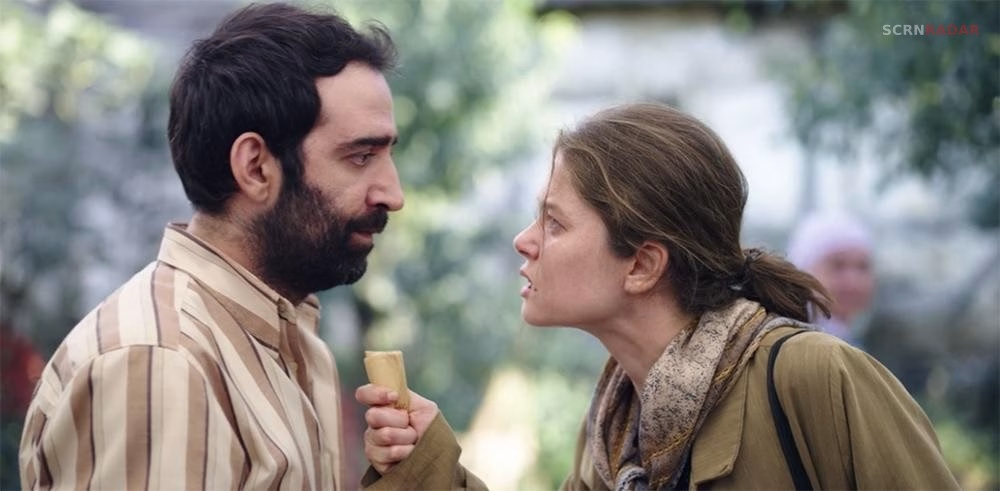
The result is a character who feels deeply human despite committing increasingly extreme acts.
Pacing Issues Occasionally Slow the Momentum
While Fatma succeeds in many areas, it is not without flaws. The biggest issue is pacing. Certain episodes spend considerable time on introspection and atmosphere, sometimes at the expense of narrative momentum.
Some viewers may appreciate the slower, character-focused approach. Others might find that the story occasionally lingers too long on repetitive emotional beats. Critics were somewhat divided on this aspect, with some praising the deliberate pacing while others felt it weakened the narrative.
The six-episode structure helps prevent the story from becoming overly stretched, but there are still moments where tighter editing could have strengthened the tension.
Fortunately, the strong lead performance usually compensates for these slower sections.
Supporting Characters Serve the Story Well
Although Fatma dominates the narrative, the supporting cast plays an important role in shaping her journey. Characters connected to Zafer’s criminal world introduce new dangers while revealing pieces of the larger mystery.
Uğur Yücel’s mysterious Writer character is particularly memorable. His interactions with Fatma add another psychological layer to the story, often blurring the line between guidance and manipulation.
Mehmet Yılmaz Ak and Hazal Türesan also contribute strong performances that help maintain tension throughout the season. While some supporting characters receive more development than others, most serve a meaningful purpose within the narrative.
The ensemble cast helps create a world that feels dangerous, unpredictable, and emotionally complex.
Why Fatma Stands Out Among Netflix Crime Dramas
Netflix has released numerous international crime series, but Fatma remains distinctive because of its perspective. Most thrillers focus on characters who actively seek power or revenge. Fatma begins as someone simply trying to survive.
This difference changes the entire tone of the series. The violence feels reactive rather than calculated. The suspense comes from uncertainty rather than strategic planning.
The show also benefits from its willingness to address social issues without becoming overly didactic. Themes of class, gender, and invisibility are woven naturally into the narrative instead of being presented as direct lessons. That balance allows the series to remain engaging while still offering meaningful commentary.
Another noteworthy element in Fatma is how the series handles morality without offering clear answers. The narrative never fully justifies Fatma’s actions, but it also avoids outright condemning her. Instead, it places the audience in an uncomfortable position, forcing viewers to question how far empathy can extend when someone commits repeated acts of violence. This moral ambiguity becomes one of the show’s most engaging aspects, as it challenges traditional crime drama expectations where characters are often clearly defined as heroes or villains.
The series also benefits from its compact six-episode structure, which allows the story to remain focused despite its slower pacing. Each episode adds another layer to Fatma’s psychological state while gradually revealing the larger picture. This tight format prevents the narrative from overstaying its welcome, ensuring that even its quieter moments contribute to the emotional impact.
Fatma Season 1 is one of Netflix’s strongest international psychological thrillers. Its unique premise, powerful lead performance, and emotionally driven storytelling help it stand out in a crowded genre. While occasional pacing issues prevent it from being flawless, the series succeeds in creating a memorable and deeply human protagonist.
Burcu Biricik transforms what could have been a standard crime story into something far more compelling. Through her performance, Fatma becomes a symbol of overlooked people pushed beyond their breaking point. The show’s exploration of trauma, invisibility, and survival gives it lasting emotional impact.
For viewers looking for a crime drama that prioritizes character depth over action spectacle, Fatma is absolutely worth watching.