The ending of Dragon Ball Super left fans with one of the most intense and emotionally layered conclusions in the franchise’s history. The Tournament of Power arc pushed every major character to their limits, introducing god-tier stakes where entire universes could be erased in an instant. With survival on the line, Universe 7 had to rely not just on power but also teamwork, strategy, and sacrifice to outlast their opponents. The final episodes delivered surprising eliminations, unexpected alliances, and one of the most debated conclusions in modern anime.
At the center of the ending is a surprising MVP, a risky wish that could have backfired, and a message about selflessness that defines the arc’s true meaning. Let’s break down exactly how the Tournament of Power ends, who wins, what Android 17’s wish changes, and what it all means for the future of Dragon Ball Super.
How the Tournament of Power reaches its final battle
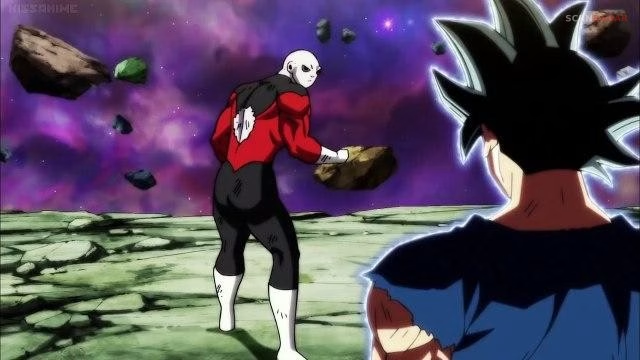
As the Tournament of Power approaches its climax, only a handful of fighters remain in the arena. Universe 7 is down to Goku, Frieza, Android 17, and a severely injured Vegeta, while Universe 11 still has its strongest warrior, Jiren, along with Toppo and Dyspo. The stakes escalate dramatically as each elimination brings the multiverse closer to total annihilation.
Vegeta’s final stand becomes one of the most emotional moments of the arc. Despite pushing beyond his limits and unlocking new power, he ultimately sacrifices himself in a desperate attempt to weaken Jiren. His elimination leaves Goku as Universe 7’s primary fighter, forcing him to confront Jiren in a battle that surpasses anything seen before.
At the same time, Android 17 proves to be one of the most strategic fighters in the tournament. Unlike the Saiyans, who rely heavily on power-ups, 17 consistently uses tactics, barriers, and energy management to survive. His presence becomes increasingly important as the number of fighters dwindles and raw strength alone is no longer enough.
Goku vs Jiren and the rise of Ultra Instinct
The final confrontation between Goku and Jiren is the centerpiece of the Tournament of Power ending. After being pushed to the brink multiple times, Goku finally masters Ultra Instinct, a divine technique that allows his body to react independently of his thoughts. This transformation elevates him to a level that even the gods struggle to comprehend.
In this state, Goku overwhelms Jiren with speed, precision, and overwhelming power. For the first time, Jiren is forced onto the defensive, revealing cracks in his previously unshakable confidence. The battle becomes more than just physical, as Jiren’s rigid belief in strength and isolation is challenged by Goku’s reliance on bonds and trust.
However, the victory is short-lived. Ultra Instinct proves too unstable for Goku’s body, causing severe backlash just as he appears ready to finish the fight. This sudden collapse shifts the momentum back in Jiren’s favor, setting up the unpredictable final phase of the tournament.
Frieza and Android 17’s unexpected teamwork
One of the most surprising aspects of the ending is the role played by Frieza. Initially brought back as a temporary ally, Frieza remains unpredictable throughout the tournament. While he occasionally helps Universe 7, he never fully abandons his selfish nature, making his actions in the final moments even more impactful.
As Goku collapses from the strain of Ultra Instinct, it is Frieza and Android 17 who step up to continue the fight against Jiren. This unlikely trio represents a mix of ideologies, with Frieza’s cunning, 17’s pragmatism, and Goku’s determination coming together at the most critical moment.
Android 17, who was believed to have been eliminated earlier, reveals that he survived thanks to his barrier abilities. His return adds a crucial layer to the final battle, as he provides both offensive support and strategic defense against Jiren’s overwhelming attacks.
How Jiren is finally defeated
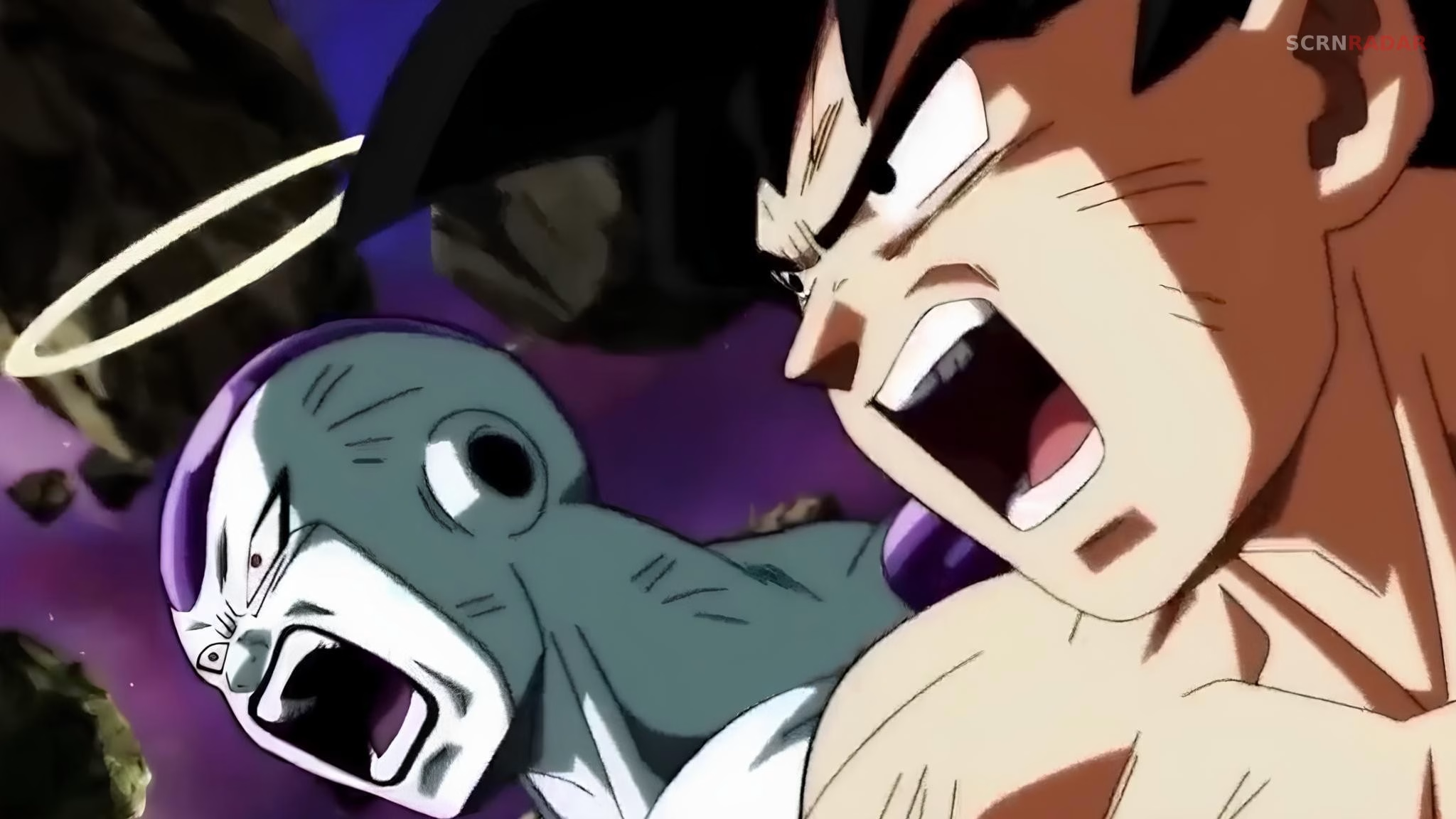
The defeat of Jiren is not achieved through a single overpowering move but through collective effort. In one of the most memorable sequences in Dragon Ball Super, Goku and Frieza team up to physically push Jiren out of the arena. Despite being enemies for most of the series, the two temporarily set aside their rivalry for survival.
This moment is significant because it reinforces the core theme of the Tournament of Power. Strength alone is not enough to win. Cooperation, sacrifice, and trust ultimately determine the outcome. Jiren, who believed in solitary strength above all else, is defeated by a team that embodies unity despite their differences.
Android 17 plays a key role by supporting the effort and ensuring that Universe 7 maintains a presence in the arena. As Goku and Frieza fall alongside Jiren, 17 remains the last fighter standing, securing victory for Universe 7.
Why Android 17 becomes the winner
The decision to make Android 17 the final survivor surprised many fans, especially given the prominence of Goku and Vegeta throughout the series. However, his victory aligns perfectly with the narrative of the Tournament of Power. Unlike the Saiyans, 17 approaches battles with logic and efficiency rather than emotion.
Throughout the tournament, he conserves energy, avoids unnecessary risks, and prioritizes survival. These qualities ultimately allow him to outlast even the strongest fighters. His win also highlights the importance of adaptability and intelligence in high-stakes scenarios.
More importantly, Android 17’s character arc reflects growth and responsibility. Once a destructive force during the Android saga, he has evolved into a protector of nature and a guardian of life. This transformation makes him the ideal candidate to make the tournament’s final wish.
Android 17’s wish and its true significance
After Universe 7 is declared the winner, Android 17 is granted the Super Dragon Balls to make any wish he desires. Throughout the tournament, he had jokingly mentioned wanting a luxury cruise, leading some to believe he might choose a selfish reward. However, his actual wish surprises everyone.
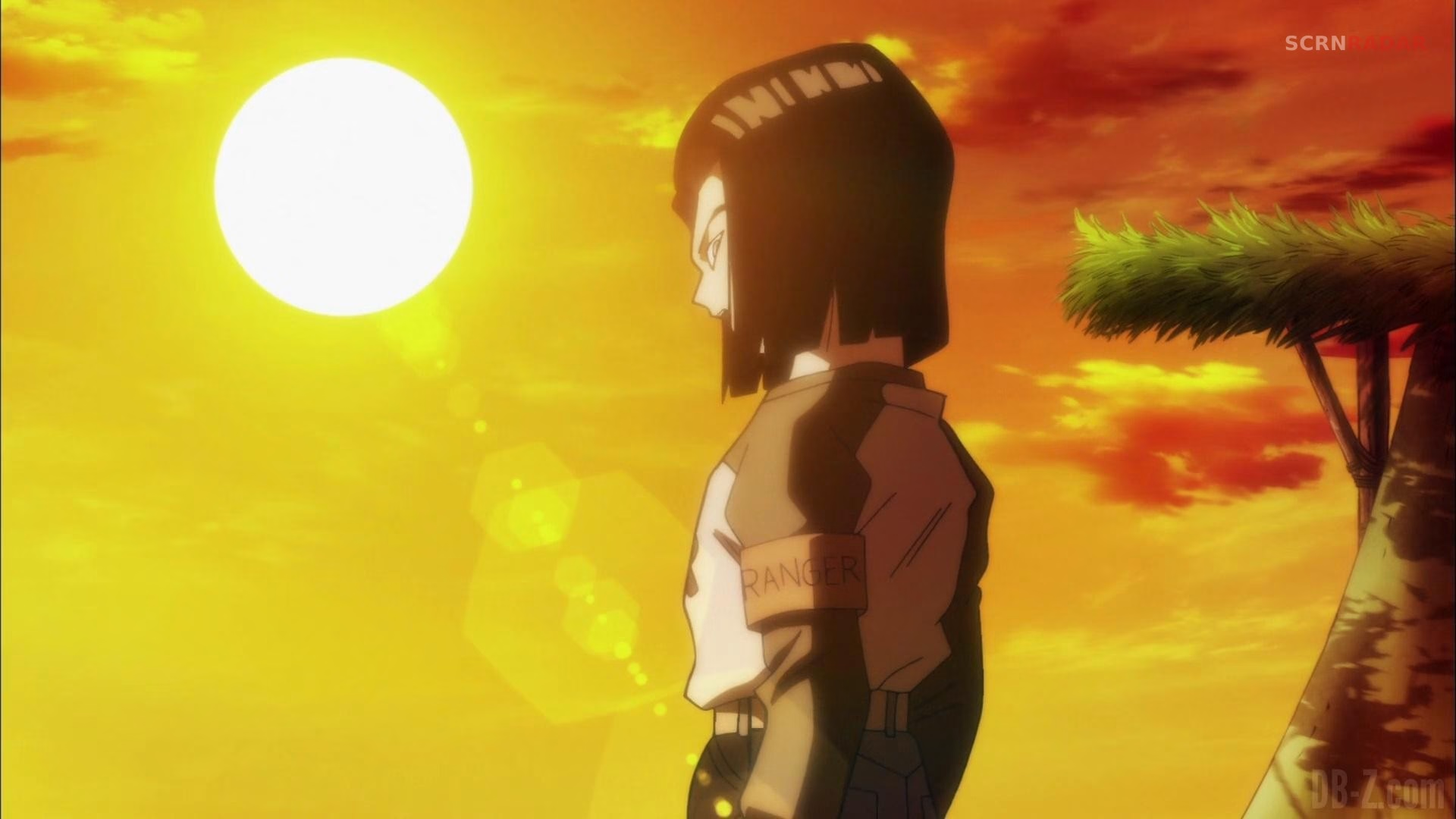
Android 17 chooses to restore all the universes that were erased during the Tournament of Power. This selfless act ensures that the lives lost during the competition are brought back, effectively reversing the destruction caused by the Zeno kings’ game.
This moment carries deeper significance because it fulfills a hidden test set by the Omni-King. It is revealed that the tournament was designed to evaluate the moral character of the participating universes. If the winner had made a selfish wish, all universes would have been erased permanently.
Android 17’s decision proves that Universe 7 possesses the compassion and selflessness required to justify its survival. His wish not only saves countless lives but also validates the values that Goku and his allies represent.
The hidden test behind the Tournament of Power
One of the most important revelations in the ending is that the Tournament of Power was never just about strength. The Omni-Kings orchestrated the event as a test of morality and character. The destruction of universes served as both a consequence and a setup for the final evaluation.
This twist reframes the entire arc, turning what seemed like a brutal survival game into a philosophical experiment. The question was never who is the strongest but rather who deserves to exist. The final wish becomes the deciding factor in this judgment.
By choosing to restore all universes, Android 17 effectively passes the test on behalf of Universe 7. His decision demonstrates empathy, responsibility, and an understanding of the value of life, qualities that contrast sharply with the selfish desires that could have led to total annihilation.
What happens to Goku, Vegeta, and Frieza after the ending
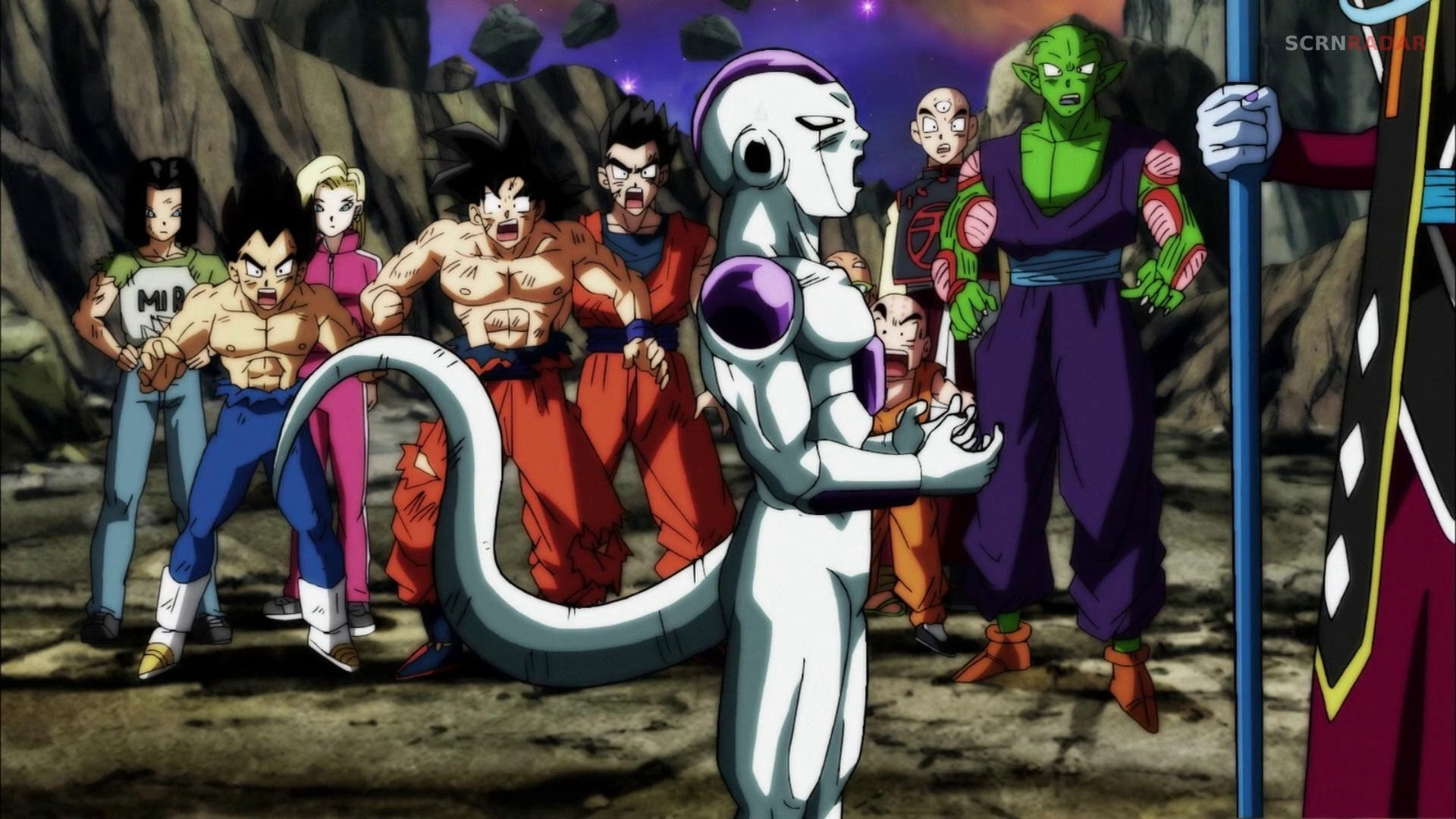
Following the tournament, Goku and Vegeta return to their usual lives, but their experiences have clearly changed them. Goku remains driven to become stronger, particularly after encountering Ultra Instinct and realizing its potential. However, he also gains a deeper appreciation for teamwork and the bonds he shares with others.
Vegeta, on the other hand, undergoes subtle but meaningful growth. His actions during the tournament reflect a shift from pride-driven ambition to a more balanced sense of responsibility. His promise to Cabba and his motivation to protect his family add emotional depth to his character.
Frieza’s fate is equally important. After assisting Universe 7, he is rewarded with a full resurrection, allowing him to return to life permanently. This decision reintroduces one of Dragon Ball’s most iconic villains into the story, setting up future conflicts and power struggles.
The deeper meaning of the Tournament of Power ending
At its core, the ending of Dragon Ball Super emphasizes themes that go beyond traditional shonen storytelling. While power and transformation remain central elements, the conclusion highlights the importance of cooperation, empathy, and moral choice.
The contrast between Goku and Jiren represents two opposing philosophies. Jiren believes that strength comes from isolation and self-reliance, while Goku’s power is rooted in his connections with others. The outcome of their battle reinforces the idea that true strength is not achieved alone.
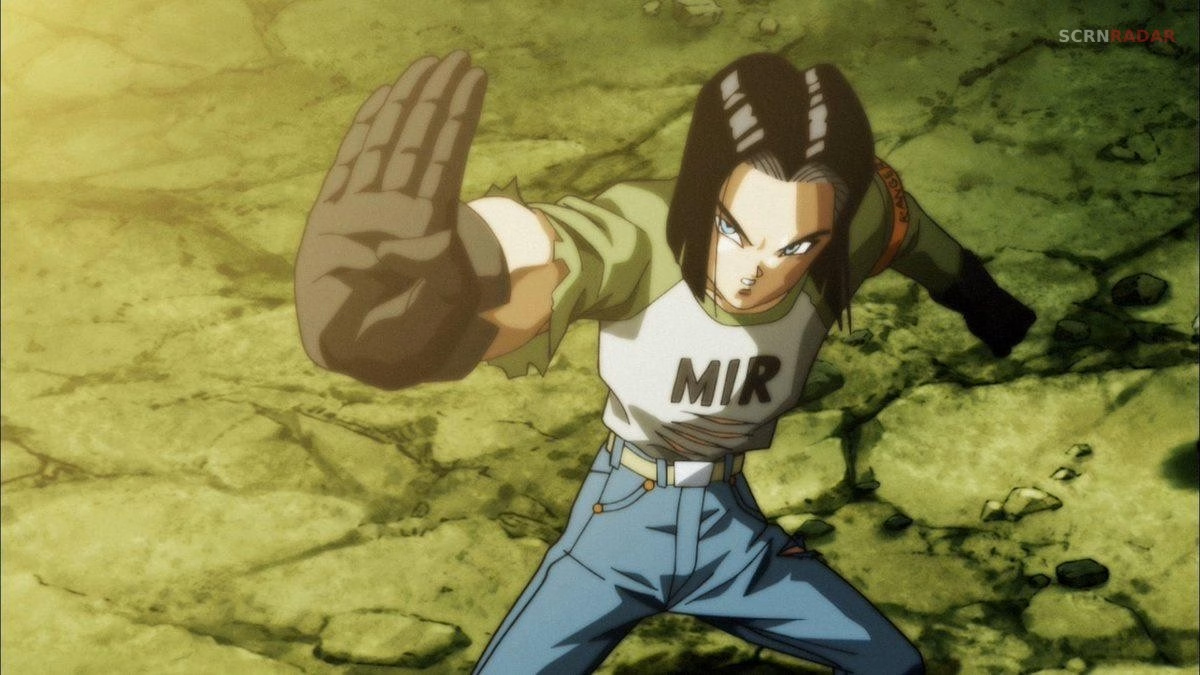
Android 17’s wish serves as the ultimate expression of this theme. By prioritizing the well-being of others over personal gain, he embodies the values that define Universe 7’s victory. The ending suggests that survival is not just about being the strongest but about being worthy.
How the ending sets up the future of Dragon Ball Super
Although the anime concludes with the Tournament of Power, the story of Dragon Ball Super continues in other forms. The introduction of Ultra Instinct opens new possibilities for Goku’s growth, while the return of Frieza adds ongoing tension to the narrative.
The multiverse itself remains intact thanks to Android 17’s wish, allowing for future arcs to explore new universes and characters. The relationships formed during the tournament, including alliances and rivalries, provide a foundation for continued storytelling.
The ending also reinforces the presence of the gods and the Omni-Kings, ensuring that the stakes remain high in future conflicts. While the immediate threat of universal erasure is resolved, the structure of the multiverse leaves room for even greater challenges ahead.