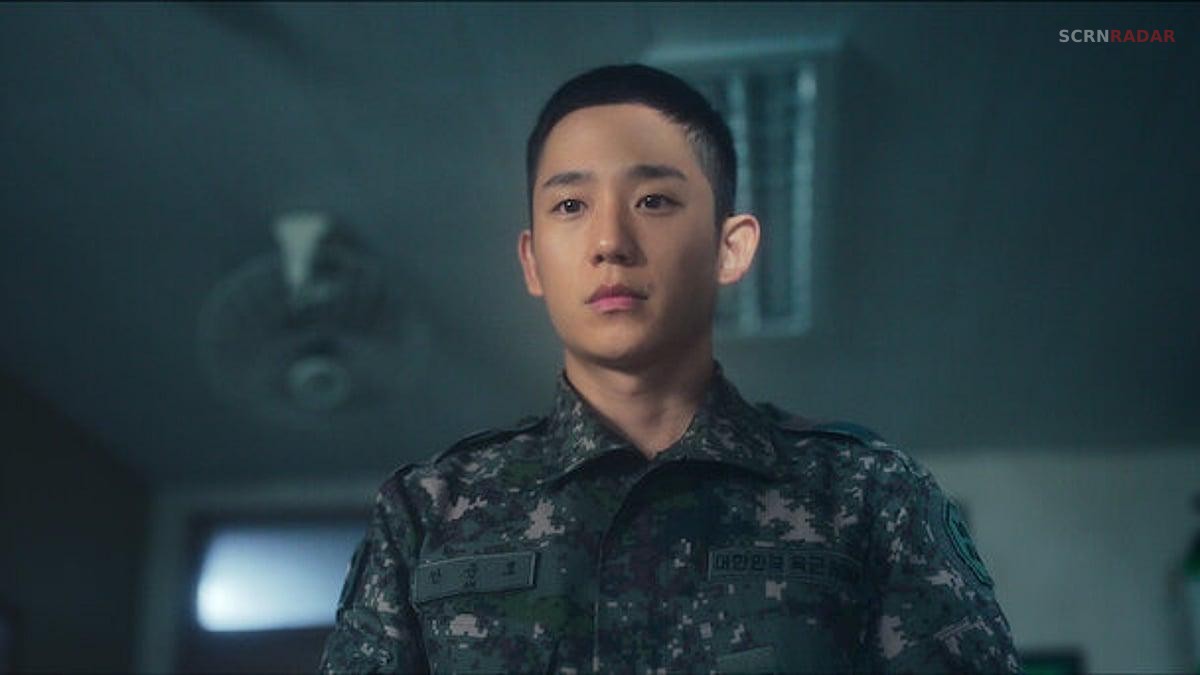
Netflix’s D.P. is not the typical K-drama audiences might expect. Rather than focusing on romance, fantasy, or lighthearted comedy, the series dives into the harsh realities of South Korea’s mandatory military service system. Based on the webtoon D.P. Dog’s Day by Kim Bo-tong, the drama follows Private Ahn Jun-ho, a young soldier assigned to the Deserter Pursuit (D.P.) unit, whose job is to track down military deserters.
As Jun-ho and his partner investigate runaway soldiers, they uncover stories of abuse, hazing, mental health struggles, and systemic failures within the military. What begins as a procedural drama gradually evolves into a powerful social commentary that challenges viewers to question the institutions and traditions that enable suffering.
With outstanding performances, sharp writing, and emotional storytelling, D.P. has earned widespread critical acclaim and remains one of Netflix’s most impactful Korean dramas.
A Unique Premise That Goes Beyond Military Action
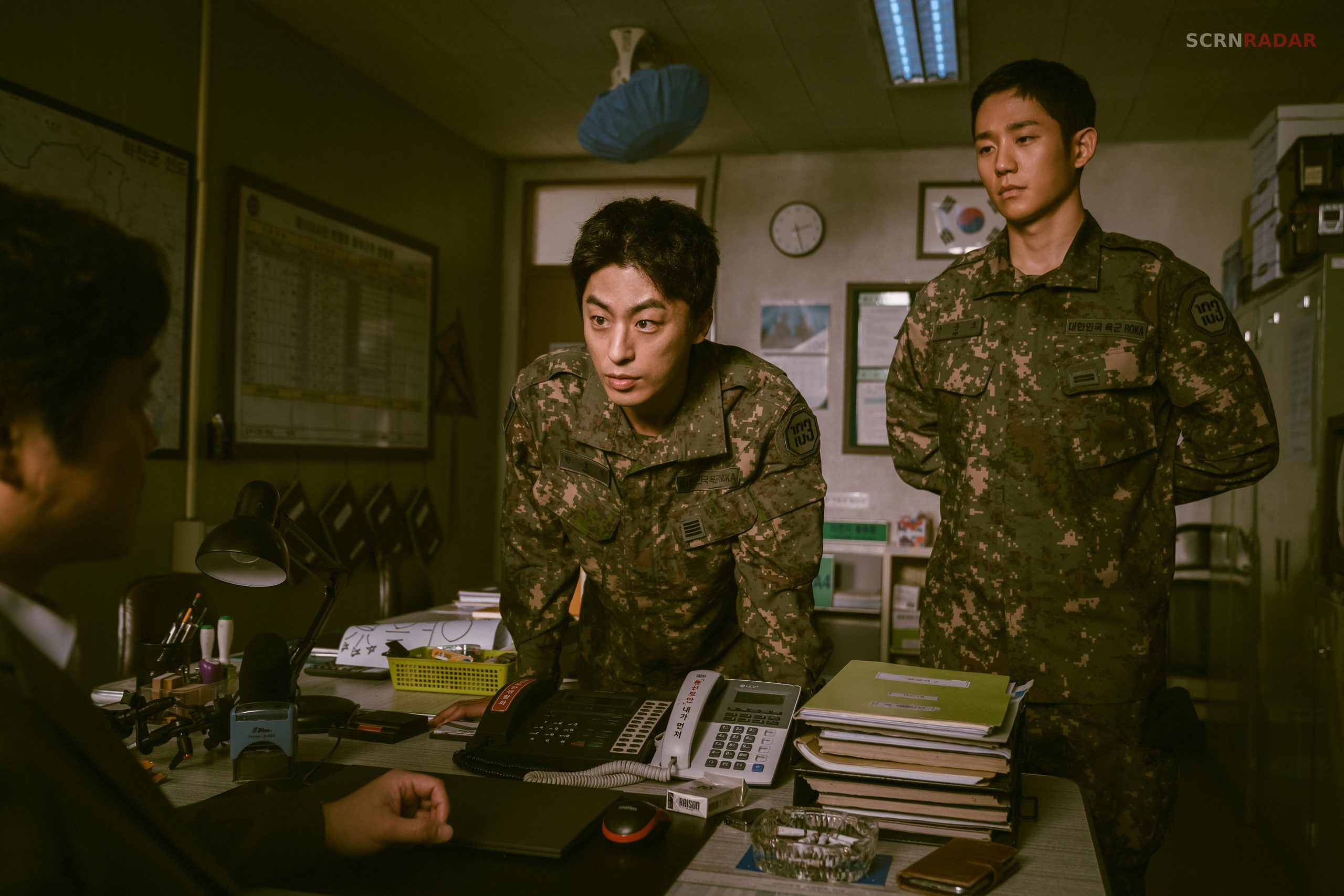
The premise of D.P. immediately sets it apart from most military dramas. Private Jung Hae-in plays Ahn Jun-ho, a quiet recruit who joins the Deserter Pursuit unit after displaying strong observation skills. Alongside Corporal Koo Kyo-hwan’s Han Ho-yeol, he travels across South Korea searching for soldiers who have fled military service.
Rather than portraying deserters as criminals, the series explores the reasons behind their decisions. Each case reveals different forms of bullying, humiliation, and psychological trauma that push soldiers to their breaking points. This approach transforms the drama into a character-driven exploration of human suffering rather than a simple chase series.
The result is a show that constantly challenges viewers’ assumptions. Every episode raises difficult questions about responsibility, power, and the cost of maintaining rigid hierarchies.
Outstanding Performances Carry the Series
One of D.P.’s greatest strengths is its cast. Jung Hae-in delivers arguably the strongest performance of his career as Ahn Jun-ho. His portrayal captures the character’s growing frustration and emotional exhaustion as he witnesses repeated injustice. Critics widely praised his nuanced performance and ability to communicate complex emotions with subtle expressions.
Koo Kyo-hwan provides the perfect counterpart as Han Ho-yeol. While Jun-ho is reserved and serious, Ho-yeol often brings humor and energy to their partnership. Their chemistry feels natural, making their friendship one of the show’s most engaging elements.
Supporting actors Kim Sung-kyun and Son Suk-ku further strengthen the series. Their performances add depth to the military command structure and highlight the different perspectives within the system.
Brutal Themes Handled With Realism
The defining characteristic of D.P. is its willingness to confront uncomfortable realities. The series depicts bullying, abuse of power, toxic masculinity, and mental health struggles without softening their impact. Rather than sensationalizing these issues, the show presents them as systemic problems that affect countless individuals.
Several reviewers praised the drama for its unflinching approach. Critics highlighted how effectively it examines the culture of hazing and the cycle of abuse that often perpetuates itself within hierarchical institutions.
This realism can make the series emotionally exhausting at times. Some scenes are difficult to watch, but that discomfort serves an important purpose. The show wants audiences to confront these issues rather than ignore them.
Strong Writing and Cinematic Direction
Director Han Jun-hee brings a cinematic quality rarely seen in television dramas. The series combines intense action sequences with quieter emotional moments, maintaining tension throughout its six-episode first season. The pacing is tight, ensuring that every episode contributes meaningfully to the larger narrative.
The writing deserves equal praise. Each deserter’s story feels distinct and personal, allowing viewers to understand the human cost behind every case. The drama avoids simplistic solutions and instead presents complex situations with moral ambiguity.
Many critics specifically praised the cinematography and storytelling, noting how the series balances social commentary with compelling entertainment. The result is a drama that remains thought-provoking long after the final episode.
The Good
- Strong performances from Jung Hae-in and Koo Kyo-hwan.
- Excellent writing that humanizes every deserter's story.
- Powerful social commentary on bullying and abuse.
- Tight pacing with cinematic production quality.
- Thought-provoking themes that stay with viewers.
The Bad
- Some scenes may be too intense for sensitive viewers.
- The dark subject matter makes it emotionally draining.
- A few supporting characters receive limited development.