The latest episode of Euphoria season 3 has put Colman Domingo front and center, finally peeling back the layers of his character Ali in a way the series had avoided for years. As the penultimate episode unfolds, viewers are given a raw look into Ali’s past, transforming him from a calm, philosophical mentor into a deeply flawed man still grappling with his history.
In a recent interview with The Hollywood Reporter, Domingo explained why now was the right time to reveal this side of Ali. The decision not only deepens the character but also reshapes his relationship with Rue Bennett, played by Zendaya, just as the series heads into its highly anticipated finale.
Ali’s Backstory Finally Comes Into Focus
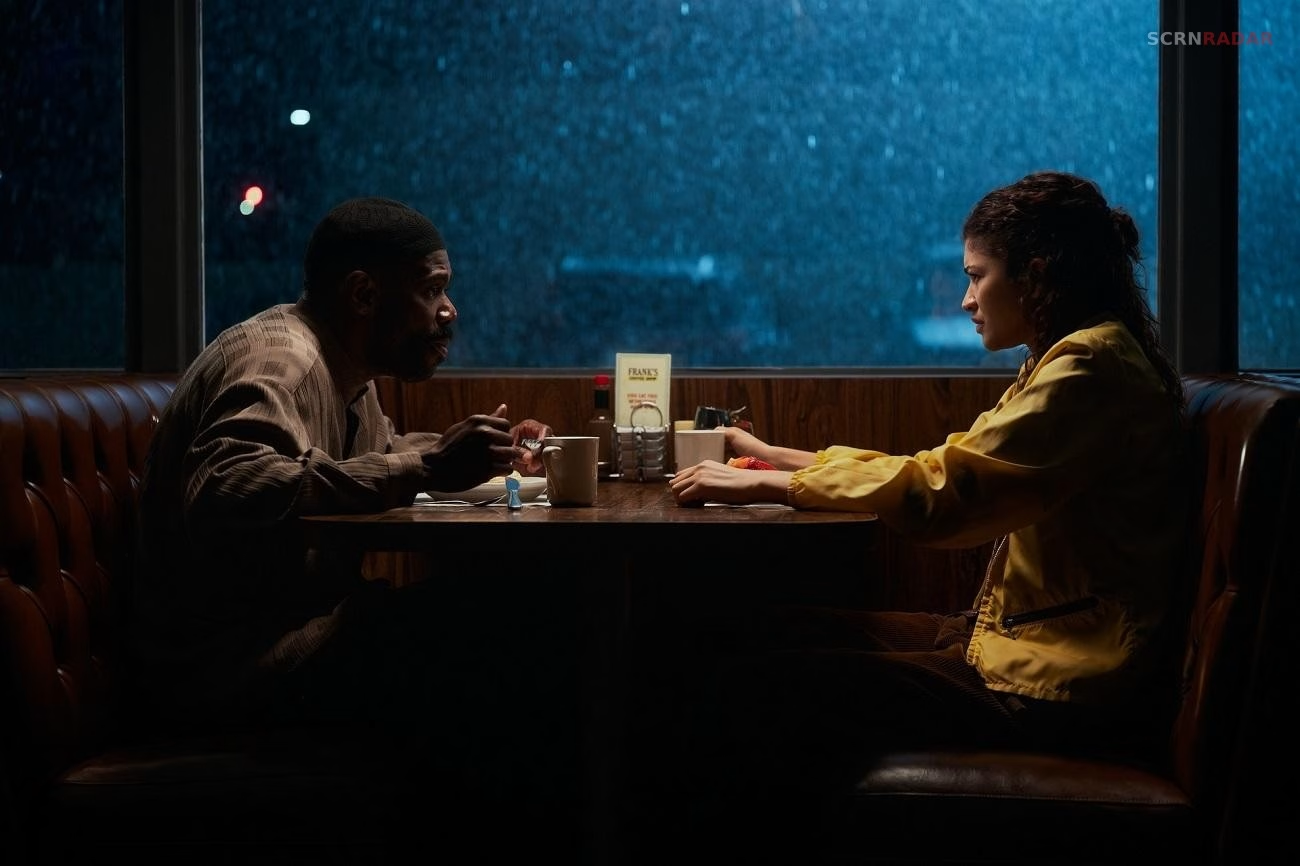
For much of the show’s run, Ali has been portrayed as a steady guiding force for Rue, often delivering reflective advice during their diner conversations. However, season 3 shifts that dynamic by showing the life he led before recovery, including moments of addiction, infidelity, and emotional volatility.
Domingo emphasized that this shift was always part of creator Sam Levinson’s long-term plan. He explained that the intention was to provide context for Ali’s actions rather than present him as a purely moral figure.
“We get to see some of the darkness that Ali says he can’t drop,”
Domingo said, adding that the new material
“humanizes him a bit more instead of just being a voice of wisdom in a diner.”
The actor noted that the show deliberately avoided turning Ali’s past into a conventional redemption story. Instead, the focus remains on understanding the contradictions within him, allowing audiences to see both his struggles and his attempts to move forward.
Moving Beyond the “Diner Philosopher” Persona
A key theme in Domingo’s comments is the need to evolve Ali beyond the role he played in earlier seasons. While those quiet diner scenes became iconic, the actor felt it was time to explore new dimensions of the character.
“I knew for sure that Ali wouldn’t just be in a diner sounding like a bumper sticker,”
Domingo told The Hollywood Reporter.
“We already did that.”
This statement reflects a broader shift in the show’s storytelling approach, where characters are no longer confined to familiar patterns.
By placing Ali in different environments and showing him at a younger, more volatile stage of his life, the series expands its emotional scope. These scenes reveal a man who was once consumed by chaos, making his current attempts at stability feel more hard-earned and fragile.
Chemistry and Authenticity Drive Key Scenes
One of the standout elements of the episode is Ali’s interaction with a fellow addict played by Natasha Lyonne. The casting choice adds an extra layer of authenticity, as Lyonne has openly discussed her own experiences with addiction.
Domingo highlighted how this real-world perspective influenced their performances, noting that the show benefits from working with actors who bring lived experience into their roles.
“There’s an authenticity in the room, so I can’t fake it or lie,”
he said, explaining how that honesty shaped their scenes together.
The episode also features a powerful exchange between Ali and Rue, where their relationship takes on a more emotionally complex tone. Rather than simply offering guidance, Ali is forced to confront the reality of Rue’s situation, creating tension that reflects their shared vulnerabilities.

A Relationship Built on Need and Survival
As the series progresses, the bond between Ali and Rue evolves into something deeper than mentorship. Domingo described it as shifting toward a surrogate father-daughter dynamic, driven by mutual need.
“She doesn’t have a father, and I don’t have my daughters,”
he explained, emphasizing how both characters are searching for connection and redemption. This dynamic adds emotional weight to their interactions, particularly as Rue’s circumstances become increasingly dangerous.
Ali’s motivation to help Rue is not entirely selfless. Domingo suggested that keeping her alive is also a way for Ali to cope with his own past and maintain a sense of purpose. This layered approach avoids simple moral binaries, instead presenting a relationship shaped by both compassion and personal survival.
Themes of Loss and Faith Shape the Season
Season 3 of Euphoria has been heavily influenced by themes of grief and mortality, something Domingo addressed in the interview. He pointed out that the show’s creative direction was shaped by real-life experiences of loss, which informed the emotional tone of the season.

Ali’s character embodies this theme through his role as a sponsor, constantly supporting others while dealing with the reality that not everyone survives addiction. Domingo described how Ali keeps track of those he has lost, yet continues to offer hope to those still struggling.
“He buries another person, but he still has hope,”
Domingo said, capturing the resilience at the heart of the character. This persistence reflects the show’s broader exploration of faith, both in oneself and in others.
What to Expect From the Finale
With the season finale approaching, Domingo teased a dramatic conclusion that will build on the groundwork laid throughout the series. His comments suggest that the final episode will deliver unexpected developments that tie together multiple character arcs.
“It’s going to smack people in the face,”
he said, hinting at the intensity of what’s to come. While he avoided specific spoilers, the statement underscores the high stakes facing the characters as they reach a breaking point.
The buildup to this moment has been gradual, allowing each storyline to develop organically. As a result, the finale is expected to feel both surprising and inevitable, a culmination of the themes and conflicts explored over three seasons.
Colman Domingo’s expanded role in season 3 marks a turning point for Euphoria, offering a deeper understanding of one of its most compelling characters. By revealing Ali’s past and redefining his relationship with Rue, the show adds new emotional layers just as it heads into its climax.
As the finale approaches, Domingo’s insights suggest that the story is far from predictable. Instead, it promises a powerful conclusion that challenges both its characters and its audience, reinforcing why Euphoria continues to stand out as one of television’s most ambitious dramas.