Bungou Stray Dogs: BEAST is not a typical franchise spin-off. Instead of continuing the main storyline, it asks a simple but powerful question: What would happen if the lives of Atsushi Nakajima and Ryunosuke Akutagawa were completely reversed? The answer creates one of the most intriguing alternate universes in the entire Bungou Stray Dogs franchise.
Released in 2022 and directed by Koichi Sakamoto, the live-action film adapts Kafka Asagiri’s BEAST light novel. The story places Akutagawa inside the Armed Detective Agency while Atsushi becomes a feared member of the Port Mafia. This role reversal changes not only the characters’ allegiances but also the emotional core of the narrative. The film was written by Asagiri himself and features many actors who previously portrayed these characters in stage productions.
For longtime fans, BEAST offers a fresh perspective on familiar characters. For newcomers, it serves as a darker and more tragic introduction to the world of Bungou Stray Dogs. The result is a film that succeeds in several important areas while also revealing the limitations of adapting a beloved novel into a two-hour live-action feature.
What Is Bungou Stray Dogs: BEAST About?
The biggest selling point of BEAST is its alternate timeline premise. In the original series, Atsushi joins the Armed Detective Agency and frequently clashes with Akutagawa of the Port Mafia. In BEAST, those roles are reversed. Akutagawa becomes associated with the Agency, while Atsushi grows into the Port Mafia’s most dangerous operative, often referred to as the White Reaper.
This change instantly creates a different emotional dynamic. Akutagawa, who is usually aggressive and ruthless, becomes a protagonist driven by his desire to rescue his sister Gin. Meanwhile, Atsushi transforms into a colder and more intimidating figure whose circumstances have pushed him down a darker path. The movie explores how environment and mentorship shape people’s identities.
The story also places Osamu Dazai at the center of the mystery. As with many Bungou Stray Dogs narratives, Dazai’s actions influence nearly every major event. His role in this alternate world creates several surprising revelations that gradually explain why reality unfolded differently from the version fans already know.

One of the Franchise’s Best Alternate Universe Concepts
Alternate reality stories often rely on superficial changes. Characters switch sides, wear different costumes, or gain new powers. BEAST goes much deeper than that. The film examines how a person’s experiences shape their morality and worldview.
Akutagawa benefits the most from this approach. In the main series, he often functions as a rival character whose motivations are tied to Dazai’s approval. Here, he receives substantial emotional development. His struggle to save Gin gives him a sympathetic goal that immediately connects with the audience.
Atsushi’s transformation is equally compelling. Seeing the normally kind-hearted protagonist become a feared Mafia enforcer creates a constant sense of unease. The character remains recognizable, yet his personality reflects a lifetime of different choices and influences.
The concept works because it remains faithful to the core themes of Bungou Stray Dogs. Identity, trauma, belonging, and redemption remain central to the narrative. The alternate setting simply allows those themes to be explored from a new angle.
Performances Carry Much of the Film
One of the movie’s greatest strengths is its cast. Many performers previously portrayed these characters in stage adaptations, giving them a strong understanding of the source material. Their familiarity helps preserve the personalities that fans expect despite the altered circumstances.
Shohei Hashimoto delivers a particularly strong performance as Akutagawa. He balances the character’s usual intensity with a vulnerability that rarely appears in the main timeline. His portrayal helps the audience invest in Akutagawa’s emotional journey even when the screenplay moves quickly through major story beats.
Yuki Torigoe’s version of Atsushi is equally memorable. Instead of portraying a traditional hero, he presents a character hardened by his experiences. His scenes carry an intimidating presence that highlights just how different this alternate world truly is.
Rui Tabuchi’s Dazai also deserves praise. Dazai remains one of the franchise’s most difficult characters to portray because he constantly hides his true intentions behind humor and unpredictability. The film successfully captures that complexity while giving him an even more mysterious role within the alternate timeline.
How Well Does the Live-Action Format Work?
Anime adaptations often struggle when translated into live action. Stylized powers, exaggerated personalities, and elaborate action sequences can feel awkward when recreated with real actors. Fortunately, BEAST performs better than many anime-based films.
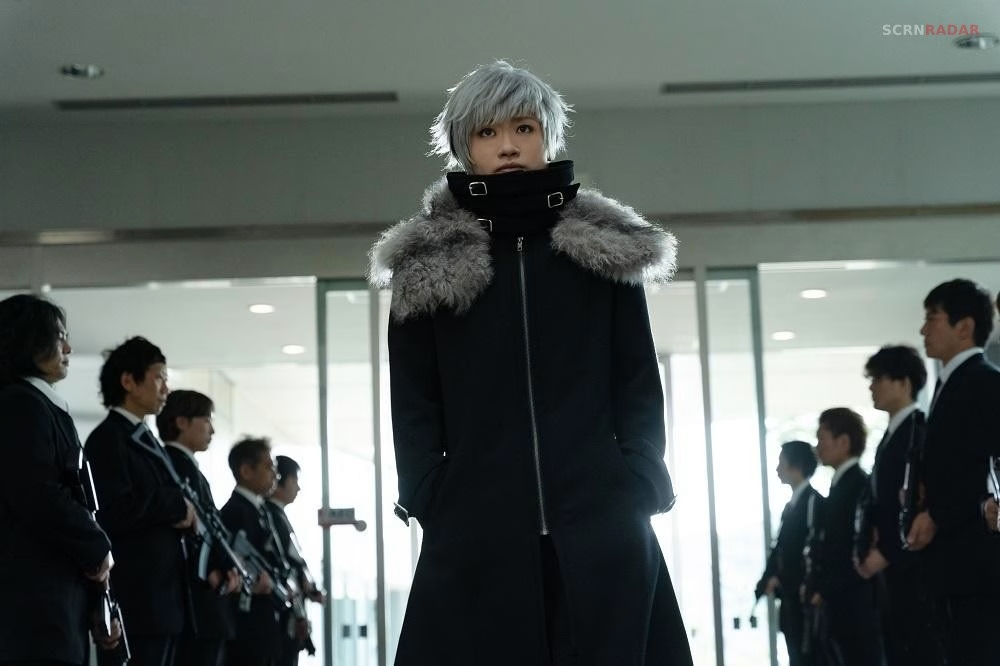
The production embraces the theatrical roots of the cast. Rather than trying to create a completely realistic interpretation, the movie maintains some of the heightened energy associated with the franchise. This approach helps preserve the spirit of the source material.
The action sequences are generally effective. While the budget limitations occasionally become visible, the fights capture the intensity expected from a Bungou Stray Dogs story. Akutagawa’s ability Rashomon remains visually engaging, and several confrontations successfully convey the dangerous nature of the alternate timeline.
The film’s visual presentation also benefits from its darker tone. Yokohama feels more oppressive and tragic than in many parts of the main series. This atmosphere reinforces the narrative’s themes and helps distinguish BEAST from previous adaptations.
Where the Movie Falls Short
Despite its strengths, BEAST is not a flawless adaptation. The biggest issue is pacing. The original light novel contains a significant amount of character development and world-building that simply cannot fit into a single movie.
As a result, some relationships feel underdeveloped. Important emotional moments arrive before the audience has enough time to fully connect with certain characters. Fans familiar with the novel may understand the significance of these scenes, but newcomers could find them less impactful.
Several story elements are also condensed or removed entirely. Community discussions among readers frequently highlight how certain character-building moments from the novel were omitted from the film adaptation. These missing scenes would have provided additional depth to Akutagawa’s relationships with other members of the Armed Detective Agency.
The movie occasionally relies on exposition-heavy dialogue as well. Because the alternate universe concept requires extensive explanation, characters sometimes discuss information that might have been more effective if shown through action or visual storytelling.
The Emotional Core of the Story
What ultimately elevates BEAST above many franchise spin-offs is its emotional focus. Beneath the alternate universe premise lies a story about loss, sacrifice, and the search for purpose.
Akutagawa’s determination to save Gin provides the narrative’s strongest emotional thread. His journey reveals a side of the character that rarely receives attention in the main series. Instead of pursuing recognition or revenge, he is motivated by love and responsibility.

The relationship between Dazai and Oda Sakunosuke also remains central to the film’s emotional impact. Longtime fans understand how important Oda’s influence was on Dazai’s development. BEAST uses that connection to explore themes of fate and personal choice in surprisingly effective ways.
The movie’s final act delivers several emotionally powerful moments that resonate because they are rooted in character rather than spectacle. Even viewers who identify the twists early may still find themselves affected by the tragic consequences of the story’s central conflict.
How It Compares to the Anime
Comparing BEAST directly to the anime may not be entirely fair because the two projects have different goals. The anime focuses on long-form storytelling and character development across multiple seasons. The movie tells a self-contained alternate reality narrative.
The anime remains superior in terms of production quality, world-building, and character depth. Studio Bones had significantly more time and resources to develop the franchise’s cast and mythology. The emotional investment built over dozens of episodes is difficult for any film to replicate.
However, BEAST offers something the anime cannot. It allows fans to see familiar characters from completely different perspectives. The role reversal concept creates fresh interactions and emotional conflicts that would never occur in the primary timeline.
For dedicated fans, this uniqueness becomes one of the movie’s greatest strengths. It expands the franchise without undermining the existing story. Instead, it demonstrates how small changes can produce dramatically different outcomes.
Is the Movie Accessible for New Viewers?
This is one area where opinions will likely differ. Technically, BEAST functions as a standalone story. The movie explains its alternate reality premise and introduces its major characters clearly enough for new viewers to follow the plot.
However, prior knowledge of Bungou Stray Dogs significantly enhances the experience. Much of the film’s appeal comes from recognizing how drastically the characters have changed. Without that context, some of the role reversals lose their emotional impact.

New viewers may also struggle with the large ensemble cast. The franchise contains many important characters, and the movie does not always have enough time to fully develop each one.
For that reason, existing fans will probably enjoy the film more than complete newcomers. Nevertheless, the central narrative remains understandable and emotionally engaging even without extensive franchise knowledge.
Bungou Stray Dogs: BEAST succeeds because it understands what makes alternate universe stories compelling. It does not rely solely on novelty. Instead, it uses its changed timeline to explore familiar characters in meaningful new ways.
The film benefits from strong performances, an intriguing premise, and emotional storytelling that remains faithful to the themes of Kafka Asagiri’s original work. While pacing issues and condensed character development prevent it from reaching its full potential, the adaptation still offers a rewarding experience for fans of the franchise.
Those expecting the production values of the anime may leave somewhat disappointed. However, viewers willing to embrace the film’s theatrical style and focus on character-driven drama will find plenty to appreciate. BEAST is not merely a curiosity for collectors of franchise spin-offs. It is a thoughtful exploration of fate, identity, and the choices that define who people become.