For years, Boruto: Naruto Next Generations struggled to live up to the towering legacy of Naruto. Fans often pointed to uneven pacing, inconsistent stakes, and a lack of emotional urgency as key issues. However, Boruto: Two Blue Vortex has dramatically shifted that perception, and Episodes 4 and 5 stand as the clearest evidence yet that this reboot deserved a second chance.
These chapters do more than just progress the story. They redefine the tone, sharpen the narrative focus, and lift the emotional stakes to a level the series had long struggled to reach. For many readers, this feels like the moment Boruto finally steps out of Naruto’s shadow and claims its own identity.
Episodes 4 and 5 showcase a confident, mature story that respects its legacy while pushing forward. Let’s break down why these chapters feel like a turning point and what makes them some of the strongest entries in the entire Boruto saga.
A Stronger, More Layered Boruto Uzumaki
One of the most striking improvements in Episodes 4 and 5 is the transformation of Boruto Uzumaki. Earlier in the series, Boruto was often criticized for lacking the emotional depth and relatability that defined Naruto Uzumaki.
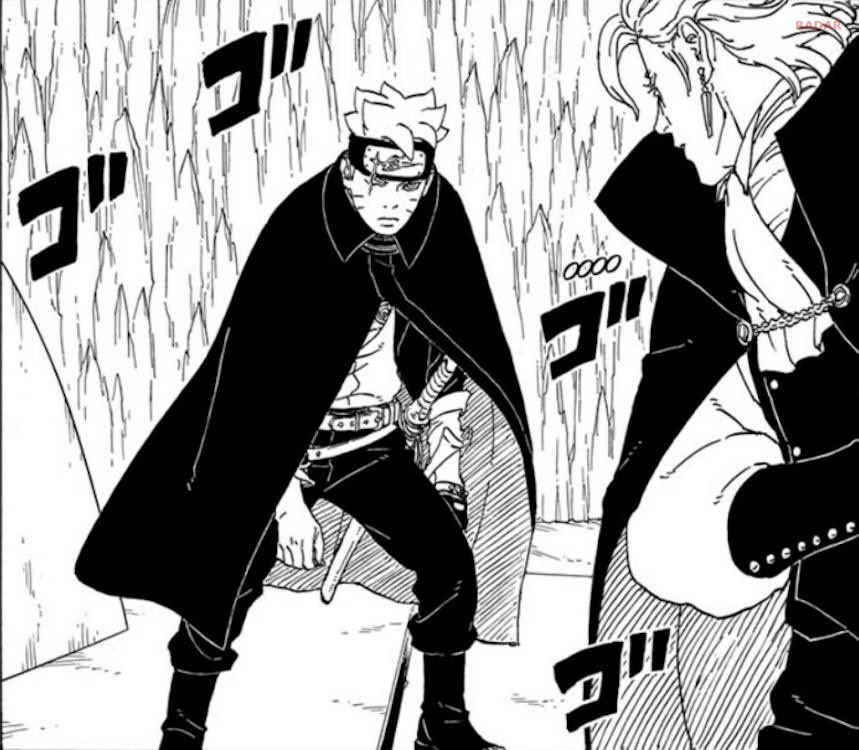
That criticism no longer holds weight. The post-timeskip Boruto is a fundamentally different character, shaped by exile, betrayal, and the burden of being misunderstood by the very world he is trying to protect. His calm demeanor hides a deep emotional undercurrent, and Episodes 4 and 5 lean into that complexity.

What makes this version of Boruto compelling is his restraint. He does not rush into battle blindly. Instead, he observes, calculates, and acts with purpose. This evolution reflects a character who has learned from hardship, and it adds a level of maturity that aligns the series more closely with the later arcs of Naruto.
Additionally, Boruto’s internal conflict adds depth to his actions. He is not just fighting external threats but also grappling with his identity and role in a world that has essentially turned against him. This dual-layered struggle gives the story emotional weight that was often missing before.
Code Emerges as a Truly Dangerous Villain
Episodes 4 and 5 also lift Code into a far more compelling antagonist. Previously, Code’s presence felt more like a looming threat than an immediate danger. In these chapters, that changes completely.
Code is no longer just a background villain waiting for his moment. He actively drives the tension and forces the narrative into high-stakes territory. His abilities feel threatening, his decisions carry consequences, and his unpredictability adds a constant sense of danger.
More importantly, Code’s role highlights how much the stakes have increased. This is no longer a story where conflicts resolve neatly or without cost. Every encounter feels like it could have lasting repercussions, and that unpredictability is crucial for maintaining engagement.
The writing also avoids making Code a one-dimensional antagonist. His motivations and actions hint at a larger, more complex narrative that is still unfolding. This layered approach to villainy is something Boruto had been missing, and Episodes 4 and 5 finally deliver it.
Kawaki vs Boruto: Ideology Over Power
The dynamic between Kawaki and Boruto remains one of the most compelling aspects of the story, and these chapters deepen that conflict in meaningful ways.
What makes their rivalry so engaging is that it is not purely about strength. It is rooted in ideology. Kawaki’s desire to protect at any cost contrasts sharply with Boruto’s more balanced perspective. This philosophical divide adds layers to their interactions, making every confrontation feel significant.
Episodes 4 and 5 emphasize this tension without overexplaining it. The narrative trusts the audience to understand the stakes, allowing the emotional weight to build naturally. This subtlety enhances the storytelling and makes their conflict feel more authentic.
Their relationship is also a reflection of the series’ broader themes. It explores questions of identity, sacrifice, and what it truly means to protect others. This thematic depth is a major step forward for Boruto as a whole.
A Darker Tone That Enhances the Narrative
One of the most noticeable changes in Two Blue Vortex is its darker tone, and Episodes 4 and 5 fully commit to it. The story no longer feels like a lighter continuation of Naruto but rather a natural progression into a more mature phase.
This tonal shift allows the narrative to explore more complex themes without feeling out of place. Loss, isolation, and moral ambiguity are now central to the story, creating a more immersive and emotionally resonant experience.
Importantly, this darker tone does not feel forced. It emerges organically from the characters’ circumstances and the stakes they face. This authenticity is what makes the shift so effective.
Improved Pacing and Storytelling Confidence
Another major strength of Episodes 4 and 5 is their pacing. Unlike earlier arcs that often felt stretched or unfocused, these chapters move with purpose. Every scene contributes to the overall narrative, and there is little to no wasted space.

This efficiency enhances the impact of key moments. Action sequences feel intense and meaningful, while quieter scenes provide necessary emotional context. The balance between these elements keeps the story engaging from start to finish.
There is also a noticeable increase in storytelling confidence. The narrative no longer feels the need to over-explain every detail. Instead, it allows moments to unfold naturally, trusting the audience to interpret and engage with the material.
This shift makes the reading experience more rewarding, as it encourages deeper investment in the story and its characters.
Why This Reboot Truly Works
Episodes 4 and 5 highlight why Two Blue Vortex succeeds where the original series struggled. The reboot does not simply continue the story. It refines it.
By focusing on character development, raising the stakes, and embracing a more mature tone, the series creates a stronger foundation for future arcs. It respects the legacy of Naruto while establishing its own identity.
This balance is crucial. It allows long-time fans to reconnect with the franchise while also making the story accessible to newer audiences. It is a rare achievement, and these chapters handle it exceptionally well.
Boruto: Two Blue Vortex Episodes 4 and 5 are a turning point for the franchise. They deliver stronger character development, higher stakes, and a more cohesive narrative than the series has seen in years.
While there is still room for growth, particularly in expanding supporting characters and maintaining consistency, the progress is undeniable. These chapters prove that Boruto has not only improved but has the potential to become something truly great.
This score reflects a series that has finally found its direction. If future chapters maintain this level of quality, Boruto could evolve into a worthy successor to Naruto’s legacy rather than just living in its shadow.