Few films in recent years have sparked as much discussion as Barbie. Directed by Greta Gerwig, the movie begins as a colorful, satirical take on the iconic doll but gradually evolves into something far more introspective. By the time the credits roll, viewers are left with questions about identity, purpose, and what it truly means to be human.
The ending of Barbie is not just about a character choosing a new path. It is about self-discovery, emotional growth, and breaking free from expectations imposed by society. From Barbie’s decision to leave Barbieland to Ken’s realization of self-worth, every arc reaches a meaningful conclusion.
Let’s break down the Barbie ending, including the final scene, the symbolic choices, and whether the film includes an end-credit scene worth sticking around for.
Barbie’s Final Choice Explained: Why She Leaves Barbieland
At the heart of the film’s ending is Barbie’s decision to leave Barbieland and enter the real world. This moment represents the culmination of her journey from perfection to authenticity.
Throughout the movie, Barbie, played by Margot Robbie, begins to question her existence. She experiences thoughts of mortality, imperfection, and emotional complexity. These are things that do not belong in the flawless world of Barbieland.
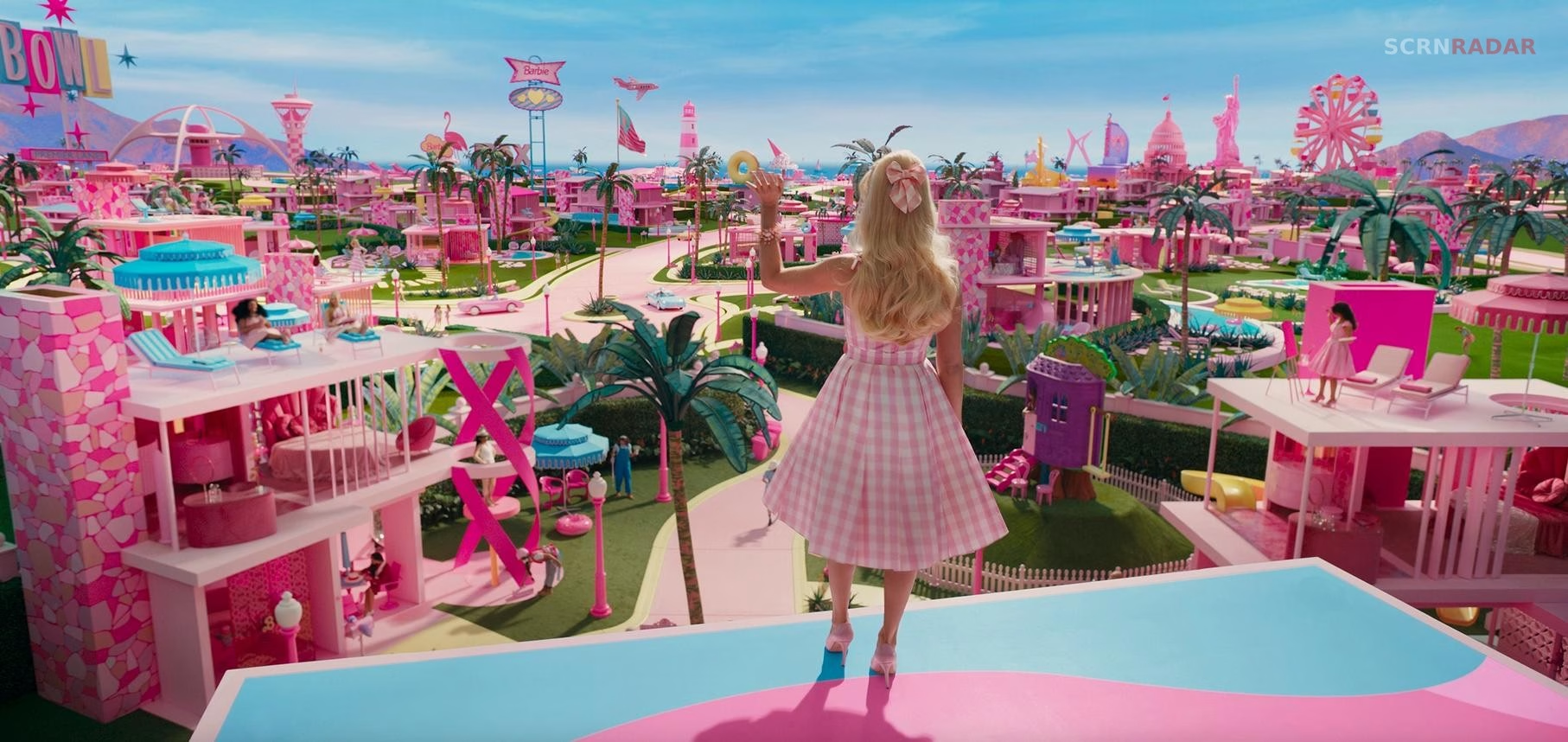
Her meeting with Ruth Handler, portrayed by Rhea Perlman, becomes the turning point. Ruth, the creator of Barbie, offers her a choice: remain in the safe, predictable world of dolls or step into the messy, unpredictable reality of being human. Barbie chooses humanity.
This decision symbolizes growth. It shows that real meaning comes from experiencing life fully, including pain, uncertainty, and imperfection. Instead of being defined by how others see her, Barbie chooses to define herself.
Ken’s storyline is just as important as Barbie’s in understanding the ending. Played by Ryan Gosling, Ken starts the film as someone whose entire identity revolves around Barbie.
When he enters the real world, he discovers patriarchy and mistakenly interprets it as a system that will finally give him value. He brings this idea back to Barbieland, creating chaos and shifting the balance of power.
However, by the end, Ken realizes that this borrowed identity does not fulfill him. His emotional breakdown leads to one of the film’s most important messages: “Ken is enough.”
This realization is powerful because it shifts the narrative away from dependency. Ken does not need Barbie’s validation to exist. He needs to understand himself independently.
The ending suggests that Ken is beginning his own journey of self-discovery. It is not fully resolved, but that is intentional. Growth is ongoing.
After the chaos caused by Ken’s version of patriarchy, Barbieland is restored to its original structure. However, it does not return exactly to how things were.
The Barbies regain control, but the Kens are not given equal power immediately. This choice has sparked debate among viewers. Some see it as a critique of how societal systems evolve slowly, while others interpret it as satire reflecting real-world inequalities.
The film does not present a perfect resolution. Instead, it highlights that change takes time. Equality is not achieved overnight, and systems need gradual reform.
This nuanced ending reinforces the film’s broader themes. It avoids simplistic answers and encourages viewers to think critically about power dynamics and social structures.

Barbie’s transformation is deeply symbolic. It is not just a literal shift from doll to human but a metaphor for self-awareness and emotional awakening.
In Barbieland, Barbie is an idea. She represents perfection, aspiration, and a carefully curated image. In the real world, she becomes a person with agency, flaws, and individuality.
Her choice reflects a universal human desire: to live authentically.
The montage shown before her transformation, filled with real-life moments of joy, sadness, and connection, reinforces this idea. Life’s beauty lies in its imperfections.
By choosing humanity, Barbie embraces uncertainty. She accepts that meaning is not predefined but created through experience.
Barbie’s Final Scene Explained: The Gynecologist Moment
The final scene of Barbie is both humorous and symbolic. Barbie, now living in the real world, walks into an office and announces that she is there to see her gynecologist.
On the surface, this is a comedic punchline. Throughout the film, Barbies are portrayed as anatomically perfect but unrealistic dolls. This line confirms that Barbie has fully transitioned into a human body.
On a deeper level, the scene represents ownership of identity and physical existence. Barbie is no longer an object designed for others. She is a person with autonomy over her life and body.
Ending the film on this note reinforces its central message. Becoming human is not just about emotions. It is about embracing the full reality of existence, including aspects that were once ignored or simplified.

Is There an End-Credit Scene in Barbie?
Unlike many modern films, especially those influenced by franchise storytelling, Barbie does not include a traditional end-credit scene that teases a sequel or expands the narrative.
There are no hidden scenes or major reveals after the credits.
However, the film does include playful and stylistic credits that match its tone. These serve more as a creative extension of the movie rather than additional storytelling content.
This decision aligns with the film’s self-contained narrative. Barbie tells a complete story with a clear thematic resolution. It does not rely on post-credit scenes to leave a lasting impression.
At its core, the ending of Barbie is about identity, freedom, and self-definition.
Barbie’s journey reflects the struggle many people face when trying to move beyond expectations. She begins as a symbol created by others and ends as an individual who defines herself.
Ken’s arc complements this by showing the dangers of tying identity to external validation. His realization that he is enough without Barbie is a powerful counterpoint.
Together, their stories highlight a shared theme: true fulfillment comes from understanding oneself, not from fitting into predefined roles.
The film also explores broader societal themes. It examines gender dynamics, power structures, and the complexities of equality. Rather than offering simple solutions, it encourages reflection.
The ending of Barbie is both satisfying and thought-provoking. It blends humor, emotion, and social commentary into a conclusion that feels meaningful without being overly definitive.