The finale of All of Us Are Dead delivers a powerful mix of heartbreak, survival, and unresolved mystery that leaves viewers with as many questions as answers. Throughout the season, the show builds a relentless atmosphere of fear inside Hyosan High School, where a deadly zombie outbreak turns ordinary students into desperate survivors. By the time the final episode arrives, the stakes are deeply personal, and every character decision carries emotional weight.
The ending does not simply wrap up the story with a neat resolution. Instead, it reflects the harsh reality of survival in a world that has changed forever. Characters we followed from the beginning either find closure or face uncertain futures, while the virus itself evolves into something far more unpredictable. Let’s break down what really happened in the Season 1 finale, why certain characters made the choices they did, and how it all sets up a potential continuation of the story.
The Final Escape and the Cost of Survival
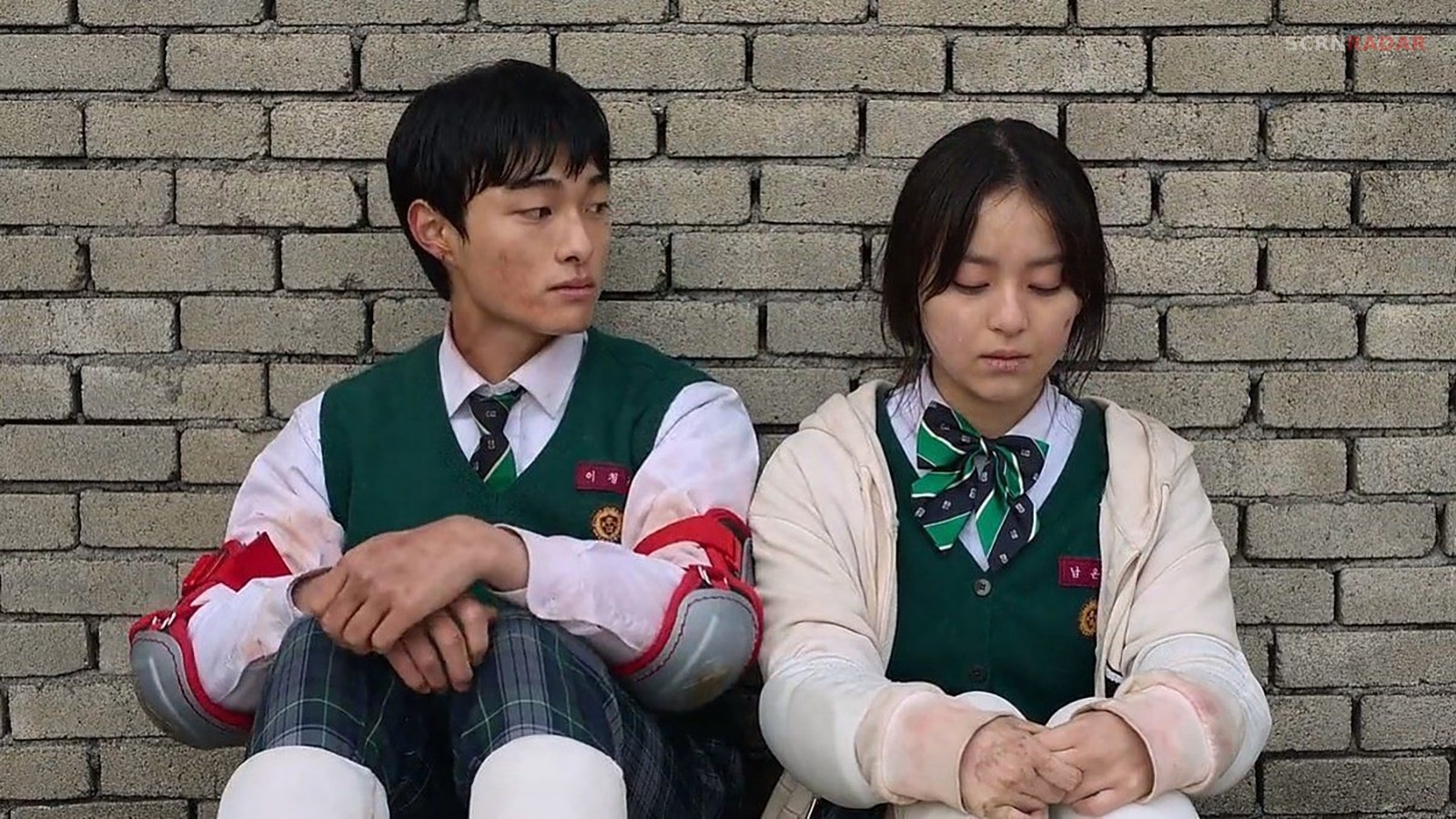
As the military tightens its grip on Hyosan, the surviving students realize that escaping the city is their only chance at survival. Lee Cheong-san and Nam On-jo become the emotional core of this final push, representing both hope and the painful reality of sacrifice. Their bond, which developed steadily throughout the season, reaches its peak during the final moments.
Cheong-san’s confrontation with Yoon Gwi-nam is one of the most intense sequences in the finale. Gwi-nam, now a hybrid infected, embodies the worst evolution of the virus, retaining intelligence while craving violence. Cheong-san’s decision to stay behind and fight him is not just about survival but about protecting his friends, especially On-jo. This moment solidifies his character arc as someone willing to give everything for others.
The explosion that follows appears to kill both Cheong-san and Gwi-nam. However, the show deliberately leaves Cheong-san’s fate ambiguous. Given the series’ pattern of unexpected survivals and transformations, it is possible that his story is not entirely over. This uncertainty adds emotional depth to the ending and keeps viewers invested in what comes next.
One of the most fascinating elements of the finale revolves around Choi Nam-ra and her transformation into what fans call a “halfbie.” Unlike regular zombies, Nam-ra retains her consciousness, emotions, and moral compass while still being infected. This unique condition places her in a constant internal struggle between her humanity and her instincts.
By the end of the season, Nam-ra chooses to separate herself from the group. Her decision is not driven by fear but by responsibility. She recognizes that her condition makes her a potential danger to her friends, even if she does not want to harm them. At the same time, she hints at the existence of others like her, suggesting that the virus is evolving in ways that even the authorities do not fully understand.
This revelation expands the narrative beyond a simple zombie outbreak. It introduces the idea of a new category of infected individuals who exist between life and death. Nam-ra’s final rooftop scene, where she leaps away after hearing other halfbies, reinforces the idea that her journey is far from over. It also sets up a compelling storyline for future seasons, where these hybrid beings could play a central role.
The Military’s Decision and the Bigger Threat
The government’s response to the outbreak is one of the most controversial aspects of the ending. Faced with an uncontrollable virus, the military decides to bomb Hyosan in an attempt to contain the spread. This drastic action highlights the scale of the crisis and the limits of human control in the face of a rapidly mutating infection.
While the bombing successfully eliminates a large portion of the infected population, it comes at a devastating cost. Innocent lives are lost, and the survivors are left traumatized by what they have endured. The decision also raises ethical questions about whether such extreme measures were justified or if there could have been another way.
The aftermath reveals that the virus is not entirely eradicated. Instead, it has adapted, giving rise to individuals like Nam-ra and Gwi-nam. This suggests that the outbreak is not a contained incident but part of a larger, ongoing threat. The military’s actions may have delayed the spread, but they have not eliminated the possibility of future outbreaks.
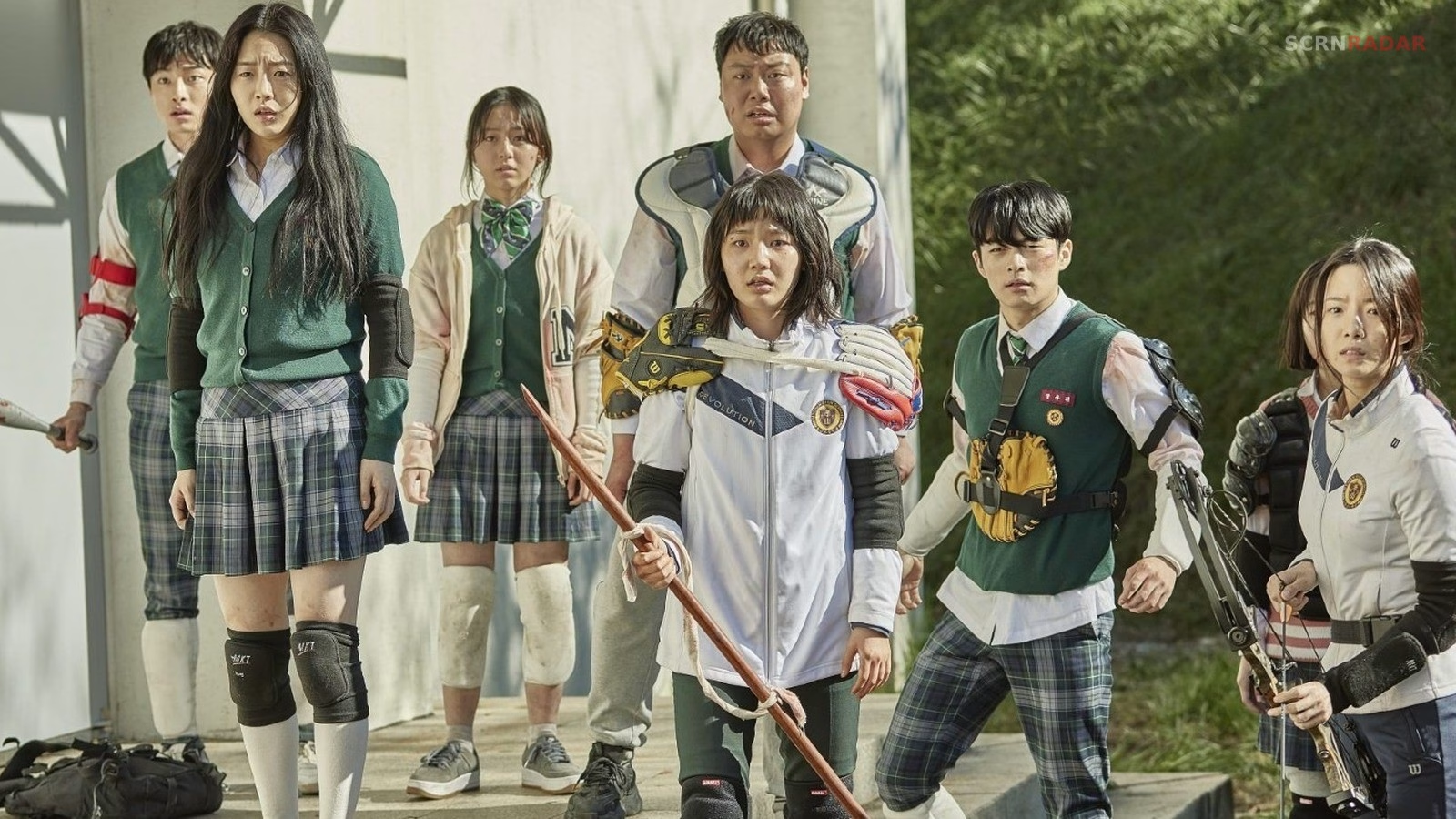
The final scenes focus on the remaining survivors as they attempt to rebuild their lives. Nam On-jo, along with her friends, represents the emotional aftermath of the tragedy. Their journey does not end with relief or celebration but with a quiet acknowledgment of loss.
On-jo’s return to the school rooftop is particularly significant. It serves as a symbolic moment where she confronts her memories and holds onto hope that some of her friends might still be alive. When Nam-ra briefly reunites with the group, it provides a sense of closure while also leaving the door open for future interactions.
The survivors’ bond remains strong, shaped by everything they have experienced together. This emotional continuity is one of the show’s strongest elements, as it grounds the horror in genuine human connections. Even in a world filled with chaos, the relationships between these characters remain a source of strength.
What the Ending Means for Season 2
The ending of All of Us Are Dead is clearly designed to set up a continuation of the story. The introduction of halfbies, the ambiguity surrounding Cheong-san, and the unresolved nature of the virus all point toward a larger narrative waiting to unfold.
Season 2 could explore the origins and evolution of the virus in greater detail. It might also look into the lives of halfbies, examining how they navigate a world that fears and misunderstands them. Nam-ra’s storyline, in particular, has the potential to become the central focus, as she bridges the gap between humans and the infected.
There is also the possibility of expanding the story beyond Hyosan. The virus could spread to other regions, introducing new characters and challenges. This broader scope would allow the series to evolve while maintaining the emotional core that made Season 1 so compelling.
The reason the finale leaves such a strong impact is because it balances action with emotion. It does not rely solely on shock value or spectacle but instead focuses on the human cost of the outbreak. Every major event in the ending carries emotional weight, making it more than just a typical zombie story.
The ambiguity of certain outcomes, especially Cheong-san’s fate, keeps the audience engaged long after the credits roll. At the same time, the introduction of new concepts like halfbies ensures that the story continues to evolve. This combination of closure and mystery is what makes the ending so effective.
Ultimately, the finale of All of Us Are Dead is about survival in every sense of the word. It is not just about staying alive but about holding onto humanity in the face of unimaginable circumstances. That theme, more than anything else, is what makes the ending both satisfying and unforgettable.