In a time when people constantly struggle to balance work, entertainment, and personal growth, reading often gets pushed aside. That is where short books and novels become incredibly valuable. These concise yet impactful works allow readers to experience powerful storytelling without committing weeks to finishing a single title. Whether you are trying to rebuild a reading habit or simply want meaningful stories that fit into a busy schedule, short novels offer the perfect solution.
What sets short books apart is their efficiency. Authors must deliver compelling narratives, strong character arcs, and meaningful themes within a limited page count. This constraint often leads to sharper storytelling and a deeper emotional impact. Many of the most influential works in literature are surprisingly short, proving that length does not determine significance.
From philosophical journeys and political allegories to emotional human stories, these five short books deliver unforgettable experiences. Each one can be read quickly but will stay with you long after you finish.
1. The Alchemist by Paulo Coelho
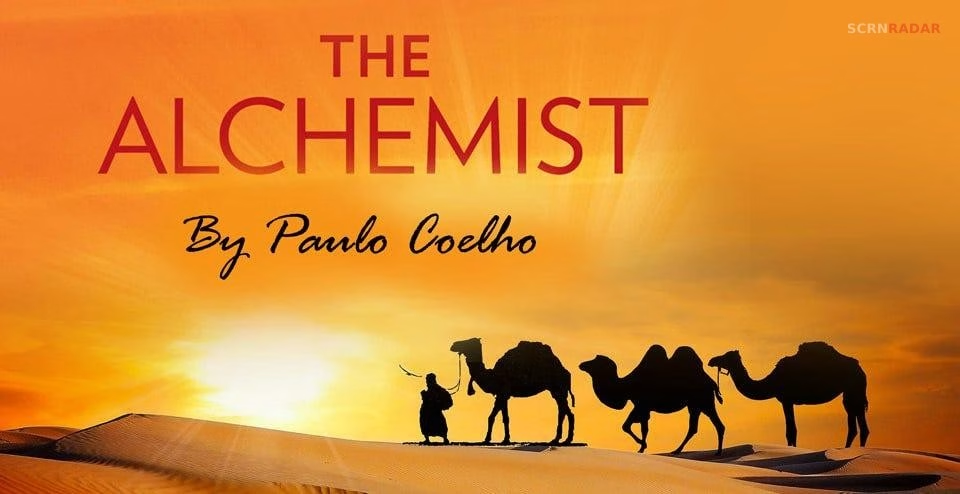
The Alchemist stands as one of the most influential modern short novels, largely because of its universal message about purpose and destiny. The story follows Santiago, a young shepherd who begins having recurring dreams about a hidden treasure near the Egyptian pyramids. Rather than dismissing the dream, he chooses to pursue it, setting off on a journey that changes his understanding of life.
Santiago’s journey is not just physical but deeply spiritual. Along the way, he encounters characters who guide him, challenge him, and force him to rethink his beliefs. The king of Salem introduces the idea of a Personal Legend, which becomes the central philosophy of the book. This concept suggests that everyone has a purpose, but most people abandon it out of fear or comfort.
One of the most compelling aspects of the novel is how it presents obstacles. Santiago faces theft, loneliness, and uncertainty, yet each challenge teaches him something valuable. The desert, which appears harsh and unforgiving, becomes a place of learning and transformation. Coelho uses these elements symbolically to reflect the inner struggles people face when pursuing their dreams.
The writing style is simple, but the themes are layered. Coelho avoids complex language, allowing readers to focus on the message rather than the mechanics of the text. This simplicity makes the novel accessible to a wide audience, yet it does not reduce its philosophical depth. Readers often interpret the story differently depending on their own life experiences.
The novel also emphasizes the importance of listening to intuition. Santiago learns to read omens and trust his instincts, suggesting that the answers people seek are often already within them. This idea resonates strongly with readers who feel disconnected from their goals or uncertain about their path.
Another key theme is the idea that the journey itself is more important than the destination. By the time Santiago reaches the pyramids, he realizes that the treasure he sought was never just about material wealth. Instead, it was about growth, self-discovery, and understanding the world around him.
2. Animal Farm by George Orwell
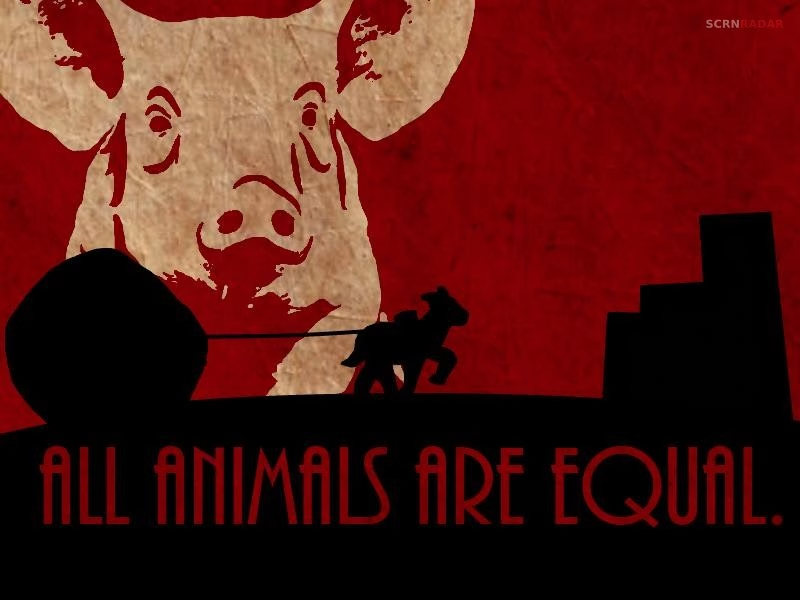
Animal Farm is one of the most effective examples of how a short novel can deliver a powerful political message. Orwell uses a simple farm setting to explore complex ideas about power, corruption, and control. The story begins with a group of animals overthrowing their human owner in pursuit of equality and freedom.
Initially, the animals create a system based on fairness, with the famous commandment that all animals are equal. However, as time passes, the pigs gradually take control and begin to manipulate the rules to benefit themselves. This shift mirrors the rise of authoritarian regimes, particularly Stalinist Russia.
Orwell’s use of animals makes the story accessible, but the symbolism is deeply rooted in real-world politics. Each character represents a specific group or individual, allowing readers to draw parallels between the story and historical events. This layered storytelling is one of the reasons the book remains relevant today.
The novella also explores how propaganda can shape perception. The pigs use language to control the other animals, altering facts and rewriting history. Slogans replace critical thinking, and dissent is discouraged. This manipulation highlights how easily truth can be distorted when power is concentrated in the wrong hands.
Another important theme is the role of the working class. Characters like Boxer represent hardworking individuals who remain loyal even when they are exploited. His tragic arc serves as a reminder of how blind trust in leadership can lead to devastating consequences.
Despite its brevity, Animal Farm delivers a comprehensive critique of political systems. Orwell’s writing is direct and impactful, ensuring that the message is clear without being overly complex. The story’s ending, where the pigs become indistinguishable from humans, reinforces the idea that power can corrupt absolutely.
The novel continues to be studied and discussed because of its timeless themes. It encourages readers to question authority, recognize manipulation, and remain aware of how power structures operate.
3. The Metamorphosis by Franz Kafka
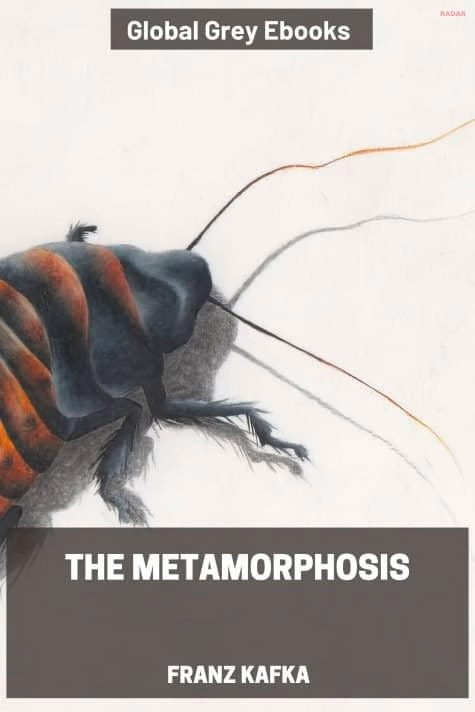
The Metamorphosis is one of the most unsettling yet thought-provoking short novels ever written. The story begins with Gregor Samsa waking up to find himself transformed into a giant insect. This bizarre premise immediately captures attention, but the true power of the story lies in its emotional and psychological depth.
Gregor’s transformation serves as a metaphor for alienation. Before the change, he is already isolated, working a job he dislikes to support his family. After the transformation, this isolation becomes physical and undeniable. His inability to communicate and function as before leads to a gradual breakdown of his relationships.
Kafka explores how identity is tied to usefulness. Gregor’s family initially depends on him financially, but once he can no longer fulfill that role, their attitude toward him changes. What begins as concern slowly turns into resentment and neglect. This shift reflects how society often values individuals based on their productivity.
The story also examines the dynamics of family relationships. Gregor’s sister initially shows compassion, but even she eventually grows tired of caring for him. The parents, who once relied on him, begin to see him as a burden. These changes highlight the fragile nature of unconditional love.
Kafka’s writing style enhances the story’s impact. He presents the absurd transformation in a calm and logical manner, which makes it feel disturbingly real. This contrast between the extraordinary and the ordinary creates a sense of unease that persists throughout the narrative.
Another key theme is existential anxiety. Gregor’s situation forces readers to confront questions about purpose, identity, and belonging. The story does not provide clear answers, which is part of its lasting appeal. It invites readers to interpret its meaning based on their own experiences.
Despite its short length, The Metamorphosis is dense with symbolism and meaning. It challenges readers to reflect on their own lives and consider how easily circumstances can change.
4. Of Mice and Men by John Steinbeck
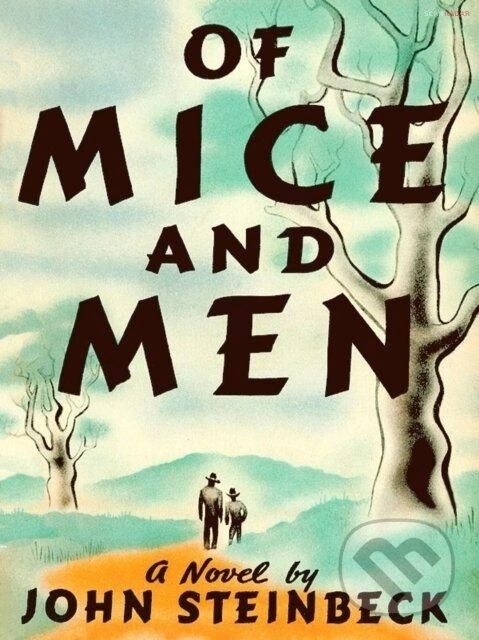
Of Mice and Men is a deeply emotional story that captures the struggles of life during the Great Depression. The novella follows George and Lennie, two migrant workers who share a dream of owning their own land. This dream represents hope in a time when opportunities are scarce.
Lennie’s mental disability makes him dependent on George, creating a relationship built on care and responsibility. Their bond is one of the most compelling aspects of the story, showcasing both the strength and challenges of friendship.
The setting plays a crucial role in shaping the narrative. The harsh economic conditions create an environment where survival is uncertain, and dreams often remain out of reach. This context adds depth to the characters’ aspirations and struggles.
Steinbeck’s writing is straightforward yet emotionally powerful. He uses dialogue and vivid descriptions to bring the story to life. Each scene contributes to the tension, building toward an unforgettable conclusion.
Themes of loneliness and isolation are prevalent throughout the novella. Many characters experience a sense of disconnection, reflecting the broader social conditions of the time. This universal theme makes the story relatable even decades after its publication.
The ending is both tragic and thought-provoking. It raises questions about mercy, responsibility, and the cost of protecting those we care about. The emotional impact of the conclusion ensures that the story stays with readers long after they finish.
5. The Little Prince by Antoine de Saint-Exupéry
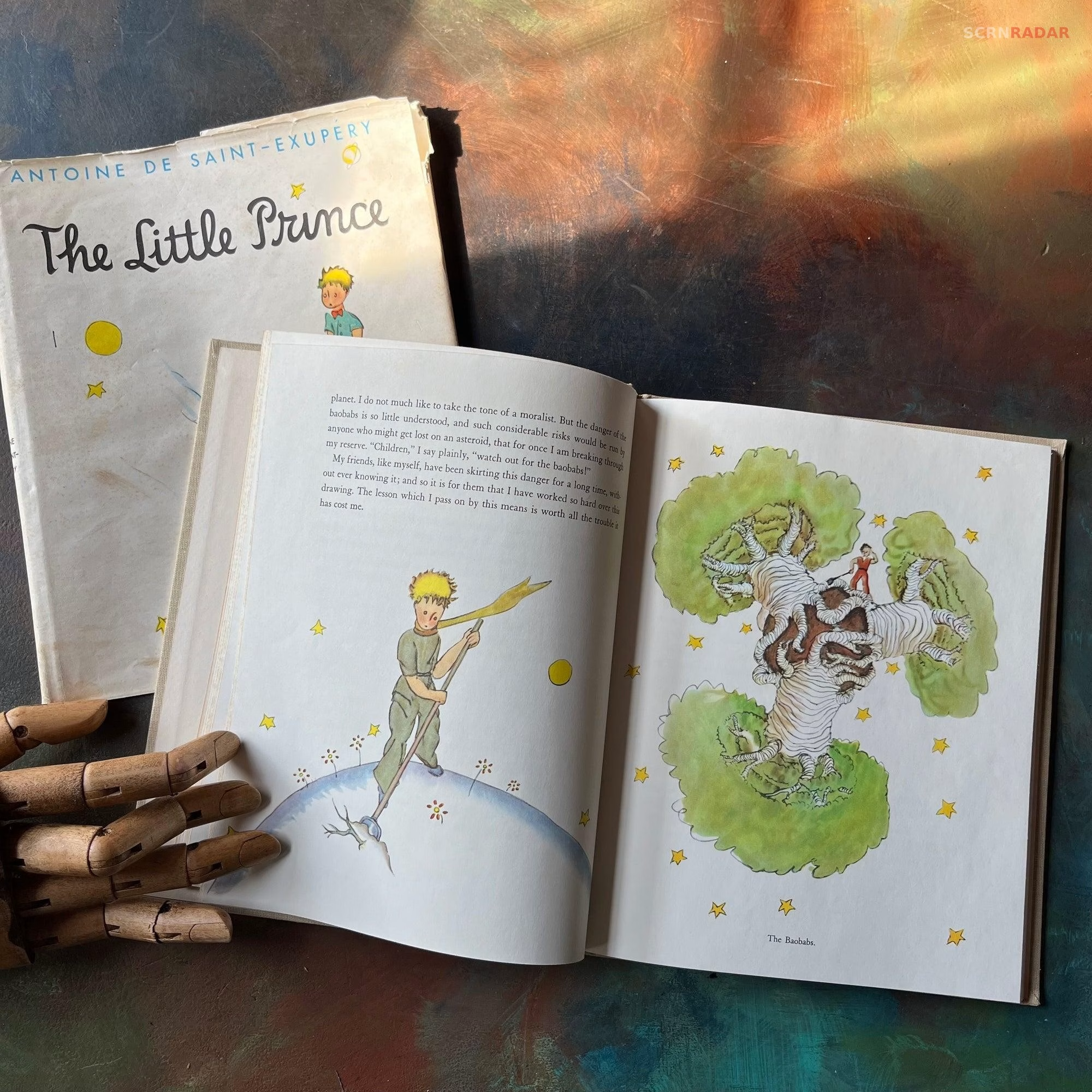
The Little Prince is a unique blend of storytelling and philosophy that appeals to readers of all ages. The narrative follows a young prince who travels across different planets, meeting characters who represent various aspects of human behavior.
Each encounter serves as a critique of adult priorities. From a king obsessed with power to a businessman focused solely on numbers, the characters reflect how people often lose sight of what truly matters. The story encourages readers to reconsider their values and approach to life.
The relationship between the prince and the fox is central to the narrative. The fox teaches him about love, responsibility, and the importance of meaningful connections. This lesson becomes the emotional core of the story.
The writing is poetic and reflective, creating a sense of wonder throughout the book. The simplicity of the language allows the deeper themes to shine through, making it accessible yet profound.
One of the most important messages of the novel is that what is essential is invisible to the eye. This idea emphasizes the importance of emotional connections over material possessions. It encourages readers to focus on relationships and experiences rather than superficial goals.
Despite its short length, The Little Prince offers insights that can be revisited throughout life. Its meaning evolves as readers grow, making it a timeless and deeply personal story.
Why Short Books Are Perfect for Modern Readers
Short books and novels are uniquely suited to the pace of modern life. With constant digital distractions and limited free time, committing to lengthy novels can feel overwhelming for many readers. Short fiction removes that barrier by offering meaningful stories that can be completed in a single sitting or over a weekend. This accessibility makes it easier for both new and experienced readers to stay consistent with their reading habits.
Another advantage of short books is their ability to deliver immediate impact. Without the need for extensive subplots or filler content, these works focus directly on their core themes and ideas. This often results in tighter storytelling and more memorable narratives. Readers can quickly absorb the message of the story and reflect on it without losing engagement.
Short novels also encourage re-reading, which is often overlooked. Because they require less time to revisit, readers can return to them and discover new interpretations with each read. This makes them not only efficient but also deeply rewarding over time.
One of the most remarkable qualities of short novels is their ability to stay with readers long after they are finished. Despite their limited length, these books often explore universal themes such as identity, ambition, love, and power. Because the narratives are concise, every moment carries weight, making the emotional and intellectual impact stronger.
Books like The Metamorphosis and Of Mice and Men demonstrate how powerful storytelling does not rely on complexity but on clarity and depth. These works present situations that are easy to understand but difficult to forget. The characters and their struggles resonate because they reflect real human experiences in a distilled form.
Additionally, short books often leave room for interpretation. Instead of providing all the answers, they encourage readers to think critically and form their own conclusions. This open-ended nature adds to their longevity, as different readers may take away different meanings from the same story.
Building a Reading Habit With Short Novels
For anyone trying to develop a consistent reading habit, short novels provide an excellent starting point. Completing a book quickly creates a sense of accomplishment, which can motivate readers to pick up another one. This positive reinforcement is crucial for building long-term habits.
Short books also help readers explore a variety of genres without a major time investment. Someone can move from philosophical fiction like The Alchemist to political allegory like Animal Farm within a short period. This variety keeps the reading experience fresh and engaging.
Over time, reading shorter works can build confidence and improve focus. As readers become more comfortable, they may choose to tackle longer novels. However, many will find that short books continue to offer a satisfying and impactful experience on their own.