Parasite, directed by Bong Joon-ho, reshaped modern cinema by blending biting social commentary with a gripping, genre-defying narrative. The film’s exploration of class inequality, deception, and survival struck a universal chord, culminating in its historic Best Picture win at the Academy Awards. What truly set Parasite apart was its ability to shift tones effortlessly, moving from dark comedy to suspense to tragedy without losing narrative control.
For viewers who connected with its layered storytelling, morally complex characters, and surprising twists, finding similar films can feel challenging. However, several movies capture that same unsettling mix of class conflict, psychological tension, and social critique. These films may differ in tone or setting, but they all share a willingness to question systems of power and expose uncomfortable truths about human nature. Let’s break down five movies like Parasite that deliver equally powerful and thought-provoking experiences.
Snowpiercer (2013)

Snowpiercer stands as one of the most direct thematic companions to Parasite, largely because it comes from the same director, Bong Joon-ho. While Parasite presents a grounded, modern setting, Snowpiercer pushes its ideas into a dystopian future where humanity survives on a train circling a frozen Earth. The confined environment becomes an unmistakable metaphor for class division, with each train carriage representing a different social tier.
The film begins in the tail section, where the poorest passengers live in squalor and survive on minimal resources. Their oppression is systemic and enforced, echoing the invisible barriers seen in Parasite. As Curtis, played by Chris Evans, leads a rebellion toward the front, the audience witnesses a literal journey through layers of privilege. Each compartment reveals a new aspect of elite life, from bizarre educational systems to extravagant nightlife.
What makes Snowpiercer particularly compelling is its exploration of how systems maintain inequality. Authority figures justify the hierarchy as necessary for survival, forcing characters and viewers to question whether order can exist without oppression. This mirrors Parasite’s subtle suggestion that class structures are deeply ingrained and difficult to dismantle.
The film also excels in its tonal shifts. Moments of dark humor and absurdity break through the tension, much like in Parasite. Yet, beneath that surface lies a deeply unsettling reality about human nature. Characters are forced into impossible choices, revealing how survival can override morality.
By the time the film reaches its climax, it becomes clear that the revolution itself may not offer a clean solution. Like Parasite, Snowpiercer avoids simplistic conclusions, leaving audiences with lingering questions about power, control, and the cost of change.
The Platform (2019)
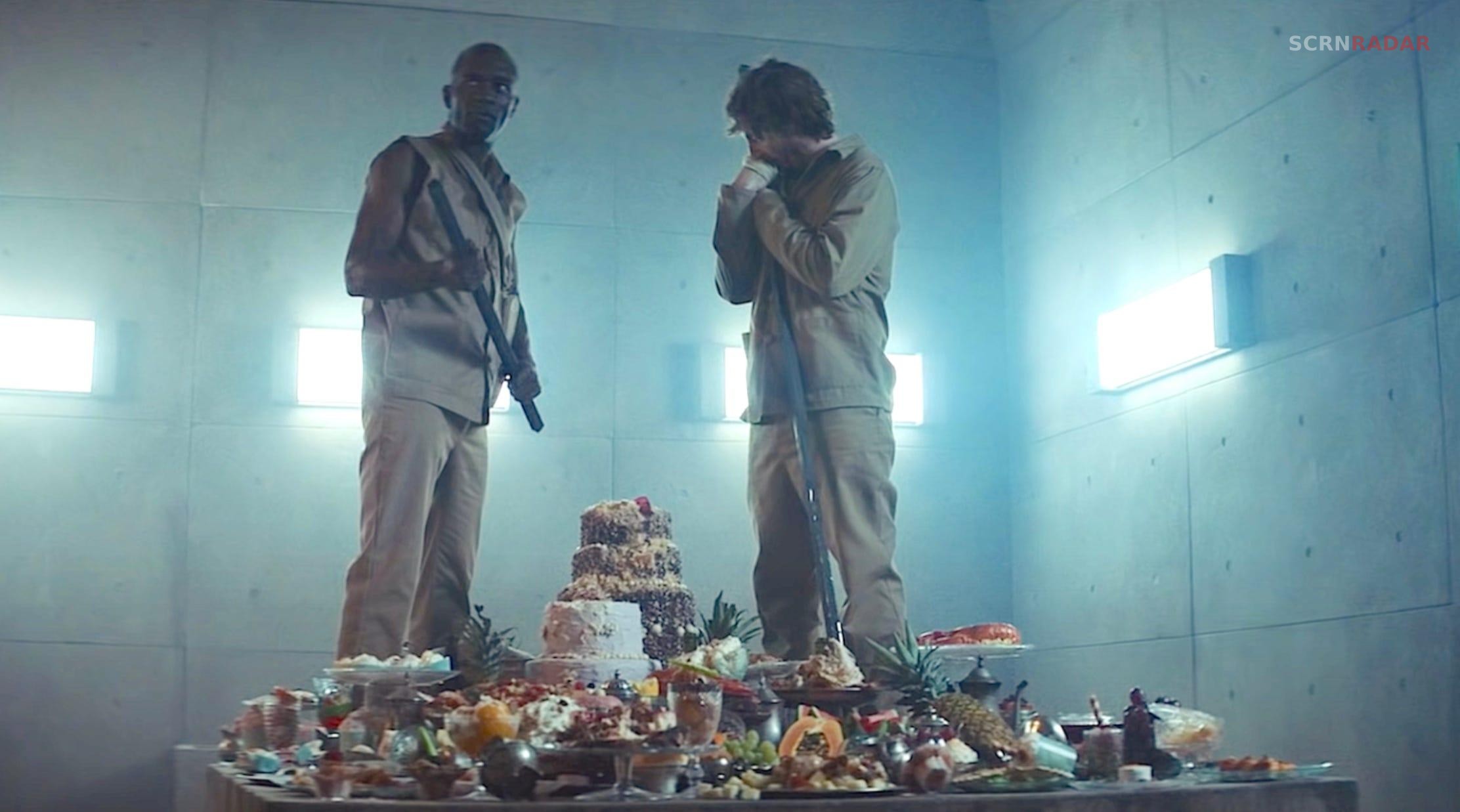
The Platform takes the idea of class inequality and distills it into one of the most brutal cinematic metaphors in recent memory. Set inside a vertical prison, the film revolves around a platform of food that descends from the top floor to the bottom. Those at the top feast, while those below are left with whatever remains, often nothing at all.
The simplicity of the concept is what makes it so powerful. Much like Parasite, the film uses a confined setting to explore a much larger societal issue. The vertical structure becomes a stark representation of wealth distribution, where position determines survival.
As the protagonist moves between levels, the film examines how people behave when placed in different positions of power. Individuals who once suffered may become just as selfish when given access to resources. This cyclical nature of inequality reflects Parasite’s message that class struggle is not just about wealth but also about mindset and opportunity.
The film’s tone is far darker and more brutal than Parasite, leaning heavily into psychological horror. However, both films share a commitment to moral ambiguity. There are no clear heroes, only individuals trying to navigate an inherently unfair system.
Another striking similarity is the use of shock value to drive home its themes. Just as Parasite delivers unexpected twists, The Platform constantly challenges viewers with disturbing scenarios. These moments are not just for impact but serve to highlight the consequences of systemic inequality.
By the end, the film leaves its central question unresolved. Can individuals create change within a broken system, or are they doomed to repeat the same patterns? Like Parasite, the answer is left deliberately ambiguous.
Shoplifters (2018)

Shoplifters, directed by Hirokazu Kore-eda, offers a more intimate and emotionally grounded exploration of themes that Parasite tackles through satire and suspense. The film follows a group of individuals living together as a makeshift family, surviving through petty theft and small acts of deception.
At first glance, their lives appear simple and even warm. Despite their financial struggles, they share genuine affection and support for one another. This sense of belonging stands in stark contrast to the fractured relationships seen in Parasite, where wealth often isolates individuals rather than connecting them.
As the story unfolds, however, the film begins to reveal the fragile foundation of this family. Secrets about their past and the true nature of their relationships come to light, forcing both the characters and the audience to reconsider what defines a family. This gradual unraveling mirrors Parasite’s ability to shift perceptions over time.
One of the film’s greatest strengths is its empathy. Unlike Parasite, which often uses sharp satire, Shoplifters approaches its characters with compassion. It highlights how economic hardship can push people into morally questionable actions, not out of greed but out of necessity.
The film also critiques societal systems that fail to support vulnerable individuals. By focusing on those living on the margins, it exposes the gaps in social structures that allow such situations to exist. This aligns closely with Parasite’s broader commentary on inequality.
By the end, Shoplifters delivers an emotional impact that lingers long after the credits roll. It may not rely on surprising twists, but its quiet revelations are just as powerful.
Ready or Not (2019)

Ready or Not takes a more chaotic and genre-driven approach to themes similar to Parasite. Blending horror, dark comedy, and satire, the film tells the story of a young bride who marries into a wealthy family with a deadly secret.
On her wedding night, she is forced to participate in a ritualistic game of hide-and-seek, where the stakes are life and death. This bizarre premise quickly transforms into a critique of wealth and privilege. The family’s willingness to commit violence to maintain their status mirrors the extreme lengths characters go to in Parasite.
The protagonist, played by Samara Weaving, serves as an outsider entering an elite world. Much like the Kim family in Parasite, she initially sees opportunity but soon realizes the danger hidden beneath the surface. Her journey becomes one of survival and self-realization.
The film’s tone is significantly more energetic and chaotic than Parasite, but its core message remains similar. It exposes how wealth can create a sense of entitlement and moral detachment. The family’s actions are both absurd and horrifying, highlighting the extremes of privilege.
Another shared element is the use of a confined setting. The mansion becomes a battleground, much like the house in Parasite. Within this space, social hierarchies are both reinforced and challenged.
By the end, Ready or Not delivers a cathartic and explosive conclusion. While it leans more into genre thrills, its underlying commentary ensures it resonates with fans of Parasite.
Burning (2018)

Burning, directed by Lee Chang-dong, offers a slower, more introspective take on themes of class disparity and psychological tension. The film follows a young man who becomes involved with a mysterious and wealthy individual, leading to a story filled with ambiguity and unease.
Unlike the more direct storytelling of Parasite, Burning unfolds gradually. Its pacing allows tension to build subtly, creating a sense of discomfort that lingers throughout the film. This slow-burn approach makes its moments of revelation even more impactful.
The film explores class differences through character interactions rather than explicit conflict. The wealthy character’s casual demeanor contrasts sharply with the protagonist’s struggles, highlighting the invisible divide between them. This subtlety aligns with Parasite’s nuanced portrayal of inequality.
Ambiguity is central to Burning. Key events are left open to interpretation, forcing viewers to actively engage with the story. This approach creates a sense of mystery that extends beyond the narrative itself.
The film also look into themes of jealousy, identity, and existential frustration. These elements combine to create a deeply psychological experience. Like Parasite, it suggests that class disparity can lead to emotional and mental turmoil.
By its conclusion, Burning leaves more questions than answers. This ambiguity is intentional, encouraging reflection long after the film ends.
If you’re searching for movies like Parasite, these five films deliver powerful and thought-provoking experiences. Each one captures a different aspect of what made Parasite so impactful, from its exploration of class inequality to its complex characters and unexpected twists.
Whether through dystopian settings, emotional storytelling, or psychological tension, these films challenge viewers to confront uncomfortable truths about society. They prove that the themes explored in Parasite are not limited to one story but are part of a broader conversation about power, privilege, and human nature.
Watching these films offers more than just entertainment. They provide insight into the systems that shape our world and the individuals who navigate them. For fans of Parasite, they are essential viewing that will leave a lasting impression.